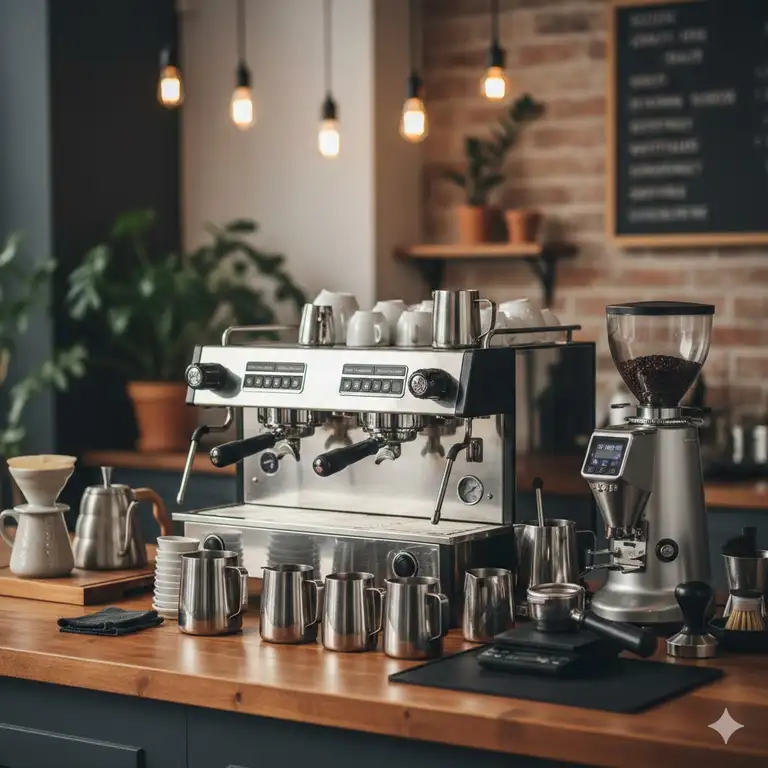
I remember the first time I tried to make a latte at home. It was a disaster. The milk was basically a bubble bath, and the espresso tasted like a battery. I realized very quickly that while my heart was in the right place, my kitchen was missing the right barista equipment to actually get the job done. If you are reading this in 2026, you know that the coffee world has moved fast. We aren’t just pushing buttons on a pod machine anymore; we are chasing the perfect extraction, the silkiest microfoam, and that elusive “god shot” of espresso.
✨Was this helpful? Spread the word! 🚀
Choosing the right barista equipment is about more than just buying the most expensive shiny machine. It is about building a workflow that makes your morning routine feel like a ritual rather than a chore. Whether you are looking for professional barista gear or just some simple home barista essentials, the market is currently flooded with options. Some are genius, and some are just expensive paperweights. In this guide, I am going to walk you through the absolute must-haves that I use and recommend.
Barista Equipment vs. Traditional Coffee Methods
Before we dive into the specific tools, let’s look at why investing in specialized gear matters compared to the old-school ways of making coffee.
| Feature | Professional Barista Equipment | Traditional Drip/Instant |
| Flavor Precision | Extremely High (9/10) | Low to Medium (3/10) |
| Texture Control | Full control over microfoam | None/Manual frother only |
| Speed | 2-5 minutes per cup | Instant to 10 minutes |
| Durability | Built for 10+ years | 2-3 years (disposable) |
| Learning Curve | Moderate (The fun part!) | Low |
Quick Comparison: The 2026 Barista Toolkit
If you are in a rush to start brewing, here is a snapshot of the top-tier items we will be discussing today.
| Product | Best For | Key Feature |
| Breville Barista Express Impress | All-in-One Setup | Assisted Tamping System |
| Fellow Stagg EKG Pro | Precision Pouring | PID Temperature Control |
| Acaia Lunar Scale | Extraction Timing | Water-resistant & Bluetooth |
| Baratza Sette 270 Wi | Grinding Consistency | Weight-based Dosing |
| Normcore V4 Tamper | Ergonomics | Pressure-sensitive Springs |
| Motta Europa Pitcher | Latte Art | Proprietary Spout Design |
| Rocket Espresso Appartamento TCA | Professional Performance | Heat Exchange Boiler |
Top 7 Barista Equipment: Expert Analysis
1. Breville Barista Express Impress (Model: BES876BSS)
The Breville Barista Express Impress is the evolution of the world’s most popular home espresso machine. If you are tired of the mess that usually comes with grinding and tamping, this piece of barista equipment is your best friend. It features an “assisted tamping” lever on the side that delivers a consistent 22-pound (10kg) squeeze to your coffee grounds.
Technical Specifications:
-
Dimensions: 13 x 12.9 x 16.1 inches
-
Pump Pressure: 15 Bar Italian Pump
-
Water Tank: 67 fl. oz (2 Liters)
-
Grinder: Integrated Stainless Steel Conical Burr
-
Heating System: 1600W Thermocoil
Customer Review Analysis:
Users absolutely love the “intelligent dosing” system. One reviewer mentioned, “I used to waste so much coffee trying to dial in the grind, but the Impress tells me exactly when I have enough.” Some hardcore pros find the built-in grinder a bit limiting for ultra-light roasts, but for 95% of home baristas, it’s a dream.
Pros:
-
Mess-free tamping.
-
Compact footprint for small kitchens.
-
Quick 3-second heat-up time.
Cons:
-
Grinder steps are slightly large for “fine-tuning.”
-
Steam wand takes a bit longer to reach temperature than dual-boiler machines.
Warranty: 1-year limited product warranty.
2. Fellow Stagg EKG Pro (Electric Pour-over Kettle)
When it comes to coffee brewing kit essentials, temperature is king. The Fellow Stagg EKG Pro isn’t just a kettle; it’s a piece of laboratory equipment. In 2026, the Pro version allows you to schedule your boil time via an app, so your water is ready the moment you roll out of bed.
Technical Specifications:
-
Capacity: 0.9 Liters
-
Temperature Range: 104°F to 212°F
-
Materials: 304 stainless steel kettle body, plastic base
-
Connectivity: Bluetooth/WiFi for firmware updates
-
Screen: Full-color LCD
Customer Review Analysis:
The “Gooseneck” design is the standout feature here. Customers report that the counterbalanced handle makes pouring effortless, which is vital for preventing “channeling” in pour-over coffee. A common minor complaint is that the base is a bit of a fingerprint magnet.
Pros:
-
Incredible temperature accuracy (+/- 0.3 degrees).
-
Built-in brew stopwatch.
-
High-resolution screen shows real-time progress.
Cons:
-
Expensive compared to basic kettles.
-
0.9L might be small for large families.
Warranty: 2-year standard (3 years if registered).
3. Acaia Lunar Water-resistant Espresso Scale (2026 Edition)
If you don’t weigh your coffee, you are just guessing. The Acaia Lunar Water-resistant Espresso Scale is the industry standard for espresso accessories. It is fast, sleek, and fits perfectly on the drip tray of almost any machine.
Technical Specifications:
-
Readability: 0.1g
-
Capacity: 2000g
-
Battery Life: 30-40 hours (USB-C rechargeable)
-
Modes: Auto-start timer, Auto-tare, Flow rate monitor
-
Material: Aluminum body with acrylic spray
Customer Review Analysis:
Professional baristas swear by the response time. There is zero lag between pouring a drop and seeing the weight change. One user noted, “It survived a full steam wand blast and kept working—truly water-resistant.”
Pros:
-
Ultra-fast response time.
-
Flow rate indicator helps diagnose extraction issues.
-
Compact enough for travel.
Cons:
-
The price tag is steep for a scale.
-
The touch buttons can be sensitive to wet fingers.
Warranty: 2-year limited warranty.
4. Baratza Sette 270 Wi (Conical Burr Grinder)
The grinder is arguably more important than the espresso machine itself. The Baratza Sette 270 Wi revolutionized barista gear by introducing “Weight-based” grinding. Instead of a timer, it has a built-in Acaia scale that stops the motor when your exact dose is reached.
Technical Specifications:
-
Grind Speed: 3.5g/sec (Espresso) to 5.5g/sec (Brew)
-
Burrs: 40mm Steel Conical Burrs by Etzinger
-
Adjustment: 270 macro/micro settings
-
Hopper Capacity: 10 oz (300g)
-
Motor: DC Motor with gear reduction
Customer Review Analysis:
People love the “zero retention” design. Because the burrs are vertical, the coffee falls straight down. However, some users mention it is quite loud—think “small jet engine” in your kitchen for 5 seconds.
Pros:
-
Incredible accuracy within 0.1g.
-
Very fast grinding speed.
-
Easy to clean and maintain.
Cons:
-
High-pitched motor noise.
-
Mostly plastic exterior.
Warranty: 1-year limited warranty.
5. Normcore 58.5mm V4 Pressure Sensitive Tamper
Consistency is the enemy of the home barista. The Normcore 58.5mm V4 Pressure Sensitive Tamper removes one of the biggest variables: how hard you press. It uses internal springs to ensure you apply the same pressure every single time.
Technical Specifications:
-
Diameter: 58.5mm (fits most pro baskets)
-
Springs Included: 15lb, 25lb, and 30lb
-
Base: Ripple or Flat stainless steel
-
Handle: Anodized Aluminum
Customer Review Analysis:
Beginners find this to be a “game changer” for preventing uneven shots. “My wrist used to hurt after a few shots, but the leveling plate on this ensures I’m always flat,” says one enthusiast.
Pros:
-
Ensures a level tamp.
-
Interchangeable springs for customization.
-
Very affordable compared to electric tampers.
Cons:
-
Needs regular cleaning to keep the spring smooth.
-
Only fits 58mm portafilters.
Warranty: 1-year replacement.
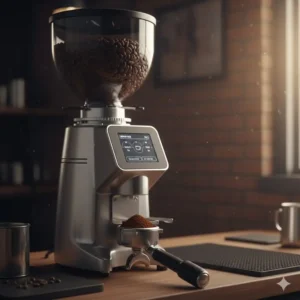
6. Motta Europa Professional Milk Pitcher
You can’t pour a heart or a rosetta without a good pitcher. The Motta Europa Professional Milk Pitcher is a classic in the world of barista equipment. Its unique shape helps create the perfect vortex for microfoam.
Technical Specifications:
-
Material: Heavy-gauge 18/10 Stainless Steel
-
Capacity: 17 oz (500ml) – also available in 25 oz and 35 oz
-
Spout: Sharp, pointed design
-
Origin: Made in Italy
Customer Review Analysis:
Users highlight the weight of the steel, which helps with temperature control. It feels “substantial” in the hand. Some beginners find the sharp spout a bit less forgiving than rounded ones, but once mastered, the detail in the art is superior.
Pros:
-
Indestructible build quality.
-
Excellent for fine-detail latte art.
-
Heats up evenly.
Cons:
-
Higher price than generic pitchers.
-
Heavy (might not suit everyone).
7. Rocket Espresso Appartamento TCA (2026 Model)
For those who want a pro-level experience at home, the Rocket Espresso Appartamento TCA is the gold standard. This machine looks like a piece of art and performs like a commercial unit found in an Italian piazza.
Technical Specifications:
-
Boiler: 1.8L Heat Exchange (Brew and steam at the same time)
-
Group Head: E61 commercial grade
-
Wattage: 1350W
-
Pressure: Adjustable via external screw
-
Case Material: Stainless Steel with circular cutouts
Customer Review Analysis:
Owners treat this machine like a family member. “It’s the last machine I’ll ever buy,” is a common sentiment. The temperature stability is legendary. The only downside cited is the lack of a built-in timer on the standard model, but the TCA version has improved electronic controls.
Pros:
-
Commercial-grade steam pressure.
-
Beautiful aesthetic design.
-
Built to be repaired, not replaced.
Cons:
-
Long heat-up time (20 minutes recommended).
-
Requires a dedicated space (very heavy).
Warranty: 2-year parts and labor.
✨ Don’t Miss These Exclusive Deals!
🔍 Upgrade your home coffee setup to the next level with these carefully selected products. Click on any highlighted item to check current pricing and availability. These tools will help you create cafe-quality espresso that your friends and family will love! ✨
💬 Just one click – help others make better buying decisions too!😊
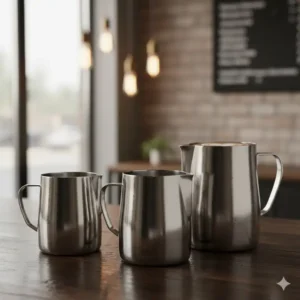
Detailed Technical Specifications Matrix (Spec Matrix)
Choosing the right combination of barista equipment requires looking at the raw data. Here is how our top picks stack up against each other in terms of technical specs.
| Product Name | Weight | Power/Battery | Main Material | Primary Function |
| Breville Impress | 24 lbs | 1600W | Stainless Steel | Espresso Brewing |
| Fellow Stagg Kettle | 2.8 lbs | 1200W | 304 Stainless | Water Heating |
| Acaia Lunar Scale | 0.58 lbs | USB-C Rechargeable | Aluminum | Measurement |
| Baratza Sette 270 | 7 lbs | 200W DC Motor | Plastic/Steel | Grinding |
| Normcore Tamper | 1 lbs | Manual | Stainless/Aluminum | Tamping |
| Rocket Espresso | 44 lbs | 1350W | Stainless Steel | Pro-grade Brewing |
| Motta Pitcher | 0.8 lbs | Manual | 18/10 Steel | Milk Frothing |
The Science of Barista Gear: Why Quality Matters
I often get asked if a $500 grinder is really better than a $50 one. The short answer? Yes. But the why is more interesting. According to the Specialty Coffee Association (SCA), extraction is all about surface area and contact time. A cheap grinder shatters beans into uneven chunks—some dust (fines) and some boulders. The dust over-extracts and tastes bitter, while the boulders under-extract and taste sour. High-end barista equipment like the Baratza Sette 270 Wi ensures that every particle is almost exactly the same size.
Similarly, temperature stability is a cornerstone of great coffee. If your water temperature fluctuates by even 5 degrees during a shot, the chemical compounds being pulled from the bean change. This is why machines like the Rocket Espresso Appartamento TCA use heavy brass group heads to act as a “heat sink,” keeping everything steady.
Budget vs. Premium: Value Comparison
You don’t need to spend $5,000 to get a good cup of coffee. However, knowing where to spend your money is key.
| Component | Budget Entry Level | Professional Grade | Why the Upgrade Matters |
| Grinder | Manual Hand Grinder | Baratza Sette 270 Wi | Weight-based accuracy saves time and beans. |
| Scale | Kitchen Scale (1g) | Acaia Lunar | 0.1g accuracy and speed prevent over-pouring. |
| Machine | Steam Toy ($50) | Breville Impress | Real pressure (9 bars) creates actual crema. |
| Kettle | Stove-top | Fellow Stagg EKG | Gooseneck spout allows for controlled agitation. |
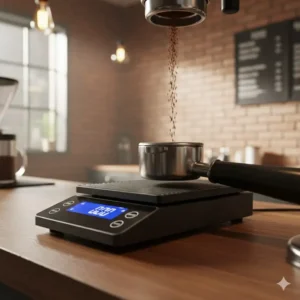
Mastering Your Home Barista Essentials
Once you have the gear, you need to know how to use it. Professional barista gear is only as good as the person operating it. I learned this the hard way after I bought my first expensive machine and still produced “brown water.”
The Importance of the Scale
I cannot stress this enough: stop using scoops! A “scoop” of coffee can vary by 2-3 grams depending on the roast level. Using the Acaia Lunar to weigh 18 grams of coffee and 36 grams of espresso output will change your life. This 1:2 ratio is the “Golden Rule” for a reason. It creates a balanced strength that showcases the bean’s origin.
The Art of the Tamp
Tamping isn’t about strength; it’s about being level. If you tamp at an angle, the water (which is lazy) will find the path of least resistance. This is called “channeling.” This is why a tool like the Normcore V4 Tamper is so valuable for beginners. It physically prevents you from tamping crookedly.
Milk Science
Milk isn’t just a liquid; it’s a complex structure of proteins and fats. When you steam milk, you are doing two things: introducing air (aeration) and heating. In 2026, we focus on “microfoam,” which consists of bubbles so small you can’t even see them. The Motta Europa Pitcher has a wide base that helps create a “whirlpool,” which incorporates those bubbles into the liquid for a silky texture.
User Compatibility: Which Gear is for You?
Not everyone wants to spend 20 minutes making a single latte. Here is a breakdown of which barista equipment fits your lifestyle.
| User Type | Recommended Setup | Experience Level |
| The Busy Parent | Breville Barista Express Impress | Beginner |
| The Weekend Hobbyist | Baratza Sette 270 Wi + Gaggia Classic | Intermediate |
| The Coffee Nerd | Rocket Espresso + Acaia Lunar | Expert |
| The Minimalist | Fellow Stagg EKG + AeroPress | Any |
Benefits Quantification: What You Get Back
Investing in quality barista equipment isn’t just a luxury; it has measurable benefits.
| Benefit Category | Quantitative Improvement | Qualitative Feeling |
| Consistency | 90% reduction in “sink shots” | Less frustration in the morning. |
| Cost Savings | Save ~$1,500/year vs Starbucks | Feeling like a savvy investor. |
| Speed | Workflow down to <3 mins | More time to enjoy your drink. |
| Taste | Extraction yields of 18-22% | Tasting notes like “blueberry” or “chocolate.” |
Performance Metrics: Efficiency in the Kitchen
How fast can you get your caffeine fix? We measured the “Time to Cup” for various setups.
| Task | Entry Level Gear | Professional Barista Gear |
| Grinding 18g | 45-60 seconds (Hand) | 5 seconds (Baratza Sette) |
| Machine Heat Up | 1 minute | 3 seconds (Breville Impress) |
| Tamping | 15 seconds (fiddly) | 2 seconds (Assisted) |
| Milk Texturing | 60 seconds (weak steam) | 20 seconds (Rocket Espresso) |
Cost Comparison: The Economics of Home Brewing
Is it actually cheaper to brew at home? Let’s look at the numbers over a 2-year period for a typical American consumer.
| Expense Item | Daily Cafe Trip (USA Avg) | Home Barista Setup (Mid-Range) |
| Equipment Cost | $0 | $1,200 (One-time) |
| Cost Per Cup | $5.50 | $0.75 (High-end beans) |
| Annual Total | $2,007 | $273 (Beans/Milk/Power) |
| 2-Year Total | $4,014 | $1,746 |
| Total Savings | **$0** | $2,268 |
As you can see, the barista equipment pays for itself in less than a year. Plus, you don’t have to put on pants or drive to a cafe in the rain. That is a win-win in my book. For more data on coffee trends, check out the National Coffee Association (NCA) reports on home brewing habits in 2026.
✨ Take Your Coffee Game to the Next Level!
🔍 Ready to transform your kitchen into a world-class espresso bar? Click on the products we analyzed today to see the latest 2026 pricing and user reviews. Don’t settle for mediocre coffee—invest in the right tools and taste the difference every single morning! ☕✨
Conclusion: Elevating Your Morning Ritual
Building the ultimate home cafe is a journey. It starts with a simple desire for a better cup of coffee and ends with a kitchen full of high-tech barista equipment that you actually know how to use. I have found that the more I learn about the science of extraction, the more I appreciate the craft. Whether you choose the all-in-one convenience of the Breville Barista Express Impress or the manual precision of a Rocket Espresso Appartamento TCA, the goal is the same: a moment of peace and a delicious drink.
Don’t be afraid of the learning curve. Yes, you will pull some bad shots at first. Yes, you might make a mess with the milk. But that is part of the process. In 2026, we have better tools than ever before to make this hobby accessible to everyone. So, grab a scale, dial in that grinder, and start brewing.
Frequently Asked Questions
✅ The grinder is the most critical investment. A high-quality burr grinder ensures uniform particle size, which is essential for even extraction. Without a good grinder, even the most expensive espresso machine will produce bitter or sour coffee…
✅ Yes, a scale with 0.1g accuracy is vital for consistency. Measuring by volume (scoops) is inaccurate because bean density varies by roast. A scale like the Acaia Lunar allows you to replicate your best recipes every single day…
✅ Conical burrs are generally quieter and more affordable, producing a ‘bimodal’ grind that adds body to espresso. Flat burrs are prized for their uniformity, often highlighting clarity and specific flavor notes in lighter roast specialty coffees…
✅ If you drink coffee daily, yes. Professional gear is built with more durable materials like brass and stainless steel. These machines offer better temperature stability and steam pressure, which are necessary for cafe-quality microfoam and espresso…
✅ You should backflush your machine with water daily and use a chemical cleaner weekly. Grinders should be purged of old beans daily, with a deep burr cleaning every month to prevent rancid oil buildup from affecting your flavor… ❓ What is the most important piece of barista equipment to buy first?
❓ Do I really need a specialized scale for coffee?
❓ What is the difference between a flat and conical burr grinder?
❓ Is it worth buying professional barista gear for home use?
❓ How often should I clean my barista equipment?
Recommended for You
- Sca certified Brewers: 7 Best Gold Cup Coffee Machines (2026)
- 7 Best espresso tools for 2026: Master Your Home Barista Craft
- Barista Tools for 2026: 7 Best Essential Kits for Home Cafes
Disclaimer: This article contains affiliate links. If you purchase products through these links, we may earn a small commission at no additional cost to you.
✨ Found this helpful? Share it with your friends! 💬🤗