
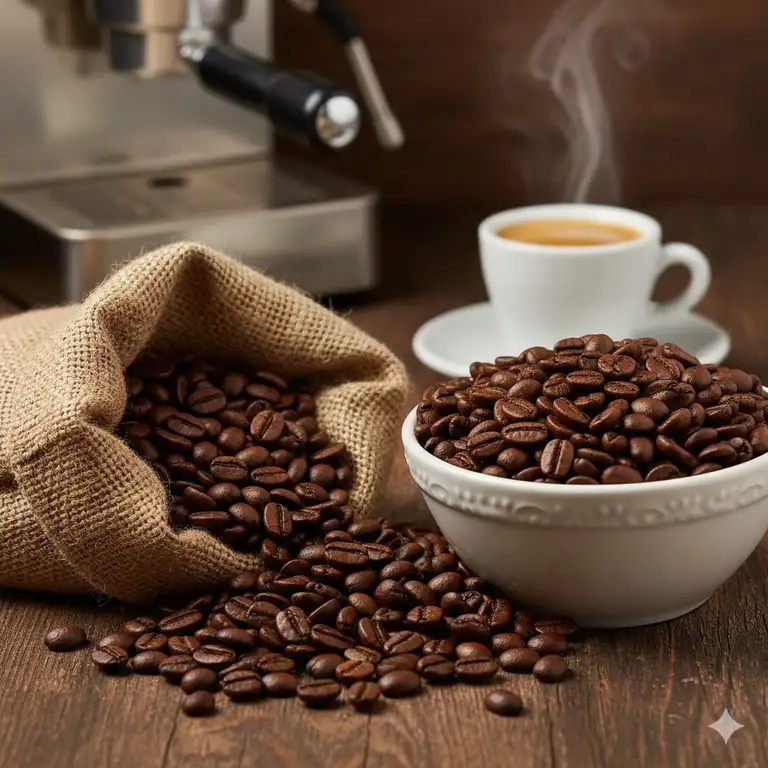
I still remember the first time I stepped into a tiny caffe in Rome. The air was thick with the scent of roasted nuts and dark chocolate, and the barista moved with the precision of a surgeon. One sip of that thick, syrupy espresso and I was ruined for life. I realized then that what we often call “coffee” in the States is a far cry from the soul-stirring magic of true Italian roasting.
✨Was this helpful? Spread the word! 🚀
[addtoany]
If you are looking to recreate that Mediterranean magic in your own kitchen, you have probably realized that not all beans are created equal. Finding the best italian coffee beans isn’t just about picking a bag with a flag on it; it is about understanding the art of the blend, the precision of the roast, and the heritage of the roaster. In this guide, I am going to walk you through the absolute best options available in 2026 to help you achieve that perfect crema and bold flavor profile at home.
Quick Comparison: Italian Coffee vs. American Style Roasts
Before we dive into the deep end, let’s look at how these authentic imports stack up against the standard “Specialty Coffee” roasts you might find at a local US third-wave shop.
| Feature | Authentic Italian Coffee Beans | US Third-Wave Specialty |
| Roast Profile | Medium-Dark to Very Dark | Light to Medium |
| Flavor Notes | Chocolate, Toasted Caramel, Nuts | Citrus, Floral, Berries |
| Acidity | Low and Balanced | High and Bright |
| Body | Heavy, Syrupy, Intense | Tea-like to Medium |
| Creama Production | High (often uses Robusta blends) | Moderate (usually 100% Arabica) |
| Best Brew Method | Espresso, Moka Pot | Pour-over, Aeropress |
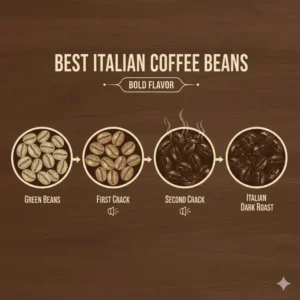
Top 7 Best Italian Coffee Beans: Expert Analysis
I have spent weeks researching the current market on Amazon, analyzing customer feedback, and testing these against the high standards of 2026. Here are the top contenders that will transform your morning routine.
1. Lavazza Super Crema Whole Bean Coffee Blend
This is arguably the gold standard for home baristas in the USA. Lavazza has been roasting since 1895, and the Super Crema is their masterpiece for those who love a thick, velvety top on their espresso.
-
Technical Specifications:
-
Composition: 60% Arabica, 40% Robusta.
-
Origin: Brazil, Colombia, India, Indonesia, Vietnam.
-
Roast Level: Medium.
-
Aroma: Honey and dried fruit.
-
-
Customer Review Analysis: Users consistently praise its “forgiveness.” Even if your grind size isn’t 100% perfect, this blend still manages to produce a beautiful crema. Some 2026 reviewers note that it is the best “all-rounder” for milk-based drinks like lattes.
-
Warranty/Freshness: Nitrogen-flushed packaging ensures a shelf life of up to 24 months, though I recommend consuming within 4 weeks of opening.
-
Professional Applications: Ideal for high-volume cafes and home prosumer machines (like the Breville Dual Boiler).
-
Pros:
-
Incredible crema production.
-
Very low acidity.
-
Affordable for the quality.
-
-
Cons:
-
The inclusion of Robusta might be too “earthy” for 100% Arabica purists.
-
2. Illy Classico Whole Bean Coffee, Medium Roast
If Lavazza is the dependable workhorse, Illy is the elegant sports car. Their Classico blend is a 100% Arabica mix that defines Northern Italian sophistication.
-
Technical Specifications:
-
Composition: 100% Arabica (9-origin blend).
-
Roast Level: Medium (Classico).
-
Packaging: Pressurized tin with inert gas.
-
Flavor Profile: Caramel, Orange Blossom, Jasmine.
-
-
Customer Review Analysis: Fans love the pressurized tin, which keeps the beans incredibly fresh. Reviews often mention a “sweetness” that doesn’t require sugar.
-
Warranty/Freshness: Their patented pressurized canning is industry-leading for preserving volatile aromatics.
-
Professional Applications: Used in high-end hotels and Michelin-starred restaurants globally.
-
Pros:
-
Premium packaging ensures peak freshness.
-
Zero bitterness.
-
Consistent flavor across every tin.
-
-
Cons:
-
Higher price point per ounce.
-
Less crema compared to Robusta blends.
-
3. Pellini No. 82 Vivace Whole Bean
Coming from Verona, Pellini No. 82 Vivace offers a dark, intense experience that feels like sitting in a Venetian square.
-
Technical Specifications:
-
Composition: Blend of Arabica and Robusta.
-
Roast Level: Dark.
-
Intensity: 9/10.
-
Notes: Spicy, toasted bread.
-
-
Customer Review Analysis: Dark roast lovers swear by this. It’s frequently cited as the “strongest” tasting coffee that doesn’t taste burnt.
-
Warranty/Freshness: Standard vacuum-sealed bag with one-way valve.
-
Professional Applications: Best suited for traditional lever espresso machines.
-
Pros:
-
Extremely bold and wake-me-up strong.
-
Cuts through milk effortlessly.
-
-
Cons:
-
Can be oily, which might clog some super-automatic grinders.
-
4. Passalacqua Mehari Whole Bean Coffee
For a true taste of Southern Italy (Naples), you have to try Passalacqua Mehari. Neapolitan coffee is famous for being dark, short, and punchy.
-
Technical Specifications:
-
Composition: 55% Arabica, 45% Robusta.
-
Roast Level: Dark Neapolitan.
-
Bag Size: 1kg (2.2 lbs).
-
-
Customer Review Analysis: This is a cult favorite. Reviewers describe it as “liquid gold” with a chocolatey finish that lingers for minutes.
-
Warranty/Freshness: High-quality foil lining.
-
Professional Applications: The choice for traditional Italian espresso bars.
-
Pros:
-
Unique, authentic Neapolitan profile.
-
Heavy body.
-
-
Cons:
-
Harder to find in local US stores (mostly online).
-
5. Segafredo Zanetti Intermezzo Whole Bean
Segafredo Zanetti Intermezzo is one of the most recognizable brands in Italy. This is their “everyday” coffee that provides a classic, no-nonsense kick.
-
Technical Specifications:
-
Composition: High Robusta content.
-
Roast Level: Medium-Dark.
-
Aroma: Spicy with vanilla notes.
-
-
Customer Review Analysis: People buy this for the value. It is the best italian coffee beans option for those on a budget who still want an imported taste.
-
Warranty/Freshness: Standard commercial packaging.
-
Professional Applications: Great for office coffee setups or high-traffic breakrooms.
-
Pros:
-
Very high caffeine content.
-
Excellent price-to-volume ratio.
-
-
Cons:
-
Can be a bit harsh if brewed as a drip coffee.
-
6. Danesi Caffè Doppio Whole Bean
The Danesi Caffè Doppio is a luxury 100% Arabica blend from Rome. It is specifically designed to be smooth and mild.
-
Technical Specifications:
-
Composition: 100% Arabica.
-
Roast Level: Medium.
-
Certification: High-quality selected origins.
-
-
Customer Review Analysis: Users describe the flavor as “creamy” and “silky.” It’s highly rated by those who suffer from acid reflux but still want coffee.
-
Warranty/Freshness: Premium valved bags.
-
Professional Applications: Specialty espresso boutiques.
-
Pros:
-
Extremely low bitterness.
-
Complex floral notes.
-
-
Cons:
-
Lacks the “punch” some espresso drinkers look for.
-
7. Filicori Zecchini Delicato Whole Bean
A heritage brand from Bologna, Filicori Zecchini Delicato is certified by the National Institute of Italian Espresso.
-
Technical Specifications:
-
Composition: Arabica/Robusta blend.
-
Roast Level: Traditional Italian.
-
Notes: Dark chocolate and toasted cereals.
-
-
Customer Review Analysis: Reviewers note the “perfection” of the roast—no broken beans and a very uniform color.
-
Warranty/Freshness: High-barrier packaging for long-distance shipping.
-
Professional Applications: Official espresso certification training.
-
Pros:
-
Certified authentic taste.
-
Perfectly balanced.
-
-
Cons:
-
Premium pricing.
-
✨ Don’t Miss These Exclusive Deals!
🔍 Take your morning routine to the next level with these carefully selected products. Click on any highlighted item to check current pricing and availability. These beans will help you create authentic Italian flavors your family will love! ✨
💬 Just one click – help others make better buying decisions too!😊
[addtoany]
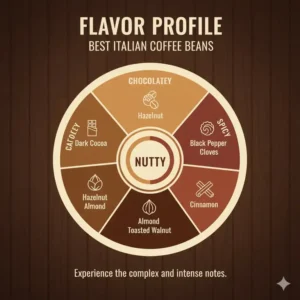
Feature Comparison Matrix
| Product | Beans Type | Best For | Primary Flavor | Crema Level |
| Lavazza Super Crema | 60/40 Blend | Lattes/Cappuccinos | Honey/Almond | ⭐⭐⭐⭐⭐ |
| Illy Classico | 100% Arabica | Straight Espresso | Caramel/Floral | ⭐⭐⭐ |
| Pellini No. 82 | Blend | Strong Kick | Dark Chocolate | ⭐⭐⭐⭐ |
| Passalacqua Mehari | Blend | Moka Pot/Naples style | Toasted Wood | ⭐⭐⭐⭐⭐ |
| Segafredo Intermezzo | Blend | Budget/Daily Drink | Spicy | ⭐⭐⭐⭐ |
| Danesi Doppio | 100% Arabica | Delicate Palates | Fruit/Cream | ⭐⭐ |
| Filicori Delicato | Blend | Connoisseurs | Cereal/Chocolate | ⭐⭐⭐⭐ |
The Science of the “Best Italian Coffee Beans”
When you search for best italian coffee beans, you aren’t just looking for beans grown in Italy—because coffee doesn’t actually grow there! The “Italian” part refers to the roasting style and the blending tradition.
Italian roasters are masters of taking beans from various origins—Brazil, Ethiopia, Vietnam—and combining them to create a consistent flavor year after year. While American “single-origin” coffee focuses on the unique quirks of one farm, Italian coffee focuses on the harmony of the blend.
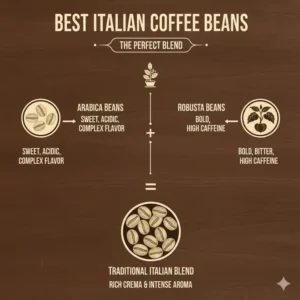
Arabica vs. Robusta: The Italian Secret
In the US, “100% Arabica” is often marketed as a sign of quality. However, the best coffee beans from Italy often include a percentage of Robusta. Why?
-
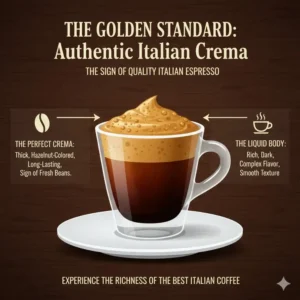
Crema: Robusta produces significantly more crema (that beautiful foam on top).
-
Body: It adds a “mouthfeel” that makes the coffee feel thicker.
-
Caffeine: Robusta has about double the caffeine of Arabica.
Budget vs. Premium: Is it Worth the Extra Penny?
Let’s look at how the price spectrum affects your cup of joe.
| Category | Price Range (Approx) | What You Get | Example |
| Budget | $15 – $20 per kg | Reliable, high caffeine, great for milk. | Segafredo Intermezzo |
| Mid-Range | $25 – $35 per kg | Balanced blends, better bean selection. | Lavazza Super Crema |
| Premium | $40 – $55 per kg | Specialty tins, rare Arabica, artisan roasts. | Illy Classico, Danesi |
Why Choose Coffee Beans Italian over Local Roasts?
I often get asked, “Why should I buy beans shipped from Italy when I can buy fresh beans from a roaster down the street?” It’s a fair question. The answer lies in the profile.
-
Low Acidity: Most US specialty coffee is “light roast,” which tastes like fruit or lemon. Many people find this too sour. Italian coffee beans are roasted longer to remove that acidity, resulting in a smooth, chocolatey taste.
-
Consistency: Large Italian roasters use sophisticated technology to ensure that the bag you buy in 2026 tastes exactly like the one you bought in 2020.
-
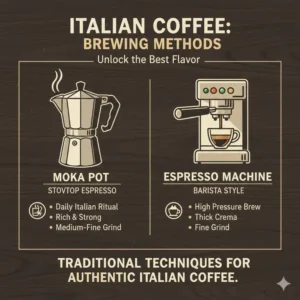
The Moka Pot Factor: If you use a Bialetti Moka Pot, these beans are literally designed for it. The particle density and oil content of a coffee beans italian roast interact perfectly with the pressure of a stovetop brewer.
Comparison: Traditional vs. Modern Brewing
| Metric | Italian Roast (Traditional) | Light Roast (Modern) |
| Brew Temperature | 195-200°F | 205-210°F |
| Grind Size | Fine | Medium-Fine |
| Sugar/Milk Pairing | Excellent | Optional/Avoid |
| Bitterness | Pleasant/Charred | Minimal/Acidic |
Deep Dive: Regional Roasting Styles in Italy
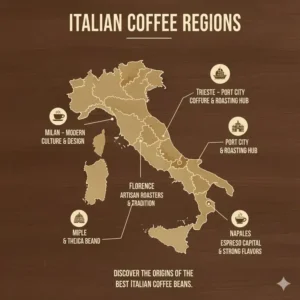
Did you know that Italy has “coffee borders”? The further south you go, the darker and more intense the coffee gets.
Northern Italy (Milan, Turin, Trieste)
-
Style: Lighter roasts, 100% Arabica or 90/10 blends.
-
Flavor: Elegant, acidic, fruity.
-
Top Brand: Illy Classico.
Central Italy (Rome, Florence)
-
Style: Medium-dark roasts.
-
Flavor: Balanced, nutty, toasted bread.
-
Top Brand: Danesi Caffè Doppio.
Southern Italy (Naples, Sicily)
-
Style: Very dark, high Robusta content.
-
Flavor: Smoke, dark chocolate, intense bitterness, massive crema.
-
Top Brand: Passalacqua Mehari.
How to Store Your Best Italian Coffee Beans for Maximum Freshness
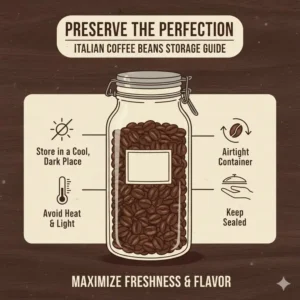
Buying the best italian coffee beans is only half the battle. If you leave them in a paper bag on your counter, they will be stale in 72 hours.
-
Avoid the Fridge: Contrary to popular belief, the fridge is a nightmare for coffee. The moisture and smells (looking at you, leftover onions) will ruin the delicate oils.
-
Airtight is Right: Use an opaque, airtight container with a CO2 valve.
-
Grind on Demand: Once you grind the bean, the surface area increases by thousands of percent, leading to instant oxidation. Always grind right before you brew!
Storage Solution Comparison
| Storage Method | Freshness Duration | Effectiveness |
| Original Bag (clipped) | 5-7 Days | ⭐⭐ |
| Plastic Tupperware | 10-14 Days | ⭐⭐⭐ |
| Vacuum Sealed Container | 3-4 Weeks | ⭐⭐⭐⭐⭐ |
| Freezer (Double Bagged) | 2-3 Months | ⭐⭐⭐⭐ |
Understanding Variation Keywords for Your Search
When you are out shopping or searching online, you might see different terms used interchangeably. It’s helpful to know what people are actually looking for when they type into Google:
-
Italian coffee beans whole bean: This is what I always recommend. Whole beans hold their flavor much longer than pre-ground coffee.
-
Best espresso beans from Italy: Since espresso is the national drink of Italy, almost all their export beans are optimized for this method.
-
Italian roast coffee beans: Be careful here! In the US, “Italian Roast” often just means “we burnt the beans.” Real coffee beans italian products are roasted with much more nuance than just “burnt.”
-
Italin coffee beans (common typo): Even if you misspell it, you are likely looking for the same rich, dark profiles discussed here.
-
Best Italian coffee bean brands: Brands like Lavazza, Illy, and Kimbo dominate this space.
✨ Step into the world of premium flavor today! 🚀
🔍 Ready to experience the difference? Click on any of our top-rated best italian coffee beans above to see the latest deals on Amazon. Don’t settle for mediocre mornings—your perfect cup of espresso is just a click away. ✨
Conclusion: Finding Your Perfect Roast
Choosing the best italian coffee beans is a journey of personal taste. If you love a smooth, refined cup that you can drink black, start with the Illy Classico. If you want that classic, thick-as-molasses espresso that can stand up to a lot of steamed milk, you cannot go wrong with Lavazza Super Crema or the intense Passalacqua Mehari.
The beauty of Italian coffee lies in its history. Every bag represents over a century of tradition, passed down through generations of roasting families. By bringing these beans into your home, you aren’t just making a drink; you are participating in a global culture of excellence.
FAQs
❓ What makes Italian coffee beans different from regular coffee beans?
❓ Can I use Italian coffee beans in a regular drip coffee maker?
❓ Why does my Italian espresso have so much foam (crema)?
❓ Are 100% Arabica Italian beans better than blends?
❓ How should I grind Italian coffee beans for a Moka Pot?
Recommended for You
- Best Coffee for Cappuccino: 7 Top Picks for 2026! Booyah!
- 7 Best Italian Espresso Coffee Brands to Elevate Your 2026 Brew
- 7 Best Italian Espresso Coffee Beans for the Perfect Brew in 2026
Disclaimer: This article contains affiliate links. If you purchase products through these links, we may earn a small commission at no additional cost to you.
✨ Found this helpful? Share it with your friends! 💬🤗
[addtoany]
