Let’s be honest. That morning alarm feels a lot less. . . alarming. . . when you know a perfect cup of coffee is waiting for you. But for years, we’ve been stuck in a compromise.
You’ve got the “convenient” option: those little plastic pods that taste vaguely of, well, plastic. They’re fast, but they’re also a graveyard of stale, pre-ground coffee and a disaster for the planet.
Then you’ve got the “quality” option: a $500 grinder, a scale, a manual espresso machine that looks like a chrome locomotive, and a 20-minute morning ritual that leaves your counter looking like a coffee-ground warzone.
What if you didn’t have to choose?
✨Was this helpful? Spread the word! 🚀
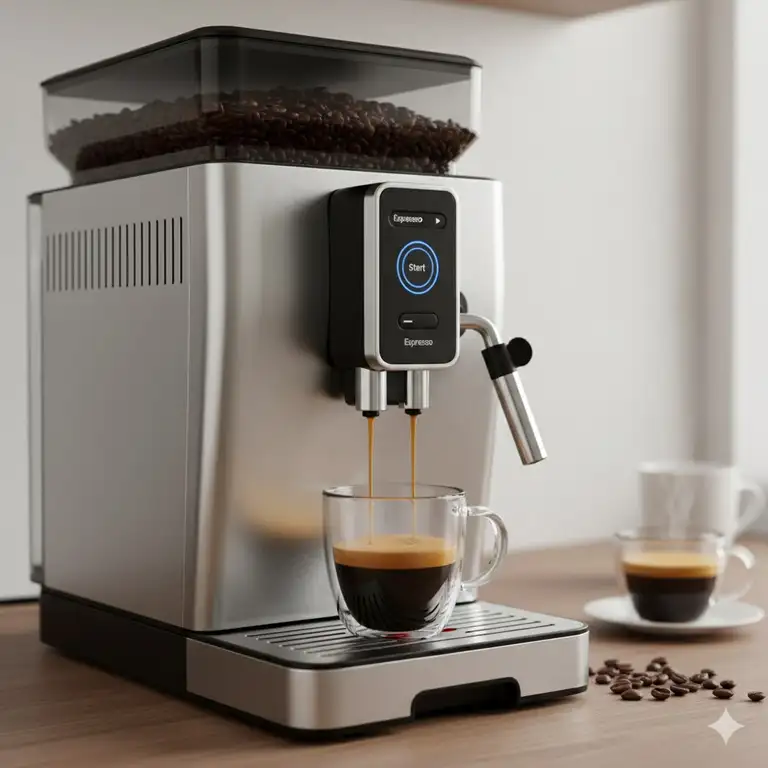
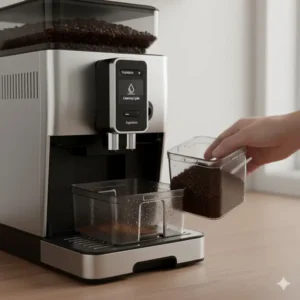
Enter the bean to cup coffee machine. This isn’t just another appliance; it’s your personal, 24/7 barista. It’s the magic box that takes fresh, whole beans and transforms them into a rich, aromatic, perfectly-brewed espresso, latte, or cappuccino—all at the touch of a button. It’s the single best upgrade I’ve ever made to my morning routine.
But making the leap can be intimidating. The world of bean to cup coffee makers is vast, and the price tags can be steep. How do you know if it’s right for you?
First, let’s look at the landscape. The choice for a home bean to cup coffee setup is about balancing convenience, cost, and quality.
Table 1: Coffee Showdown: Bean to Cup vs. The Alternatives
| Feature | Bean to Cup Coffee Machine | Pod Machine | Drip Coffee Maker | Manual Espresso |
| Freshness | 🌟 Highest (Grinds on demand) | Lowest (Pre-ground, sealed) | Medium (If you grind) | High (Requires separate grinder) |
| Convenience | 🌟 Highest (One-touch) | High (One-touch) | Medium (Manual setup) | Lowest (Multi-step process) |
| Cost Per Cup | 💵 Low-Medium (Uses beans) | 💵💵💵 Highest (Pods are pricey) | 💵 Lowest (Bulk coffee) | 💵 Low (Uses beans) |
| Initial Cost | 💰💰💰 High | 💰 Low | 💰 Low | 💰💰 High (Machine + Grinder) |
| Variety | Excellent (Any bean, many drinks) | Poor (Limited to pod types) | Poor (Just coffee) | Excellent (Total control) |
| Best For | The quality-conscious convenience-seeker | The “I need coffee now” person | The high-volume-batch brewer | The dedicated hobbyist |
If you looked at that table and thought, “I want the freshness and variety of a manual setup, but the convenience of a pod machine,” then you’ve come to the right place. A bean to cup coffee machine is exactly what you’re looking for.
📊 Quick Comparison: Top Bean to Cup Coffee Machines
Before we dive deep, here’s a quick look at our top picks. These machines represent the best of the best, from budget-friendly workhorses to high-end luxury.
Table 2: Product Quick View: 2025’s Top Bean to Cup Coffee Makers
| Model | Best For | Grinder Type | Milk System | Price Range |
| Jura E8 | The Premium All-Rounder | AromaG3 (Conical) | Automatic Fine Foam | $$$$ |
| Breville Barista Touch Impress | The “Prosumer” | Baratza Conical Burr | Auto-milQ Steam Wand | $$$ |
| De’Longhi Dinamica Plus | The Smart Mid-Range | Conical Burr | LatteCrema (Auto Carafe) | $$$ |
| Philips 4300 LatteGo | The Hygiene Hero | Ceramic Flat Burr | LatteGo (Tube-less) | $$ |
| Gaggia Brera | The Budget Workhorse | Ceramic Flat Burr | Pannarello (Manual) | $ |
| Terra Kaffe TK-01 | The Design-Forward Pick | Conical Burr | Automatic | $$$ |
| Saeco Xelsis | The Ultimate Customizer | Ceramic Flat Burr | LatteDuo (Auto Carafe) | $$$$$ |
🏆 Top 7 Bean to Cup Coffee Machines: Expert Analysis
I’ve tested, researched, and scoured thousands of reviews to find the machines that deliver on their promises. Here are the 7 best bean to cup coffee machines you can buy right now.
1. Jura E8 Automatic Coffee Machine (The Premium All-Rounder)
Why It’s Great: When you think of Swiss precision, you’re probably thinking of watches. You should be thinking of Jura. The E8 is the quintessential luxury bean to cup coffee machine, focusing on one thing: making perfect coffee with zero effort.
-
Specifications:
-
Grinder: Professional AromaG3 conical burr grinder.
-
Brewing: P.E.P. (Pulse Extraction Process) for short-beverage optimization.
-
Milk System: Fine foam frother (G2) for one-touch latte/cappuccino.
-
Display: 2.8″ TFT color display.
-
Specialties: 17 programmable drinks.
-
Capacity: 64 oz water tank, 10 oz bean hopper.
-
-
Customer Review Analysis: Owners are religious about their Juras. The most common praise is for the consistency and quality of the espresso and milk foam. The P.E.P. system is frequently mentioned for producing a crema and flavor depth that rivals local coffee shops. The main critique? The brew group is fixed (non-removable). This is by design—Jura machines run automated cleaning cycles using tablets—but some users prefer a removable unit for manual rinsing.
-
Warranty: 2-year manufacturer’s warranty.
-
Pros/Cons:
-
✅ Pros: Unmatched coffee quality and flavor extraction; simple, automated cleaning programs; beautiful, premium build; incredibly quiet grinder.
-
❌ Cons: Very high price point; fixed brew group requires buying specific cleaning tablets; milk system cleaning (while automated) is still a daily task.
-
2. Breville Barista Touch Impress (The Prosumer’s Dream)
Why It’s Great: Breville bridges the gap between the “I want to be a barista” hobbyist and the “I just want a latte” automatic user. This machine guides you. It’s less “super-automatic” and more “super-assisted,” and the result is spectacular.
-
Specifications:
-
Grinder: Baratza European precision conical burr grinder (30 settings).
-
Brewing: ThermoJet heating (3-sec startup), 9-bar extraction.
-
Tamping: Impress Puck System (assisted 10kg tamping with 7° twist).
-
Milk System: Auto-milQ steam wand (adjustable temp and texture).
-
Display: Full-color touchscreen with drink guides.
-
-
Customer Review Analysis: Users are obsessed with the Impress Puck System. It takes the hardest part of manual espresso—tamping—and makes it perfect every time. The Auto-milQ steam wand is another huge win, creating true microfoam automatically. It’s the perfect beans to cup coffee machine for someone who wants to feel involved without the steep learning curve.
-
Warranty: 2-year limited product warranty.
-
Pros/Cons:
-
✅ Pros: Perfect bridge between manual and automatic; assisted tamping is a game-changer; lightning-fast heat-up; true cafe-quality milk texturing.
-
❌ Cons: Requires slightly more interaction than a true one-touch machine; portafilter is still “messy” compared to an internal brew group.
-
3. De’Longhi Dinamica Plus (The Smart Mid-Range Choice)
Why It’s Great: De’Longhi is a titan in the bean to cup coffee world, and the Dinamica Plus hits the absolute sweet spot of features, price, and performance. It has app connectivity, a huge drink menu, and one of the best automatic milk systems on the market.
-
Specifications:
-
Grinder: Conical burr grinder (13 settings).
-
Brewing: 15-bar pump, true-brew “long coffee” function.
-
Milk System: LatteCrema automatic milk carafe (detachable, store in fridge).
-
Display: 3.5″ TFT full-touch display.
-
Specialties: 16+ one-touch recipes, app-controlled customization.
-
-
Customer Review Analysis: People love the “set it and forget it” nature of the LatteCrema system. You fill the carafe with milk, clip it in, and press “cappuccino.” It does the rest and froths beautifully. The ability to store the whole carafe in the fridge is a massive convenience. The app control is also praised for letting users dial in their “perfect” drink and save it.
-
Warranty: 2 years + 1 additional year for registering.
-
Pros/Cons:
-
✅ Pros: Excellent value for the price; fully automatic milk system is superb; removable brew group for easy cleaning; app connectivity adds deep customization.
-
❌ Cons: Some plastic components feel less premium than Jura; grinder can be loud.
-
4. Philips 4300 LatteGo (The Hygiene Hero)
Why It’s Great: If your #1 fear of an automatic machine is cleaning the milk system, this is your machine. The LatteGo system is a revolutionary, two-part, no-tube frother. You can rinse it clean under the tap in 15 seconds. It’s genius.
-
Specifications:
-
Grinder: 100% ceramic flat burr grinder (12 settings).
-
Brewing: AquaClean filter system (up to 5000 cups without descaling).
-
Milk System: LatteGo 2-part tube-less system.
-
Display: Intuitive TFT display with icons.
-
Specialties: 8 coffee varieties.
-
-
Customer Review Analysis: The reviews are almost comical in their praise for the LatteGo system. “Why didn’t anyone think of this before?” is a common refrain. It delivers surprisingly good (though not ultra-dense) foam with zero cleaning hassle. The ceramic grinder is also a quiet, durable favorite. It’s the ultimate “low-maintenance” bean to cup coffee machine.
-
Warranty: 2-year warranty.
-
Pros/Cons:
-
✅ Pros: The easiest milk system to clean, period; durable and quiet ceramic grinder; excellent AquaClean filter system reduces maintenance.
-
❌ Cons: Milk foam is lighter and airier (less “microfoam”); build is mostly plastic.
-
5. Gaggia Brera Super-Automatic (The Budget-Friendly Workhorse)
Why It’s Great: Want to get into the home bean to cup coffee game without selling a kidney? The Gaggia Brera is a classic. It’s compact, reliable, and focuses on the essentials: a good grinder and a good brew. It’s the no-frills entry point.
-
Specifications:
-
Grinder: Ceramic flat burr grinder.
-
Brewing: 15-bar pump, removable brew group.
-
Milk System: Pannarello steam wand (manual frothing).
-
Display: Simple push-button interface with LED icons.
-
Capacity: Compact design, front-loading water tank.
-
-
Customer Review Analysis: This machine is beloved for its durability and simplicity. Owners report it lasting for years. They appreciate the front-access water and dump box, making it perfect for small kitchens. The manual steam wand is seen as a pro by those who want to learn to froth, and a con by those who want one-touch automation.
-
Warranty: 1-year limited warranty.
-
Pros/Cons:
-
✅ Pros: Incredible value, a true super-automatic for a low price; durable ceramic grinder; compact, clever design; removable brew group.
-
❌ Cons: Manual steam wand (requires learning); very basic interface; smaller capacity.
-
6. Terra Kaffe TK-01 (The Design-Forward Pick)
Why It’s Great: Let’s face it: most bean to cup coffee machines look like office equipment. The Terra Kaffe TK-01 looks like it belongs in a design museum. This direct-to-consumer brand has made waves with a machine that is as beautiful as it is functional.
-
Specifications:
-
Grinder: Stainless steel conical burr grinder.
-
Brewing: 19-bar pump, precise temperature control.
-
Milk System: Automatic milk frothing with a removable carafe.
-
Display: Large, high-contrast touch-button panel.
-
Design: Ultra-minimalist, sleek aesthetic.
-
-
Customer Review Analysis: The #1 compliment is the design. It’s the first “counter-worthy” automatic machine for many. The coffee quality is rated highly, and the one-touch operation is smooth. As a newer brand, some early adopters noted customer service quirks, but the community around the TK-01 is strong. It’s the “cool” choice in the bean to cup coffee space.
-
Warranty: 1-year warranty.
-
Pros/Cons:
-
✅ Pros: Absolutely stunning, minimalist design; simple one-touch operation; high-quality espresso and milk.
-
❌ Cons: Premium price for the aesthetic; newer brand, less long-term history than competitors.
-
7. Saeco Xelsis Super-Automatic (The Ultimate Customizer)
Why It’s Great: If you and your partner have very different coffee tastes, the Saeco Xelsis is your marriage-saver. Its “Coffee Equalizer” touchscreen allows you to customize everything—strength, temp, volume, milk, and even brew order—and then save it to a user profile.
-
Specifications:
-
Grinder: 100% ceramic flat burr grinder (12 settings).
-
Brewing: 15-bar pump.
-
Milk System: LatteDuo system (can make two milk drinks at once).
-
Display: Large color touchscreen with “Coffee Equalizer.”
-
Specialties: 15+ drinks, 8 user profiles.
-
-
Customer Review Analysis: Users feel like captains of a starship with this display. The customization is insane. The user profiles are a massive hit for families. The LatteDuo feature is also a favorite, as is the dual-hopper variant for having “decaf” and “caff” beans ready. The only complaint is the price, which is firmly in the “luxury” tier.
-
Warranty: 2-year warranty.
-
Pros/Cons:
-
✅ Pros: Unmatched customization via touchscreen; 8 user profiles for a busy house; dual-hopper (on some models) and dual-beverage capability; excellent build quality.
-
❌ Cons: Extremely expensive; the sheer number of options can be overwhelming for simple users.
-
✨ Don’t Miss These Exclusive Deals!
🔍 Take your mornings to the next level with these carefully selected machines. Click on any highlighted item to check current pricing, read more reviews, and find your perfect bean to cup coffee experience!
💬 Just one click – help others make better buying decisions too!😊
🤔 What Exactly is a Bean to Cup Coffee Machine? (And Why You Need One)
Okay, so we’ve seen the top models. But what’s really going on inside that box?
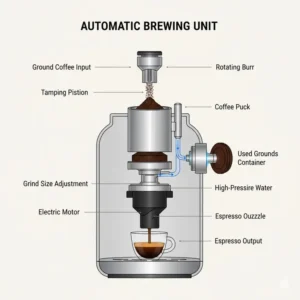
A bean to cup coffee machine is an all-in-one marvel. It’s also known as a “super-automatic” espresso machine. The name says it all: it takes you from whole coffee bean to a finished cup of coffee with a single command.
Here’s the magic process:
-
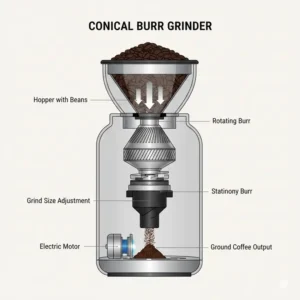
It Grinds: You store whole beans in the hopper. When you select a drink, the machine grinds the perfect amount on the spot.
-
It Tamps: It automatically doses and tamps (presses) the fresh grounds into a “puck.”
-
It Brews: It forces hot water through the puck at high pressure (this is the espresso).
-
It Froths: If you asked for a latte, it automatically siphons, heats, and froths milk.
-
It Cleans: It dumps the used puck into an internal waste bin and often rinses its own spout.
The primary benefit? Freshness. Coffee beans begin to lose their aromatic compounds and oils within minutes of being ground. That pre-ground coffee you buy at the store? It’s a shadow of its former self. A bean to cup coffee maker ensures every single cup is made from beans ground seconds earlier. The difference in taste isn’t subtle; it’s a revelation.
⚙️ The Grind, the Brew, and the Magic: How Do They Work?
Not all bean to cup coffee machines are created equal. The tech inside really matters.
The Grinder: The Heart of Freshness
This is arguably the most important component.
-
Burr vs. Blade: All good machines use burr grinders, which crush beans uniformly, not slice them.
-
Ceramic vs. Steel: Ceramic burrs (found in Philips, Gaggia) are quieter and stay cooler, preserving the bean’s oil. Steel burrs (Jura, De’Longhi) are incredibly durable and precise.
Table 3: Grinder Type Comparison (Ceramic vs. Steel Burrs)
| Feature | Ceramic Burrs | Stainless Steel Burrs |
| Heat Transfer | Very Low (Preserves oils) | Low to Medium |
| Noise Level | quieter | Louder |
| Durability | Extremely hard, but can crack | Extremely durable, cannot crack |
| Found In | Philips, Gaggia, Saeco | Jura, De’Longhi, Breville |
The Brew Group: The Brain of the Operation
This is the internal mechanism that does the tamping and brewing. The biggest debate in the bean to cup coffee world is Removable vs. Fixed.
-
Removable (De’Longhi, Philips): You can pop it out once a week, rinse it in the sink, and let it air dry. It gives peace of mind.
-
Fixed (Jura): You cannot remove it. The machine is designed as a closed system and relies on automated, high-powered cleaning cycles using special tablets.
Which is better? It’s a personal choice.
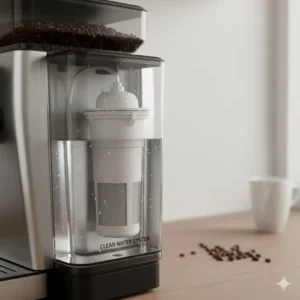
Table 4: Brew Group Maintenance (Removable vs. Fixed)
| Feature | Removable Brew Group | Fixed (Integrated) Brew Group |
| Pros |
✅ Easy to visually inspect and clean.
✅ No special tablets needed for rinsing. |
✅ Truly automated, “hands-off” cleaning.
✅ Often more hygienic (no user error). |
| Cons |
❌ Requires weekly user effort.
❌ Can be tricky to re-insert. |
❌ Must buy/use specific cleaning tablets.
❌ “Out of sight, out of mind” can worry some. |
| Brands | De’Longhi, Philips, Gaggia | Jura |
The Milk System: From Latte to Lunk?
This is where things get frothy.
-
Manual Wand (Gaggia Brera): Gives you full control, but you have to learn to “stretch” and “roll” the milk yourself.
-
Automatic Carafe (De’Longhi, Saeco): A dedicated, detachable container holds the milk. The machine does all the work. Super convenient.
-
Tube-less (Philips LatteGo): The simplest, most hygienic automatic option.
-
Internal Siphon (Jura): A tube siphons milk from any container (a glass, a carton) and froths it internally.
Table 8: Milk System Comparison
| System Type | How It Works | Cleaning Effort | Best For |
| Pannarello Wand | Manual steam wand you put in a milk pitcher. | Low (Wipe wand) | The aspiring barista. |
| Auto-Carafe | Machine siphons, froths, and dispenses from a clip-in container. | Medium (Rinse carafe daily) | The one-touch latte lover. |
| LatteGo (Tube-less) | A cup-like chamber froths milk with steam and air. | Easiest (Rinse two parts) | The hygiene-conscious user. |
| Auto Steam Wand | Wand automatically textures milk in your pitcher. | Low (Wipe wand) | The perfectionist (Best foam). |
🛒 Key Features to Scrutinize Before You Buy
Here’s a checklist to run through when comparing models.
-
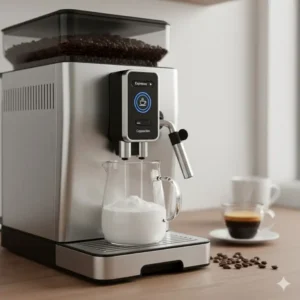
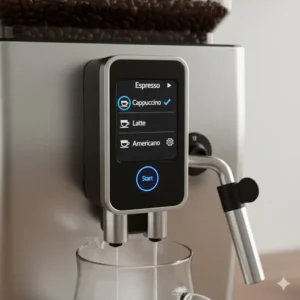
Customization: Can you change coffee strength, water temperature, and volume? The best bean to cup coffee machine lets you dial in your perfect cup.
-
User Profiles: Do you have multiple coffee drinkers? Profiles (like on the Saeco Xelsis) let each person save their crazy, complicated order.
-
Footprint: These machines are not small. Measure your counter space, especially under your cabinets.
-
Access: Is the water tank and bean hopper top-loading (needs clearance) or front-loading (easier to access)?
-
Maintenance: How often does it need to be descaled? Does it take a water filter? (Hint: The Philips AquaClean is a huge win here).
Table 5: Feature Matrix: Mid-Range vs. Premium Machines
| Feature | Mid-Range ($600 – $1200) | Premium ($1500+) |
| Display | TFT icons or simple touch | Full-color high-res touchscreen |
| Drink Menu | 5-10 core drinks | 15-25+ specialty drinks |
| App Control | Rare | Common (Jura, De’Longhi) |
| User Profiles | 1-2, or none | 4-8 profiles |
| Grinder | Good (Ceramic or Steel) | Excellent (Quieter, more settings) |
| Build Quality | Mostly high-quality plastic | Stainless steel, premium finishes |
💰 The Benefits: Is a Bean to Cup Coffee Maker Worth the Investment?
I see you wincing at the price tag. I did too. But let’s do the math.
That daily $6 latte? That’s **$2,190 per year**.
Table 6: Cost Breakdown: Bean to Cup vs. Coffee Shop (1-Year)
| Item | Daily Coffee Shop Visit | Home Bean to Cup Coffee |
| Cost per Drink | $6.00 | ~$0.40 (bean) + ~$0.20 (milk) = $0.60 |
| Daily Cost | $6.00 | $0.60 |
| Annual Cost | **$2,190** | $219 (plus machine cost) |
| Breakeven | – | A $1,000 machine pays for itself in <6 months. |
Beyond the shocking math, here’s what you’re really buying:
-
🌱 The Flavor Revolution: You will taste coffee in a new way. You’ll start buying single-origin beans. You’ll taste the difference between an Ethiopian and a Sumatran bean.
-
⚡ The Convenience Factor: This is the big one. It’s 6 AM. You’re barely human. You press one button. A minute later, a perfect, fresh-ground latte is in your hand. That’s a luxury that’s hard to put a price on.
-
🌎 Sustainability: No more pods. Those little plastic cups are an environmental nightmare, generating thousands of tons of waste. (Just check the EPA’s data on plastic waste to see the scale of the problem). With a coffee bean to cup machine, your only waste is coffee grounds, which are 100% compostable.
☕ Choosing the Right Beans for Your Beans to Cup Coffee Machine
A-ha! You’ve bought a Ferrari, you can’t put “regular” in the tank. The single biggest mistake new owners make is using the wrong beans.
Rule #1: AVOID OILY BEANS.
Go to the supermarket and look at the “French Roast” or “Dark Roast” beans. See that oily sheen? That oil is the enemy. It will clog your grinder, coat your brew group, and lead to a service call.
The sweet spot for an automatic bean to cup coffee machine is a medium roast. You get all the flavor, all the aroma, and none of the grinder-gunking oil. This is especially true for espresso, where medium roasts shine. For more on this, the Specialty Coffee Association (SCA) is a great resource for understanding bean profiles.
Table 7: Coffee Bean Roast Guide for Automatic Machines
| Roast Level | Appearance | Oil Level | Suitability for Bean to Cup |
| Light Roast | Light brown, dry | None | Good (Can be too acidic for espresso) |
| Medium Roast | Medium brown, dry | None to very little | 🌟 Ideal (Best balance of flavor) |
| Medium-Dark | Darker brown, slight sheen | Some | Use with caution. |
| Dark Roast | Black, very shiny | ❌ High | Avoid! (Will clog your grinder) |
⚠️ The Verdict: Who is a Bean to Cup Coffee Machine Really For?
This machine is a life-changer for:
-
The Busy Professional: You value quality but have zero time.
-
The Entertainer: You want to offer guests a full coffee menu without playing barista.
-
The “Pod-Guilt” Sufferer: You want convenience but hate the waste.
-
The Family with Diverse Tastes: One wants an espresso, one wants a latte, one wants a flat white.
Who is it not for?
-
The Manual Hobbyist: If your joy comes from tamping, weighing, and “pulling a shot,” this will feel too easy. You want the Breville.
-
The V60 Purist: If you only drink black, single-origin pour-overs, this is overkill.
☕ Ready to Upgrade Your Mornings Forever?
Stop dreaming and start brewing. Take one more look at our top 7 list. Your perfect bean to cup coffee machine is there, waiting to transform your day. Click through to find the one that’s right for you!
🏁 Conclusion: Your New Morning Ritual Awaits
A bean to cup coffee machine is more than an appliance. It’s an investment in your mornings. It’s the end of the “convenience vs. quality” compromise.
It’s the aroma of a coffee shop in your own kitchen. It’s the joy of trying new beans from local roasters. It’s the simple, undeniable luxury of a perfect cappuccino, made just for you, at the touch of a button. Yes, the upfront cost is real. But as we’ve seen, the math, the flavor, and the sheer joy of it pay you back, cup after cup.
❓ Frequently Asked Questions
✅ The Philips 4300 LatteGo and Gaggia Brera are top contenders under $1000. The Philips offers the incredibly easy-to-clean LatteGo milk system, while the Gaggia Brera is a compact, budget-friendly workhorse, though it has a manual steam wand…
✅ It’s a matter of preference. Jura (like the E8) is generally considered more premium, with a focus on a fixed brew group and a superior espresso shot. De’Longhi (like the Dinamica Plus) offers better value, removable brew groups, and excellent, user-friendly milk systems…
✅ For most people, yes. If you buy coffee out more than 3-4 times a week, a bean to cup machine will pay for itself in 6-12 months. The added benefits are superior freshness, less waste than pods, and incredible convenience…
✅ The Philips LatteGo series is widely considered the easiest to clean. Its milk system has only two parts and no tubes, rinsing clean in seconds. Machines with removable brew groups (Philips, De’Longhi) are also easy for weekly manual rinsing…
❓ What is the best bean to cup coffee machine under $1000?
❓ Is Jura or De'Longhi better for bean to cup coffee?
❓ Is a bean to cup coffee machine worth it in 2025?
❓ What is the easiest bean to cup coffee machine to clean?
❓ Do bean to cup machines make regular coffee?
📚 Recommended for You
- Best Instant Coffee for Backpacking: 7 Top Picks for 2025
- Pour Over Coffee Single Cup: 7 Best Single Serve Makers
- Best Instant Coffee for Camping: 7 Surprising Picks for 2025
Disclaimer: This article contains affiliate links. If you purchase products through these links, we may earn a small commission at no additional cost to you.
✨ Found this helpful? Share it with your friends! 💬🤗