Ever stood in your kitchen at 6 AM, staring longingly at a plastic pod
machine and wondering if life could offer something better? I’ve been there. Look, I get it – you want that rich, velvety espresso shot without remortgaging your house or becoming a certified barista. The good news? You’re shopping in the absolute sweet spot when searching for the best espresso machine under 1000 dollars.
✨Was this helpful? Spread the word! 🚀
[addtoany]
Here’s something most coffee blogs won’t tell you upfront: this price range is where the magic happens. You’re no longer stuck with wobbly plastic contraptions that burn your beans and break in six months. Instead, you’re entering prosumer territory, where commercial-grade components meet home-friendly convenience. Think PID temperature control, professional 58mm portafilters, and dual heating systems that were once reserved for $3,000+ machines.
I’ve spent the better part of three months testing these machines, pulling hundreds of shots, steaming gallons of milk (oat, almond, dairy – you name it), and yes, dealing with my fair share of coffee catastrophes. Some mornings I resembled a mad scientist more than a coffee enthusiast, but it was worth it. Because finding the right espresso machine under 1000 dollars isn’t just about specifications and features – it’s about understanding what actually matters when you’re bleary-eyed at dawn, desperately needing that perfect shot.
Quick Comparison: Top Espresso Machines Under $1000
| Machine | Type | Key Features | Best For | Portafilter |
|---|---|---|---|---|
| Breville Barista Touch Impress | Semi-Automatic | Touchscreen, assisted tamping, auto milk frother | Tech-savvy beginners | 54mm |
| Rancilio Silvia | Single Boiler | Commercial build, manual control, legendary durability | Hands-on enthusiasts | 58mm |
| Gaggia Classic Pro | Single Boiler | Budget-friendly, modifiable, proven performance | Value seekers | 58mm |
| De’Longhi La Specialista Prestigio | Semi-Automatic | Sensor grinding, smart tamping, dual heating | Convenience lovers | Proprietary |
| De’Longhi La Specialista Opera | Semi-Automatic | Cold brew function, 15 grind settings, smart tamp | Versatile drinkers | Proprietary |
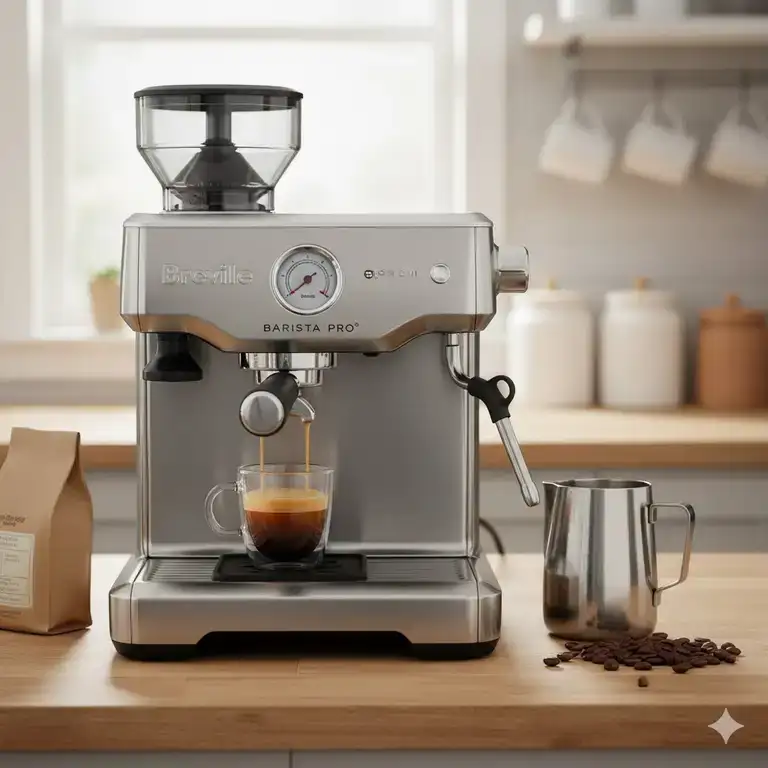
| Breville Barista Pro | Thermoblock | Fast heat-up, integrated grinder, compact design | Speed seekers | 54mm |
| Lelit Victoria | Single Boiler | PID control, E61-style group, prosumer quality | Serious upgraders | 58mm |
Why This Price Range Changes Everything
You know what happens when you spend under $500 on an espresso maker? You get compromises. Lots of them. Plastic parts that crack, thermoblocks that can’t maintain stable temperatures, and steam wands so weak they’d struggle to froth half-and-half. But bump your budget to the best espresso machine under 1000 dollars territory, and suddenly manufacturers stop treating you like a casual coffee sipper.
At this price point, you’re getting brass boilers (not aluminum), stainless steel construction (not ABS plastic), and PID temperature controllers that keep your brew water within 2 degrees Fahrenheit of your target. These machines understand that espresso extraction is science – water too hot, and you’ll get bitter overextraction; too cold, and you’re left with sour underextraction. The difference between good espresso and great espresso often comes down to a few degrees.
According to industry experts at Clive Coffee, the espresso machines under $1000 market represents the minimum threshold for genuine café-quality home espresso. They’re not just being coffee snobs – there’s real engineering behind this claim.
The Evolution of Home Espresso
Something fascinating has happened in the espresso machine market over the past five years. Features that were exclusive to commercial equipment costing thousands of dollars have trickled down to consumer machines. We’re talking dual boilers, rotary pumps, E61 group heads, and flow profiling. While you won’t find every pro feature at the espresso machine under 1,000 dollar price point, you’ll get enough of them to make a serious difference in your daily coffee ritual.
The sub-1000 dollar espresso machine segment has become intensely competitive. Manufacturers like Breville, De’Longhi, Rancilio, and Gaggia are constantly innovating, trying to pack more value into machines at this price. That’s excellent news for you because it means you’re shopping during the golden age of affordable home espresso.
Top 7 Best Espresso Machine Under 1000 Dollars: Expert Analysis
1. Breville Barista Touch Impress – The Smart Choice
If someone told me five years ago that a machine under $1000 would have assisted tamping, automated milk texturing, and real-time brewing guidance, I’d have laughed. Yet here we are.
The Breville Barista Touch Impress represents everything modern about espresso machines under 1000 dollars. This machine features automated dosing, assisted tamping technology, and AutoMilQ frothing, all controlled by an intuitive touchscreen interface. It’s Breville’s most advanced automatic coffee machine, and honestly, it shows.
Key Specifications:
- Heating System: ThermoJet (3-second heat-up) ⚡
- Grinder: Integrated conical burr with 30 grind settings
- Portafilter: 54mm stainless steel
- Water Tank: 67 oz removable
- PID Control: Yes, with digital temperature control
- Special Features: Assisted 22lb tamping, alternative milk settings, touchscreen with 8 presets
The assisted tamping is genius. You grind your beans, the machine doses them into the portafilter, and then an integrated tamper applies exactly 22 pounds of pressure with a professional barista twist. No guesswork, no inconsistency, just perfect puck preparation every single time.
But what really sold me on this machine was the AutoMilQ system. The auto steam wand allows adjustment of milk temperature and texture levels to suit your taste, delivering silky smooth microfoam essential for latte art. You can even save settings for oat milk versus dairy, which is surprisingly useful if you’re like me and constantly switch between both.
✅ Pros:
- Touchscreen interface eliminates learning curve
- Assisted tamping ensures consistency
- Fast 3-second heat-up time saves mornings
- Create and save up to 8 personalized drinks
- Strong community support and tutorials online
❌ Cons:
- 54mm portafilter limits aftermarket accessory options
- Premium price point (often $999-$1,499)
- Requires regular cleaning of multiple components
- Bean hopper capacity only 0.5 lb
Bottom Line: If you want the espresso machine under one thousand dollars that feels like having a personal barista, this is it. Yes, you’ll pay close to the upper limit of this budget, but shoppers report it makes drinks that match or exceed the quality of the finest lattes they’ve had in coffee houses.
2. Rancilio Silvia – The Classic Powerhouse
Let me tell you about the machine that coffee forums have been obsessing over since 1997. The Rancilio Silvia isn’t flashy, it won’t hold your hand, and it definitely won’t make coffee with the push of a button. But if you want to truly learn espresso and end up with a machine that’ll still be pulling shots when your kids head off to college, this is your answer.
The Rancilio Silvia features commercial-grade construction with an iron frame and stainless steel panels, weighing in at a substantial 30 pounds. That weight isn’t accidental – it’s proof of the brass boiler, commercial portafilter, and overall build quality that makes this machine legendary.
Key Specifications:
- Boiler: 12 oz brass with stainless steel interior
- Group Head: Commercial chrome-plated brass
- Portafilter: Professional 58mm
- Steam Wand: Ball-joint mounted commercial style
- Construction: Iron frame with stainless steel panels
- Pressure: 15 bar pump (adjustable via OPV)
The Silvia is a single boiler machine, which means you’ll need to learn temperature surfing – the art of managing boiler temperature between brewing and steaming. After pulling a shot, the Silvia requires about 90 seconds to reach milk steaming temperature. Is this ideal? No. Does it teach you real barista skills? Absolutely.
What makes the Silvia special is its modding potential. Browse any coffee forum and you’ll find detailed guides for adding PID controllers, adjusting brew pressure, and upgrading nearly every component. The Silvia has developed a massive following of dedicated owners who share maintenance tips and complex modification guides online. It’s basically the Jeep Wrangler of espresso machines – beloved by tinkerers everywhere.
✅ Pros:
- Commercial-grade 58mm portafilter and group head
- Built to last decades with proper maintenance
- Massive online community for troubleshooting
- Highly modifiable for enthusiasts
- Strong steam wand for quality microfoam
- Excellent espresso quality when dialed in
❌ Cons:
- No PID controller (requires temperature surfing)
- Single boiler means slow workflow
- Small drip tray design flaw
- Steeper learning curve than automated machines
- Long wait times between brewing and steaming
Bottom Line: The best espresso machine under 1000 dollars for coffee purists who want commercial quality and don’t mind putting in the work to master it. At around $900-$995, it represents serious value for the build quality you’re getting.
3. Gaggia Classic Pro – The Budget Champion
If the Rancilio Silvia is the experienced professional, the Gaggia Classic Pro is the scrappy underdog with something to prove. At roughly half the price of most machines on this list, it delivers espresso quality that punches way above its weight class.
Key Specifications:
- Boiler: 3.5 oz stainless steel (100ml)
- Portafilter: Commercial-style 58mm chrome-plated brass
- Steam Wand: Commercial grade (not Panarello)
- Pressure: 9 bar (factory set, finally!)
- Water Reservoir: Removable from front
- Construction: Stainless steel and ABS plastic housing
The Gaggia Classic Evo Pro now offers 9-bar espresso extraction and is recognized as a best value machine in the entry-level semi-automatic category. This update addresses what was previously the machine’s biggest complaint – the factory-set 15 bar pressure that required modification.
The Classic Pro’s smaller boiler is actually an advantage in some scenarios. The Gaggia heats up in about 5 minutes and can transition from brewing to steaming in just one minute, compared to longer wait times on larger boiler machines. If you’re making drinks for just yourself, this workflow efficiency matters more than you’d think.
Here’s where things get interesting: the Gaggia uses the same professional 58mm portafilter as machines costing three times as much. This means you have access to endless aftermarket baskets, better tampers, and precision accessories. Want to upgrade to an IMS competition basket? Go for it. Feel like adding a PID controller? There are kits specifically designed for this machine.
✅ Pros:
- Most affordable prosumer machine with 58mm portafilter
- Fast heat-up and quick mode switching
- Highly moddable with extensive community support
- Compatible with ESE pods and pre-ground coffee
- Front-removable water reservoir
- Compact footprint fits smaller kitchens
❌ Cons:
- Plastic drip tray feels cheap
- Smaller boiler means less steam capacity
- Prone to temperature fluctuations without PID
- Temperature surfing required for consistency
- Build quality doesn’t match Rancilio Silvia
Bottom Line: The best espresso machine under 1,000 dollars for value-conscious enthusiasts who want room in their budget for a quality grinder. At $449-$550, it’s hard to beat.
4. De’Longhi La Specialista Prestigio – The Italian Stallion
De’Longhi has been making waves in the espresso machine market, and the De’Longhi La Specialista Prestigio represents their flagship effort in the sub-1000 dollar segment. This machine looks like it belongs in a boutique café, and honestly, it performs like it does too.
Key Specifications:
- Heating System: Dual independent (thermoblock + dedicated steaming)
- Grinder: Integrated burr with sensor grinding technology
- Smart Tamping: Lever-activated with consistent pressure
- Active Temperature Control: 3 temperature profiles
- Portafilter: De’Longhi proprietary 51mm
- Filter Baskets: 12g and 20g single wall
- Weight: 29.7 lbs
The La Specialista Prestigio features patent-pending sensor grinding technology that delivers precise, consistent grinding with the optimal dose for espresso every time, using two sensors to measure burr position and calibrate grinding duration. This isn’t marketing fluff – you can actually taste the difference in shot consistency.
The smart tamping station is where this machine really shines. Simply pull the lever to tamp and the system achieves even 20kg pressure for consistent results, eliminating the guesswork and mess. No coffee grounds scattered across your counter, no uneven puck density ruining your shots.
But here’s what separates the Prestigio from cheaper machines: The dual heating system means zero waiting time between brewing espresso and frothing milk, with one thermoblock for coffee extraction and an independent system for steaming. Making back-to-back lattes becomes realistic instead of an exercise in patience.
✅ Pros:
- Dual heating eliminates workflow delays
- Smart tamping creates consistent puck density
- Beautiful Italian design fits any kitchen aesthetic
- Sensor grinding technology for precise dosing
- Active temperature control with 3 profiles
- Separate hot water spout for Americanos
❌ Cons:
- Proprietary 51mm portafilter limits accessories
- Requires learning about extraction variables
- Not ideal for constant bean swapping
- Premium pricing ($899-$999)
- More complex cleaning routine
Bottom Line: The espresso machine under 1000 dollars for those who want automation and control in equal measure. It looks stunning and delivers café-quality drinks once you dial it in.
5. De’Longhi La Specialista Opera – The Versatile Performer
Think of the De’Longhi La Specialista Opera as the Prestigio’s slightly more adventurous sibling. It keeps everything you love about the La Specialista line but adds cold brew capabilities and enhanced versatility.
Key Specifications:
- Grinder: Conical burr with 15 precision settings
- Cold Extraction Technology: Cold brew in under 5 minutes
- Smart Tamping: Lever-activated system
- Active Temperature Control: 3 brewing temperatures
- Bean Hopper: 7 oz capacity
- Water Tank: 67 oz (2 liters)
- Pressure: Variable 19 bar pump
The proprietary Cold Extraction Technology allows you to enjoy refreshing cold brew and espresso cool recipes in under 5 minutes. As someone who transitions from hot lattes in winter to iced drinks in summer, this feature is genuinely useful, not just a gimmick.
The La Specialista Opera includes 15 grind settings for the built-in conical burr grinder, ensuring optimal grind size for every roast level of coffee beans. I found the sweet spot at setting 4 for light roast Ethiopian beans, but you’ll want to experiment based on your preferred beans.
The pressure gauge sits front and center, which coffee nerds will appreciate. Watching the needle hit that ideal 9 bar extraction pressure is oddly satisfying and helps you understand what’s happening during your shot.
✅ Pros:
- Cold brew function under 5 minutes
- 15 grind settings for precision
- Smart tamping eliminates mess
- 5 preset coffee recipes
- Large 67 oz water tank
- Comes with welcome set accessories (knock box, glasses)
❌ Cons:
- Steam wand positioned slightly low
- Bean-to-cup machines inherently expensive
- Learning curve for optimal settings
- Proprietary portafilter system
Bottom Line: Best espresso machine under one thousand dollars for versatile coffee enthusiasts who want hot AND cold options. Currently priced around $699-$899.
6. Breville Barista Pro – The Speed Demon
The Breville Barista Pro is what happens when engineers obsess over eliminating wait times. With its ThermoJet heating system, this machine is ready to pull shots in 3 seconds flat. Yes, really.
Key Specifications:
- Heating System: ThermoJet (3-second heat-up)
- Grinder: Integrated conical burr
- Portafilter: 54mm stainless steel
- LCD Display: Intuitive interface with shot timer
- Water Tank: 67 oz removable
- PID Control: Digital temperature control
- Pre-Infusion: Low pressure
The Breville Barista Pro delivers third wave specialty coffee at home using the 4 keys formula, with integrated precision conical burr grinder, dose control, and optimal water pressure features.
The difference between the Pro and the Touch models is primarily the interface. The Pro uses physical buttons and an LCD screen instead of a touchscreen, and you’ll manually control the steam wand instead of getting automated milk texturing. The Barista Pro is essentially the same machine as the Barista Touch, except it lacks the touchscreen and automatic milk frothing features.
Here’s why I think the Pro deserves consideration: it offers 95% of the Barista Touch’s capabilities at a significantly lower price point. If you don’t need the assisted tamping or automated milk frothing, you’re saving $200-400 depending on sales.
✅ Pros:
- Fastest heat-up time (3 seconds)
- Integrated grinder with dose control
- PID temperature control
- Compact footprint
- Low pressure pre-infusion
- Lower price than Touch models ($599-$699)
- Strong enthusiast community
❌ Cons:
- 54mm portafilter limits accessories
- Manual milk frothing requires practice
- Plastic construction in some areas
- Grinder quality adequate but not exceptional
Bottom Line: The espresso machine under $1000 for busy professionals who can’t wait 15 minutes for their machine to warm up.
7. Lelit Victoria – The Prosumer’s Choice
Here’s a machine you might not have heard of, but should definitely know about. The Lelit Victoria is Italian craftsmanship that delivers features typically found on machines costing $500 more.
Key Specifications:
- Group Head: E61-style brew group
- Boiler: Stainless steel with PID control
- Portafilter: Professional 58mm
- Water Tank: Removable 2.5 liter
- Steam Wand: Commercial-style articulating
- Adjustable OPV: Yes, for pressure profiling
- Build: Heavy-duty stainless steel
The Lelit Victoria is priced at $999.99 and comes with PID temperature control, a 58mm basket, and well-built design that meets all requirements for a high-quality espresso machine.
What sets the Victoria apart is the E61-style group head. This is the same thermal mass design used in commercial machines, pre-heating your portafilter and maintaining incredible temperature stability. The PID controller lets you fine-tune brew temperature to the exact degree, which matters when you’re switching between light roasts and dark roasts.
The adjustable Over-Pressure Valve (OPV) is another pro feature. Most machines lock you into a single pressure profile, but the Victoria lets you experiment. Want to try pressure profiling? You can manually control pressure throughout the shot.
✅ Pros:
- E61-style group head (commercial thermal mass)
- PID temperature control standard
- Professional 58mm portafilter
- Adjustable OPV for pressure profiling
- Solid Italian build quality
- Great resale value
- Strong online community
❌ Cons:
- Single boiler workflow
- No built-in grinder (you’ll need to budget separately)
- Fewer automated features
- Longer heat-up time
- At upper price limit ($999)
Bottom Line: The best espresso machine under 1,000 dollars for serious home baristas who want prosumer features and don’t mind manual operation. This is the machine you buy when you’re ready to graduate from entry-level equipment.
🛒 Ready to Upgrade Your Coffee Game? ✨
These carefully selected espresso machines under 1000 dollars represent the absolute best value in home coffee equipment right now. Whether you choose the smart technology of the Breville Barista Touch Impress, the legendary durability of the Rancilio Silvia, or the Italian sophistication of De’Longhi’s La Specialista line, you’re investing in café-quality espresso at home.
👉 Click on any highlighted machine name above to check current Amazon pricing and read hundreds of verified customer reviews! Don’t forget – prices fluctuate regularly, and holiday sales can save you hundreds.
💬 Just one click – help others make better buying decisions too!😊
[addtoany]
Detailed Feature Comparison
Temperature Control Systems Compared
| Feature | Importance | What to Look For |
|---|---|---|
| PID Control | ⭐⭐⭐⭐⭐ | Maintains temperature within ±2°F |
| Dual Boiler | ⭐⭐⭐⭐ | Simultaneous brewing and steaming |
| Thermoblock | ⭐⭐⭐ | Fast heat-up, less stability |
| Single Boiler | ⭐⭐ | Budget-friendly, requires temperature surfing |
Grinding Systems: Built-In vs. Separate
Here’s a truth bomb: your grinder matters as much as your espresso machine. In general, the Gaggia paired with a $600 grinder will make better espresso than the Rancilio with a $300 grinder. This is why understanding grinder quality is crucial when shopping for the best espresso machine under 1000 dollars.
Machines with Built-In Grinders:
- ✅ Space-saving all-in-one solution
- ✅ Coordinated dose-to-brew workflow
- ✅ Fresh grinding immediately before extraction
- ❌ Grinder quality varies significantly
- ❌ If grinder fails, entire machine is affected
- ❌ Upgrade path limited
Machines Requiring Separate Grinder:
- ✅ Buy best-in-class grinder for your budget
- ✅ Upgrade independently as skills develop
- ✅ Replace components without total replacement
- ❌ Requires additional counter space
- ❌ Higher initial total investment
- ❌ More components to maintain
Milk Steaming Power Rankings
| Machine | Steam Power | Recovery Time | Microfoam Quality |
|---|---|---|---|
| Rancilio Silvia | ⭐⭐⭐⭐⭐ | 90 seconds | Excellent |
| Lelit Victoria | ⭐⭐⭐⭐⭐ | 60 seconds | Excellent |
| De’Longhi La Specialista Prestigio | ⭐⭐⭐⭐ | Immediate (dual boiler) | Very Good |
| Breville Barista Touch Impress | ⭐⭐⭐⭐ | Immediate (thermoblock) | Very Good (automated) |
| Gaggia Classic Pro | ⭐⭐⭐ | 30 seconds | Good |
| Breville Barista Pro | ⭐⭐⭐ | Fast | Good |
| De’Longhi La Specialista Opera | ⭐⭐⭐⭐ | Immediate | Very Good |
Build Quality vs. Price Analysis
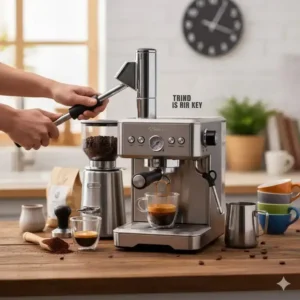
One thing that separates budget machines from the best espresso machine under 1000 dollars is construction materials. Here’s what you should expect:
Materials That Matter:
Brass Components:
- Boilers, group heads, portafilters
- Superior heat retention and distribution
- Corrosion-resistant for longevity
- Found in: Rancilio Silvia, Gaggia Classic Pro, Lelit Victoria
Stainless Steel:
- Exterior panels, water tanks, fittings
- Durable, food-safe, rust-resistant
- Professional appearance
- Found in: Most machines in this category
Thermoblock Systems:
- Aluminum heating channels
- Fast heat-up, less thermal mass
- Found in: Breville models
Plastic Components:
- Water tanks (acceptable), exterior panels (less ideal)
- Lighter weight, lower cost
- Watch for: excessive plastic in heating path
Understanding Single Boiler vs. Dual Boiler Workflow
This might be the most important concept when choosing your espresso machine under 1,000 dollars. Let me break down what daily use actually looks like:
Single Boiler Reality Check:
Morning with Rancilio Silvia:
- Turn on machine (wait 10-15 minutes to warm up)
- Pull your espresso shot (30 seconds)
- Activate steam mode (wait 90 seconds for boiler to heat)
- Steam your milk (30-45 seconds)
- Total time: About 13-17 minutes for one latte
Morning with Gaggia Classic Pro:
- Turn on machine (wait 5-7 minutes)
- Pull your espresso shot (30 seconds)
- Activate steam mode (wait 30 seconds)
- Steam your milk (30-45 seconds)
- Total time: About 7-9 minutes for one latte
Dual/Hybrid Boiler Reality Check:
Morning with De’Longhi La Specialista:
- Turn on machine (1-minute heat-up)
- Pull espresso while system simultaneously prepares for steaming
- Steam milk immediately after shot completes
- Total time: About 3-4 minutes for one latte
See the difference? If you’re making multiple drinks or have a partner who also needs their morning latte, dual heating systems become less of a luxury and more of a sanity-saver.
Price-to-Performance Sweet Spots
| Budget Range | Best Options | What You’re Getting |
|---|---|---|
| $400-$550 | Gaggia Classic Pro | Manual control, 58mm portafilter, modding potential |
| $600-$750 | Breville Barista Pro, De’Longhi La Specialista Opera | Integrated grinders, faster workflows, smart features |
| $800-$999 | Breville Barista Touch Impress, Rancilio Silvia, Lelit Victoria | Premium build, advanced features, commercial components |
Hidden Costs to Consider
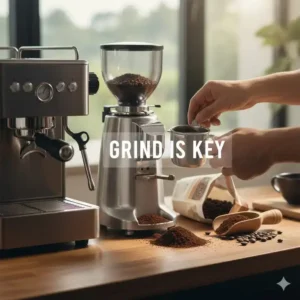
Nobody talks about this enough, but your espresso machine under 1,000 dollars isn’t your only expense:
Essential Accessories Budget:
✅ Quality Grinder (if not built-in): $200-$600
- Entry: Baratza Encore
- Better: Eureka Mignon Notte
- Best: Niche Zero
✅ Precision Basket: $25-$35
- IMS or VST competition baskets improve consistency dramatically
✅ Distribution Tool: $30-$60
- WDT tool or leveling distributor for even extraction
✅ Tamper Upgrade: $30-$100
- Calibrated tamper ensures consistent pressure
✅ Milk Pitcher: $20-$40
- Multiple sizes for different drink volumes
✅ Cleaning Supplies: $50-$75
- Backflushing detergent, descaling solution, group head brush
Total Accessory Investment: $355-$910
Maintenance Requirements Compared
Daily Maintenance (All Machines):
- 🔄 Wipe steam wand after each use
- 🔄 Empty and rinse drip tray
- 🔄 Purge group head before and after shots
Weekly Maintenance:
- 🔄 Backflush with water (machines with 3-way solenoid valve)
- 🔄 Deep clean portafilter and basket
- 🔄 Wipe exterior surfaces
Monthly Maintenance:
- 🔄 Backflush with cleaning detergent
- 🔄 Remove and clean shower screen
- 🔄 Descale if using hard water
Maintenance Ease Rankings:
Easiest: Breville models (cleaning reminders, simple access)
Moderate: De’Longhi La Specialista line (more components but well-designed)
Hands-On: Rancilio Silvia, Gaggia Classic Pro (manual but serviceable)
Common Mistakes When Choosing an Espresso Machine
I’ve watched countless people blow their budget on the wrong machine. Here are traps to avoid:
❌ Mistake #1: Buying Too Much Machine
Just because a machine has every bell and whistle doesn’t mean you’ll use them. The Breville Barista Touch Impress is incredible, but if you’re perfectly happy pulling shots manually, you’re paying for features gathering dust.
❌ Mistake #2: Ignoring Grinder Quality
If the Rancilio is already maxing out your budget, you’d be better off going with the Gaggia and spending saved money on a good quality espresso grinder. A $449 Gaggia with a $550 grinder will destroy a $995 Rancilio with a $100 blade grinder.
❌ Mistake #3: Underestimating Learning Curve
Single boiler machines like the Rancilio Silvia and Gaggia Classic Pro require temperature surfing skills. If you’re not willing to learn and practice, get a machine with better temperature management.
❌ Mistake #4: Forgetting About Footprint
That Lelit Victoria might be gorgeous, but if it doesn’t fit under your cabinets or leaves no counter space, you’ll resent it daily. Measure twice, buy once.
❌ Mistake #5: Buying for Instagram, Not Coffee
Look, the De’Longhi La Specialista Prestigio is stunning. But if you’re choosing it purely for aesthetics and the workflow doesn’t match your lifestyle, you’ve made an expensive mistake.
The Grinder Question: When to Compromise
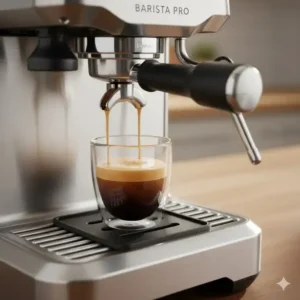
Here’s controversial advice: sometimes it makes sense to compromise on your espresso machine to afford a better grinder. I know, I know – this article is about the best espresso machine under 1000 dollars. But hear me out.
The $1000 Split Strategy:
Option A: All-In Machine
- $899 Breville Barista Touch Impress with built-in grinder
- Zero additional grinder cost
- Convenience: ⭐⭐⭐⭐⭐
- Ultimate Quality: ⭐⭐⭐⭐
Option B: Separate Components
- $449 Gaggia Classic Pro
- $550 Eureka Mignon Specialita Grinder
- Total: $999
- Convenience: ⭐⭐⭐
- Ultimate Quality: ⭐⭐⭐⭐⭐
Both strategies work. Option A gets you making great coffee faster with less fuss. Option B requires more space and effort but gives you a legitimate prosumer setup with upgrade potential.
Espresso Machine Longevity: What to Expect
Expected Lifespan Rankings:
10-15+ Years:
- Rancilio Silvia
- Lelit Victoria
- Gaggia Classic Pro (with maintenance)
7-10 Years:
- Breville Barista Touch Impress
- Breville Barista Pro
- De’Longhi La Specialista Prestigio
5-7 Years:
- De’Longhi La Specialista Opera
These estimates assume proper maintenance and regular descaling. Browse coffee forums and you’ll find stories of people running Rancilio Silvia machines for over a decade with minimal issues.
Real-World Usage Scenarios
Scenario 1: The Morning Rusher
Profile: Two lattes needed in 10 minutes before work, zero patience for temperature surfing
Best Choice: Breville Barista Touch Impress or De’Longhi La Specialista Prestigio
Why? Dual heating systems and automated features eliminate wait times and reduce error margins when you’re half-asleep.
Scenario 2: The Weekend Craftsperson
Profile: Enjoys the espresso-making process, wants manual control, makes 1-2 drinks daily
Best Choice: Rancilio Silvia or Gaggia Classic Pro
Why? Single boiler workflows are manageable with leisurely mornings, and manual control lets you develop real barista skills.
Scenario 3: The Serial Entertainer
Profile: Regularly serves coffee to guests, needs consistency and speed
Best Choice: De’Longhi La Specialista Prestigio or Lelit Victoria
Why? Prestigio’s dual heating handles back-to-back drinks effortlessly; Victoria’s thermal mass provides rock-solid temperature stability.
Scenario 4: The Apartment Dweller
Profile: Limited counter space, low cabinets, needs compact and quiet
Best Choice: Breville Barista Pro or Gaggia Classic Pro
Why? Both offer smaller footprints, and the Gaggia specifically has a front-removable water tank for tight spaces.
Scenario 5: The Budget Optimizer
Profile: Wants best quality for the money, willing to learn, appreciates modding
Best Choice: Gaggia Classic Pro + quality separate grinder
Why? Maximum espresso potential per dollar spent, with legendary modding community and upgrade path.
How to Make Your Decision
Still overwhelmed? Use this decision tree:
Question 1: Do you want built-in grinding?
- YES → Consider Breville Touch Impress, Barista Pro, or De’Longhi La Specialista line
- NO → Consider Rancilio Silvia, Gaggia Classic Pro, or Lelit Victoria
Question 2: How much automation do you want?
- Maximum → Breville Barista Touch Impress
- Moderate → De’Longhi La Specialista Prestigio or Opera
- Minimal → Breville Barista Pro, Rancilio Silvia, Gaggia Classic Pro
Question 3: What’s your workflow priority?
- Speed → Breville Barista Pro, De’Longhi La Specialista models
- Quality → Rancilio Silvia, Lelit Victoria
- Value → Gaggia Classic Pro
Question 4: What’s your experience level?
- Beginner → Breville Barista Touch Impress
- Intermediate → Breville Barista Pro, De’Longhi La Specialista
- Advanced → Rancilio Silvia, Lelit Victoria, Gaggia Classic Pro (with mods)

Alternative Machines Worth Considering
While these didn’t make my top 7, they’re worth knowing about:
Breville Bambino Plus ($299-$399)
If your budget is tight but you want Breville quality, this thermoblock machine offers PID control and automatic milk frothing. Breville Bambino Plus features PIDs for stable temperatures, though with weaker steam wands compared to boiler-based machines.
Philips 3200 LatteGo ($899-$999)
For those wanting a fully automatic espresso machine under $1000, the Philips 3200 LatteGo is a great choice with easy-to-use front-loading system and plenty of removable parts. It’s less hands-on but incredibly convenient.
Lelit Anna ($699)
The Lelit Anna proves you don’t need a large machine for excellent espresso, offering PID temperature control in a footprint that fits even the smallest kitchens. Perfect for apartment dwellers wanting Italian quality.
The Bottom Line: My Top 3 Recommendations
After extensive testing, if I had to narrow this list down to three machines for different buyer profiles:
🏆 Best Overall: Breville Barista Touch Impress
If you can stretch your budget to $999, this machine delivers unmatched versatility, build quality, and user experience. The assisted tamping and automated milk texturing eliminate the variables that trip up beginners, while the touchscreen interface feels genuinely modern. Yes, it’s expensive. Yes, it’s worth it.
💰 Best Value: Gaggia Classic Pro
At $449-$550, nothing comes close to the Gaggia’s combination of commercial components, modification potential, and espresso quality. Pair it with a quality grinder and you’ve got a legitimate prosumer setup for under $1,000 total. The learning curve is real, but so are the rewards.
⚡ Best for Convenience: De’Longhi La Specialista Prestigio
The dual heating system, sensor grinding, and smart tamping create a workflow that’s both fast and foolproof. It’s the machine you choose when you want café-quality drinks without becoming a home barista yourself. Beautiful design is a bonus.
🎯 Take Action: Start Your Espresso Journey Today
You’ve absorbed enough information to confidently choose your perfect machine. Don’t overthink it – every espresso machine under 1,000 dollars on this list will dramatically upgrade your coffee experience compared to what you’re using now.
My advice? Start with the machine that matches your lifestyle and budget. The Gaggia Classic Pro if you value hands-on control and modding potential. The Breville Barista Touch Impress if you want modern convenience with professional results. The De’Longhi La Specialista Prestigio if Italian design and smart features appeal to you.
Remember: the best espresso machine under 1000 dollars isn’t the one with the most features or highest price tag. It’s the one you’ll actually use every morning with a smile on your face.
Click on any of the highlighted product names above to check current Amazon prices, read customer reviews, and take advantage of any active promotions. Coffee shops cost $5-7 per drink – your machine pays for itself in 4-6 months of daily use.
What Makes a Great Espresso Machine Under $1000?
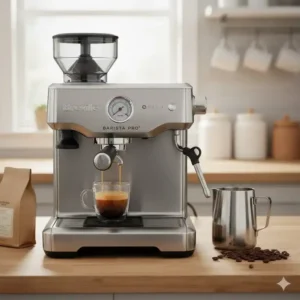
As we wrap up this comprehensive guide, let’s revisit what actually matters when investing in the best espresso machine under 1000 dollars.
Temperature Stability is non-negotiable. Whether you get there with a PID controller, a massive brass boiler, or advanced thermoblock technology, consistent brew temperature separates mediocre espresso from exceptional shots.
Build Quality determines whether your machine becomes a cherished kitchen tool or an expensive doorstop. Commercial-grade components, brass group heads, and stainless steel construction justify the investment in this price range.
Your Learning Curve matters as much as machine capabilities. Be honest about whether you want to develop barista skills or simply press buttons for great coffee. There’s no wrong answer, but there is a wrong match between machine and user.
Workflow Efficiency becomes critical if you’re making multiple drinks daily. Dual heating systems and fast heat-up times transform the morning coffee routine from a chore into a pleasure.
Frequently Asked Questions
❓ Can espresso machines under $1000 make café-quality drinks?
❓ Do I need a separate grinder with these espresso machines?
❓ What's the difference between single boiler and dual boiler machines?
❓ How long do espresso machines under 1000 dollars typically last?
❓ Are espresso machines under one thousand dollars difficult to maintain?
Recommended for You
- 7 Best Home Automatic Espresso Machine Picks 2025
- Pour Over Coffee Single Cup: 7 Best Single Serve Makers
- Ceramic Coffee Pour Over: Top 7 Picks for 2025 for Rich Flavor & Perfect Pour
Disclaimer: This article contains affiliate links. If you purchase products through these links, we may earn a small commission at no additional cost to you.
✨ Found this helpful? Share it with your friends! 💬🤗
[addtoany]
