
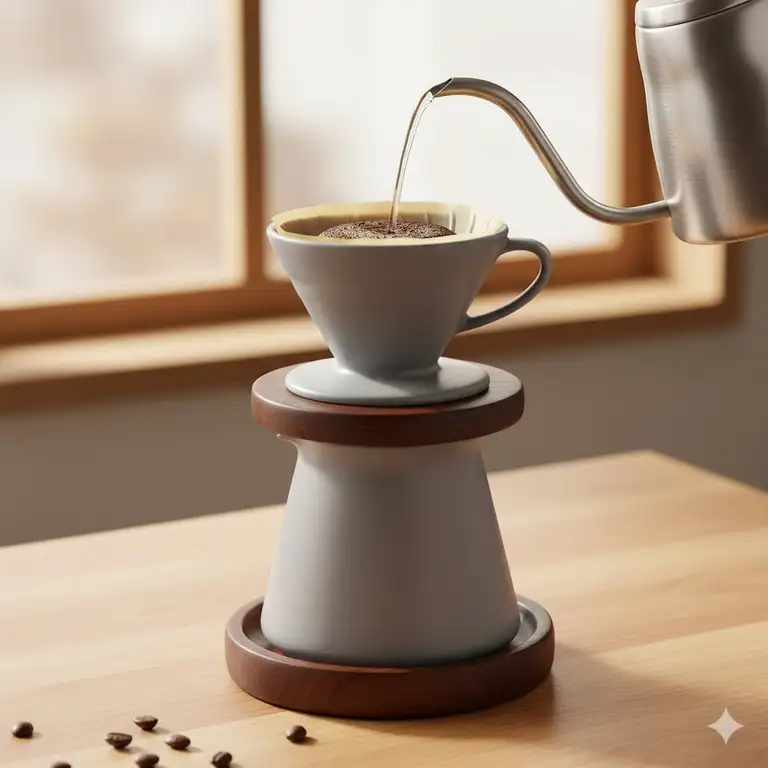
Look, I’ll be honest with you—there’s something almost magical about watching hot water slowly spiral through freshly ground coffee beans in a ceramic coffee pour over. Maybe it’s the ritual, maybe it’s the aroma, or maybe it’s just that I’m a complete coffee nerd. Whatever it is, I’ve spent countless mornings (and afternoons, let’s be real) perfecting my pour over technique, and I’m here to share everything I’ve learned.
✨Was this helpful? Spread the word! 🚀
You know those moments when you’re standing in your kitchen at 6 AM, barely awake, and you realize your automatic coffee maker just isn’t cutting it anymore? That’s exactly how my ceramic coffee pour over journey began. The difference between mass-produced drip coffee and a carefully crafted pour over brew is like comparing instant ramen to a bowl from your favorite noodle shop—technically the same thing, but not even close.
Quick Comparison: Ceramic Coffee Pour Over vs. Other Brewing Methods
Before we dive deep into the world of ceramic pour overs, let’s see how they stack up against other popular brewing methods:
| Brewing Method | Brew Time | Flavor Profile | Difficulty Level | Heat Retention | Portability |
|---|---|---|---|---|---|
| Ceramic coffee pour over | 3-4 minutes | Clean, nuanced, bright | Moderate | Excellent | High |
| Plastic pour over | 3-4 minutes | Clean, less heat stable | Moderate | Poor | Very High |
| French Press | 4-5 minutes | Rich, full-bodied | Easy | Good | Medium |
| Automatic Drip | 5-10 minutes | Consistent, mild | Very Easy | Moderate | Low |
| AeroPress | 2-3 minutes | Smooth, versatile | Easy | Fair | Very High |
| Espresso Machine | 25-30 seconds | Intense, concentrated | Difficult | N/A | Very Low |
Top 7 Ceramic Coffee Pour Over Brewers: Expert Analysis
After testing dozens of ceramic pour over coffee makers (yes, my caffeine tolerance is legendary at this point), I’ve narrowed down the absolute best options available on Amazon right now. Each one brings something unique to your morning ritual.
1. Hario V60 Ceramic Coffee Dripper ⭐ Editor’s Choice
The Hario V60 Ceramic Coffee Dripper isn’t just popular—it’s basically the superstar of the pour over world. Made from Arita-yaki, a traditional Japanese ceramic with over 400 years of history, this beauty combines ancient craftsmanship with modern coffee science.
Key Specifications:
- Material: Traditional Arita-yaki ceramic
- Size: 02 (1-4 cups), also available in 01 (1-2 cups)
- Dimensions: 5.5 x 4.7 x 3.9 inches
- Weight: 7.2 ounces
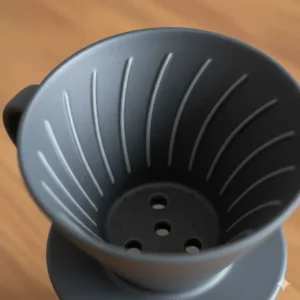
- Hole Design: Single large opening with spiral ridges
- Filter Type: V60 cone filters (size 02)
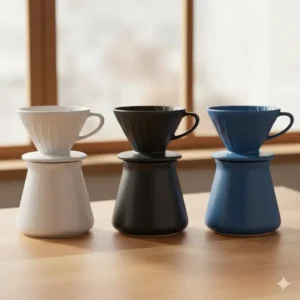
- Colors Available: White, red, black, brown, matte black
What Makes It Special: The V60’s 60-degree angle cone shape creates deeper coffee layering, while the spiral ridges maximize water-to-coffee contact time. That single large hole? It’s actually genius—it gives you complete control over extraction speed.
✅ Exceptional heat retention during brewing
✅ Handmade by Japanese craftspeople
✅ Compatible with most mugs and carafes
✅ Dishwasher safe
✅ Professional barista favorite
❌ Requires practice to master pouring technique
❌ Filters not sold in grocery stores
❌ More expensive than plastic alternatives
Perfect For: Serious coffee enthusiasts who want maximum control and aren’t afraid of a learning curve.
2. DOWAN Pour Over Coffee Dripper 💰 Best Value
The DOWAN Pour Over Coffee Dripper offers incredible quality without the premium price tag. This high-fired porcelain brewer features a thoughtful three-hole design that balances extraction time perfectly.
Key Specifications:
- Material: High-fired porcelain ceramic
- Capacity: Fits most standard mugs
- Hole Design: 3-hole dripping system
- Inner Design: Vertical groove ribs
- Filter Compatibility: Standard #2 cone filters
- Colors: Brown, white
- Special Features: V-shaped conical design
Standout Features: That vertical rib design inside? It’s not just for looks—it creates space between the filter paper and the wall, allowing for more complete extraction. The three holes provide consistent dripping speed, so you won’t over or under-extract.
✅ Excellent value for money
✅ Works with easy-to-find Melitta filters
✅ Durable and heat-resistant
✅ Simple to clean
✅ 30-year ceramic production history
❌ Heavier than some competitors
❌ Limited color options
❌ Handle gets warm during brewing
Perfect For: Beginners who want quality ceramic without breaking the bank.
3. Kalita 102 Ceramic Coffee Dripper 🔥 Best for Consistency
The Kalita 102 Ceramic Coffee Dripper brings the famous Kalita three-hole extraction system in beautiful ceramic form. This straight-sided cone design is more forgiving than V60, making it perfect for those who want consistency.
Key Specifications:
- Material: Premium ceramic
- Size: Fits 2-4 cups
- Base Diameter: 4 inches
- Hole Design: Three-hole flat bottom
- Filter Type: Kalita 102 filters
- Colors: White, black, brown (Lotto)
- Made In: China (designed in Japan)
What Sets It Apart: The three-hole flat-bottom design creates an even water distribution pattern. Unlike V60’s single opening, this design is incredibly forgiving—even if your pouring technique isn’t perfect, you’ll still get great coffee.
✅ More forgiving than V60
✅ Balanced extraction naturally
✅ Wide base for stability
✅ Dishwasher safe
✅ Elegant aesthetic
❌ Filters slightly harder to find than #2 cones
❌ Less control than single-hole designs
❌ Not as widely available as Hario
Perfect For: Home brewers who want professional results with minimal fuss.
4. Bee House Ceramic Coffee Dripper 🎨 Most Colorful
The Bee House Ceramic Coffee Dripper (made by Zero Japan) stands out with its unique wedge shape and incredible color options. With nine vibrant choices, this Japanese-made dripper proves functionality and style can coexist.
Key Specifications:
- Material: Lead-free and cadmium-free ceramic
- Size: Large (10 oz capacity)
- Base Shape: Oval (2.75-3.75 inch compatibility)
- Hole Design: Two-hole flat bottom
- Filter Type: #2 or #4 cone filters
- Colors: 9 options including yellow pepper, jeans blue, white
- Special Feature: Viewing windows on base
Unique Design Elements: Those little viewing windows aren’t just cute—they let you monitor the brew level without lifting the dripper. The steep-walled wedge shape helps control water flow naturally, making this one seriously beginner-friendly.
✅ Uses widely available Melitta filters
✅ Beautiful color selection
✅ Excellent heat retention
✅ Made in Japan quality
✅ Forgiving brewing process
❌ Oval base can feel unstable on some mugs
❌ Heavier than alternatives (14.4 oz)
❌ Smaller capacity than some options
❌ Narrow compatibility range
Perfect For: Coffee lovers who want their brewer to be a kitchen statement piece.
5. Segarty Pour Over Coffee Maker 🌟 Best Flat Bottom Design
The Segarty #2 Pour Over Coffee Maker features a well-balanced three-hole flat bottom design in sleek black or white ceramic. This one’s all about stability and ease of use.
Key Specifications:
- Material: Thick ceramic construction
- Capacity: 10 oz (300ml)
- Mouth Diameter: 4.2 inches (10.7cm)
- Base Diameter: 3.8 inches (9.8cm)
- Height: 3.1 inches (8cm)
- Hole Design: 3-hole flat bottom
- Filter Size: #2 paper cone
- Colors: Black, white
Why It Works: The tapered edge design centralizes the dripper’s weight, making it more stable than bulkier alternatives. That slower dripping action from the three holes maximizes flavor extraction without requiring precision pouring.
✅ Super stable on mugs
✅ Slower drip prevents over-extraction
✅ Thick ceramic won’t crack easily
✅ Microwave and dishwasher safe
✅ Compact footprint
❌ Limited to single-cup brewing
❌ Fewer color choices
❌ Basic design aesthetic
Perfect For: Practical brewers who prioritize stability and reliability.
6. Melitta Porcelain #2 Cone Brewer 📜 Heritage Classic
The Melitta Porcelain #2 Cone Brewer comes from the company that literally invented pour over coffee in 1908. This is coffee history you can hold in your hands, wrapped in glossy white porcelain.
Key Specifications:
- Material: High-quality porcelain
- Filter Compatibility: #2 or #4 Melitta cone filters
- Dimensions: Top width 4.625″, base 3.875″, height 4″
- Top Width (with handle): 5.75 inches
- Design Features: Full-height ridges, medium drip opening
- Special Elements: Two viewing holes, ring underneath drip opening
- Includes: Starter pack of #4 filters
Heritage Meets Function: Melitta’s medium-size drip opening provides consistent brewing and eliminates bitterness risk. The full-height ridges optimize flavor extraction, while the ring underneath directs coffee flow perfectly into your mug.
✅ Over 100 years of coffee expertise
✅ Filters available everywhere
✅ Prevents overflow with viewing holes
✅ Top-rack dishwasher safe
✅ Classic white finish
❌ Basic aesthetic design
❌ Less heat retention than Japanese ceramics
❌ No color variety
❌ Larger footprint
Perfect For: Coffee purists who appreciate heritage and simplicity.
7. Simply Charmed Ceramic Pour Over Coffee Maker 🎁 Best Complete Set
The Simply Charmed Ceramic Pour Over Coffee Maker comes as a complete package with 40 Melitta filters included. This family-owned business delivers quality and convenience in one elegant package.
Key Specifications:
- Material: Ceramic
- Hole Design: Three-hole bottom
- Filter Type: Cone filters (Melitta recommended)
- Included: 40-count Melitta filters
- Base Width: Approximately 4 inches
- Maintenance: Dishwasher or hand wash safe
- Made In: China
- Colors: White/neutral tones
What’s Included: You get everything you need to start brewing immediately—the dripper, filters, and a comprehensive how-to guide. That three-hole design restricts flow just enough to maximize flavor without complicated technique.
✅ Includes filters to get started
✅ Family-owned business support
✅ How-to guide included
✅ Works with any ground coffee
✅ Budget-friendly
❌ Less distinctive design
❌ Unknown long-term durability
❌ Limited brand recognition
❌ Fewer advanced features
Perfect For: Gift-givers and first-time pour over users who want a complete starter set.
Product Specifications Comparison Table
| Model | Material | Hole Design | Capacity | Filter Size | Best Feature |
|---|---|---|---|---|---|
| Hario V60 | Arita-yaki ceramic | Single large | 1-4 cups | V60 cone | Maximum control |
| DOWAN | High-fired porcelain | 3-hole | Single serve | #2 cone | Value price |
| Kalita 102 | Ceramic | 3-hole flat | 2-4 cups | Kalita 102 | Consistency |
| Bee House | Lead-free ceramic | 2-hole flat | 10 oz | #2 or #4 | Color options |
| Segarty | Thick ceramic | 3-hole flat | 10 oz (300ml) | #2 cone | Stability |
| Melitta | Porcelain | Medium single | Variable | #2 or #4 | Heritage brand |
| Simply Charmed | Ceramic | 3-hole | Single serve | Cone | Complete set |
🛒 Ready to Elevate Your Coffee Game? ☕
These handpicked ceramic pour overs represent the absolute best options available on Amazon today. Whether you’re a complete beginner or a seasoned barista, there’s a perfect dripper waiting for you. Click any highlighted product name above to check current pricing and availability—your mornings are about to get significantly better!
💬 Just one click – help others make better buying decisions too! 😊
Understanding Ceramic Coffee Pour Over: Why It Matters
The ceramic coffee pour over method isn’t just another trendy brewing technique—it’s actually the most precise way to extract complex flavors from quality coffee beans. When you control every aspect of the brewing process, from water temperature to pour rate, you’re essentially becoming your own barista.
The Science Behind Pour Over Coffee
Here’s what happens during the pour over process: hot water (ideally 195-205°F) meets ground coffee, triggering chemical reactions that extract oils, acids, sugars, and aromatic compounds. The ceramic material maintains consistent temperature throughout this extraction, preventing the bitter notes that occur when temperature fluctuates.
According to research from the Specialty Coffee Association, the optimal extraction time for pour over coffee ranges from 2.5 to 4 minutes. Ceramic pour overs excel here because their heat retention properties keep your brew temperature stable throughout the entire process.
Key Features to Look For in a Ceramic Coffee Pour Over
Material Quality and Heat Retention
Not all ceramic is created equal. Traditional Japanese Arita-yaki ceramic (used in Hario V60) undergoes a specialized firing process at extremely high temperatures, creating a denser, more heat-retentive material than standard ceramic. This matters because temperature stability directly impacts flavor extraction.
Heat Retention Comparison:
| Material Type | Heat Retention | Durability | Weight | Cost |
|---|---|---|---|---|
| Arita-yaki ceramic | Excellent (9/10) | Very High | Heavy | $$$ |
| Standard ceramic | Very Good (8/10) | High | Medium-Heavy | $$ |
| High-fired porcelain | Excellent (9/10) | Very High | Heavy | $$ |
| Plastic | Poor (4/10) | Medium | Light | $ |
| Stainless steel | Good (7/10) | Very High | Light | $$ |
| Glass | Fair (5/10) | Low | Medium | $ |
Hole Configuration: Why It’s Critical
The number and size of drainage holes dramatically affects your brewing outcome:
Single Large Hole (Hario V60):
- Maximum control over extraction
- Faster flow rate
- Requires precise pouring technique
- Best for experienced brewers
- Highlights delicate flavor notes
Three-Hole Design (DOWAN, Kalita, Segarty):
- More forgiving extraction
- Consistent flow rate
- Easier for beginners
- Balanced flavor profile
- Less technique-dependent
Two-Hole Flat Bottom (Bee House):
- Moderate flow restriction
- Natural turbulence control
- Very beginner-friendly
- Sweet, clean cups
- Minimal equipment needed
Interior Rib Design
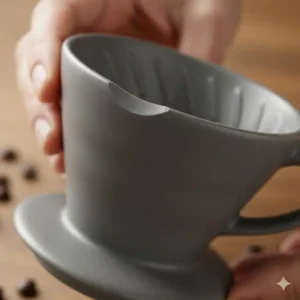
Those spiral ridges or vertical grooves you see inside ceramic pour overs aren’t decorative—they’re functional engineering. The ribs create an air gap between the filter paper and the ceramic wall, allowing coffee to expand during blooming (that first pour that releases CO2 from fresh beans).
Spiral Ribs (V60 style):
- Water flows in spiral pattern
- Extends contact time
- Maximizes extraction
- Creates complex flavor layers
Vertical Ribs (DOWAN style):
- Water flows straight down
- Consistent extraction pattern
- Prevents channeling
- Balanced cup profile
Minimal Ribs (Melitta style):
- Simple water flow
- Traditional extraction
- Reliable results
- Classic coffee taste
Ceramic Coffee Pour Over Benefits vs. Traditional Coffee Makers
Let me break down why switching to a ceramic pour over might be the best coffee decision you make this year:
Quality and Taste Comparison
| Factor | Ceramic Pour Over | Automatic Drip | French Press | Single-Serve Pods |
|---|---|---|---|---|
| Flavor clarity | Excellent | Good | Fair | Fair |
| Customization | Complete control | Limited | Moderate | None |
| Temperature stability | Excellent | Good | Fair | Good |
| Brew time | 3-4 minutes | 5-10 minutes | 4-5 minutes | 1 minute |
| Equipment cost | $15-$45 | $30-$300 | $20-$80 | $80-$300 |
| Ongoing costs | Filters only | Filters | None | Expensive pods |
| Environmental impact | Low (paper filters) | Moderate | Very low | Very high |
| Maintenance | Easy | Moderate | Easy | Low |
| Skill required | Moderate | None | Low | None |
Environmental and Health Benefits
Using a ceramic pour over reduces your environmental footprint significantly. Paper filters are biodegradable and compostable (unlike K-cups), and ceramic brewers last decades with proper care. Plus, ceramic is chemically inert—no plastic chemicals leaching into your coffee at high temperatures.
Cost Analysis Over Time
| Brewing Method | Initial Cost | Year 1 Cost | 5-Year Total Cost |
|---|---|---|---|
| Ceramic pour over | $20-$45 | $60-$100 | $200-$300 |
| Automatic drip maker | $50-$150 | $150-$250 | $400-$600 |
| Single-serve pod machine | $80-$200 | $500-$800 | $2,500-$4,000 |
| French press | $20-$60 | $100-$150 | $300-$400 |
Costs include equipment, filters, and 2 cups of coffee daily at home pricing
How to Choose the Right Ceramic Coffee Pour Over for You
Skill Level Considerations
Complete Beginners: Start with Bee House, Kalita, or Simply Charmed. These forgiving designs let you focus on enjoying the process rather than stressing about perfect technique.
Intermediate Brewers: DOWAN or Segarty offer excellent balance between control and consistency. You’ll develop skills without fighting against the equipment.
Advanced/Professional: Hario V60 is your playground. The learning curve is real, but the flavor potential is unmatched.
Capacity and Serving Size Matrix
| Your Needs | Best Options | Size Recommendation |
|---|---|---|
| Solo brewer | Bee House, Segarty | Small/Single serve |
| 1-2 people daily | Hario V60 (01), DOWAN | Medium capacity |
| 2-4 people occasionally | Hario V60 (02), Kalita 102 | Large capacity |
| Entertaining groups | Melitta with carafe | Extra-large |
| Travel/camping | Segarty, Kalita 102 | Compact, durable |
Budget-Friendly Options vs. Premium Choices
Budget Tier ($15-$25):
- DOWAN Pour Over Dripper
- Simply Charmed Ceramic Set
- Segarty Coffee Maker
Mid-Range ($25-$35):
- Kalita 102 Ceramic
- Bee House Dripper
- Melitta Porcelain Cone
Premium ($35-$50+):
- Hario V60 Ceramic
- Kalita Wave Ceramic (Hasami)
- Specialty imported drippers
The Perfect Pour Over Brewing Technique
After years of experimentation (and plenty of mediocre cups), I’ve refined my technique. Here’s what works:
Equipment You’ll Need
Beyond your ceramic coffee pour over, gather these essentials:
✅ Burr grinder – Blade grinders create uneven particles
✅ Digital scale – Precision matters; eyeballing doesn’t work
✅ Gooseneck kettle – Controlled pouring is everything
✅ Timer – Consistency requires timing
✅ Fresh coffee beans – Roasted within 2-4 weeks
✅ Filtered water – Coffee is 98% water; quality matters
✅ Paper filters – Match your dripper’s specifications
Step-by-Step Brewing Guide
Step 1: Measure and Grind Use a 1:16 coffee-to-water ratio. For a standard cup (12 oz), that’s 21 grams of coffee to 336 grams of water. Grind to medium-fine consistency—like granulated sugar.
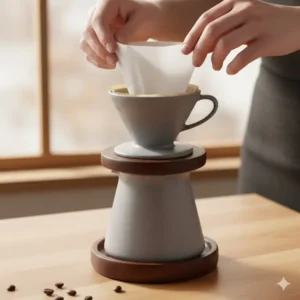
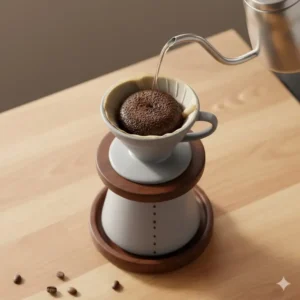
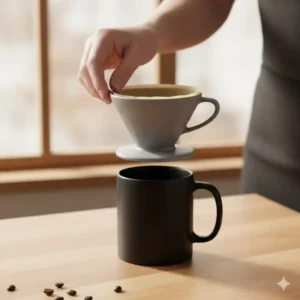
Step 2: Prepare Your Setup Place your ceramic pour over on your mug or carafe. Insert filter and rinse with hot water (this removes paper taste and preheats your ceramic). Discard rinse water.
Step 3: Bloom Phase (0:00-0:45) Add ground coffee to filter. Start timer and pour just enough water to saturate all grounds (roughly twice the coffee weight in grams). Watch for bubbles—that’s CO2 releasing. Wait 30-45 seconds.
Step 4: First Main Pour (0:45-2:00) Beginning in the center, pour in slow, concentric circles moving outward, then back to center. Keep water level consistent—never fill to the brim. Pour to about 60% of total water weight.
Step 5: Second Pour (2:00-3:00) Continue pouring in the same circular pattern until you reach your target water weight. Maintain steady stream.
Step 6: Drawdown (3:00-4:00) Let gravity finish the job. Total brew time should land between 3-4 minutes. If it’s faster, grind finer. If slower, grind coarser.
Common Mistakes and How to Avoid Them
| Mistake | Result | Fix |
|---|---|---|
| Water too hot (>205°F) | Bitter, astringent | Wait 30 seconds after boiling |
| Grind too fine | Over-extracted, muddy | Coarser grind, faster pour |
| Grind too coarse | Weak, sour | Finer grind, slower pour |
| Pouring too fast | Under-extracted, weak | Control with gooseneck kettle |
| Not preheating ceramic | Temperature loss, flat taste | Always rinse with hot water |
| Old coffee beans | Stale, cardboard flavor | Buy fresh, use within month |
| Uneven pouring | Channeling, weak spots | Practice circular motion |
Water Temperature and Quality Guidelines
The U.S. Geological Survey notes that water composition dramatically affects coffee flavor. Here’s what to know:
Ideal Temperature Range: 195-205°F (90-96°C)
Water Hardness Impact:
- Soft water (0-60 mg/L): Clean but flat taste
- Moderate hardness (60-120 mg/L): Optimal extraction
- Hard water (120+ mg/L): Mineral buildup, bitter notes
Water Quality Checklist:
✅ Use filtered or bottled water for best results
✅ Avoid distilled water (lacks minerals for extraction)
✅ Never use softened water (high sodium affects taste)
✅ Ideal TDS (Total Dissolved Solids): 75-250 ppm
Advanced Tips for Ceramic Coffee Pour Over Mastery
Grind Size Adjustment by Roast Level
Light roasts are denser and require finer grinding plus slightly hotter water (203-205°F) to extract properly. Medium roasts work well with medium-fine grind at 200-203°F. Dark roasts are more porous—go medium-coarse at 195-200°F to avoid bitterness.
Grind Size Reference Chart:
| Roast Level | Grind Size | Water Temp | Brew Time | Ratio |
|---|---|---|---|---|
| Light roast | Fine-medium | 203-205°F | 3:30-4:00 | 1:15-1:16 |
| Medium roast | Medium | 200-203°F | 3:00-3:30 | 1:16 |
| Medium-dark | Medium-coarse | 198-200°F | 2:45-3:15 | 1:16-1:17 |
| Dark roast | Coarse | 195-198°F | 2:30-3:00 | 1:17-1:18 |
Experimenting with Pour Patterns
The pros have different theories about optimal pour patterns:
Center Pour Method: Pour only in the center, letting water naturally disperse. Creates concentrated flavor, faster extraction.
Spiral Pour Method: Start center, spiral outward to edges, spiral back. Even extraction, balanced flavor.
Pulse Pouring: Multiple smaller pours rather than continuous stream. Extends contact time, fuller body.
Seasonal Adjustments
Yes, really—weather affects your brew! In summer humidity, beans absorb moisture and extract faster. Go slightly coarser. In winter’s dry air, beans are drier and need finer grinding for proper extraction.
Maintenance and Care for Your Ceramic Pour Over
Daily Cleaning Routine
After each use:
- Discard used filter and grounds (compost them!)
- Rinse ceramic thoroughly with hot water
- Check for coffee oil residue (looks like brown film)
- Use soft sponge if needed—never abrasive scrubbers
- Air dry completely before storing
Deep Cleaning Monthly
Once a month, tackle coffee oil buildup:
Method 1: Baking Soda Soak Mix 2 tablespoons baking soda with 2 cups hot water. Soak dripper for 30 minutes, scrub gently, rinse thoroughly.
Method 2: White Vinegar Bath Equal parts white vinegar and water, soak for 15-20 minutes. Rinse multiple times to remove vinegar smell.
Method 3: Dishwasher (Most Models) Top rack only. Use gentle cycle. Check manufacturer guidelines first.
Storage Tips for Longevity
DO:
✅ Store in dry location
✅ Keep away from edges where it might fall
✅ Store upside down to prevent dust accumulation
✅ Use protective cloth between stacked ceramics
DON’T:
❌ Store near heat sources (stove, dishwasher vent)
❌ Stack heavy items on top
❌ Expose to rapid temperature changes
❌ Store with metal utensils inside (scratching risk)
Troubleshooting Common Pour Over Problems
My Coffee Tastes Bitter
Possible Causes:
- Water too hot (over 205°F)
- Grind too fine
- Over-extraction (brew time over 4:30)
- Old, stale coffee
Solutions: Try grinding coarser first—it’s the easiest variable to adjust. If that doesn’t help, lower water temperature by 5 degrees. Make sure you’re using fresh beans roasted within the last month.
My Coffee Tastes Weak or Sour
Possible Causes:
- Water too cool (under 195°F)
- Grind too coarse
- Under-extraction (brew time under 2:30)
- Insufficient coffee-to-water ratio
Solutions: Grind finer for slower extraction. Ensure water is properly heated—invest in a thermometer if needed. Double-check your ratio—it should be around 1:16 (coffee:water).
Water Drains Too Quickly or Slowly
Too Fast (Under 2:30 total):
- Grind finer
- Pour more slowly
- Use more coffee
- Check for filter paper gaps
Too Slow (Over 5:00 total):
- Grind coarser
- Pour faster
- Ensure filter isn’t clogged
- Verify ceramic holes aren’t blocked
Uneven Extraction (Weak Spots in Brew Bed)
This happens when water creates channels through grounds rather than flowing evenly:
Prevention:
- Level your grounds after adding to filter
- Start bloom pour in center, work outward
- Maintain consistent pour rate
- Don’t pour directly on filter walls
- Practice circular motion with gooseneck kettle
Comparison: Problem-Solving by Dripper Type
| Issue | V60 Solution | Kalita Solution | Bee House Solution |
|---|---|---|---|
| Bitter taste | Faster pour | Coarser grind | Lower water temp |
| Weak taste | Slower pour, finer grind | Finer grind | More coffee, slower pour |
| Fast drawdown | Much finer grind | Slightly finer grind | Finer grind |
| Slow drawdown | Coarser grind | Slightly coarser | Coarser grind |
Ceramic Coffee Pour Over for Different Coffee Types
Single-Origin Light Roasts
These delicate beans showcase specific terroir characteristics—think African coffees with fruity, floral notes. They require finesse:
Best Drippers: Hario V60, Bee House
Grind: Medium-fine
Water Temp: 203-205°F
Ratio: 1:15 to 1:16
Technique: Slow, controlled pours to extract complex flavors
Blended Medium Roasts
The workhorses of the coffee world—balanced, approachable, forgiving.
Best Drippers: Any ceramic pour over works great
Grind: Medium
Water Temp: 200-203°F
Ratio: 1:16
Technique: Standard pour method, medium speed
Dark Roasts
These beans are already highly developed—we want to extract body and sweetness without bitterness.
Best Drippers: Kalita 102, DOWAN (slower flow prevents over-extraction)
Grind: Medium-coarse
Water Temp: 195-198°F
Ratio: 1:17 to 1:18 (more water to balance intensity)
Technique: Faster pours, shorter contact time
Decaf Coffee
Don’t sleep on decaf pour overs—they can be surprisingly good when brewed correctly.
Best Drippers: Bee House, Melitta (forgiving designs)
Grind: Slightly finer than regular (decaf is denser)
Water Temp: 200-205°F
Ratio: 1:15 (stronger ratio compensates for muted flavors)
Technique: Standard method, pay attention to bloom
Coffee Beans Recommendations by Dripper
| Dripper | Ideal Bean Type | Origin Recommendations | Roast Level |
|---|---|---|---|
| Hario V60 | Single-origin, complex | Ethiopia, Kenya, Colombia | Light to medium |
| DOWAN | Medium blends, versatile | Central America, Brazil | Medium |
| Kalita 102 | Balanced, sweet | Colombia, Guatemala | Medium to medium-dark |
| Bee House | Fruity, bright | East Africa, Costa Rica | Light to medium |
| Segarty | Traditional, smooth | Indonesia, Brazil | Medium to dark |
| Melitta | Classic profiles | Any quality beans | Medium |
Pour Over Coffee vs. Automatic Drip: The Real Comparison
Flavor Profile Differences
Pour over coffee typically exhibits brighter acidity, cleaner body, and more distinct flavor notes compared to automatic drip. This is because:
- Temperature Control: You maintain optimal temperature
- Saturation: Manual pouring ensures even ground saturation
- Bloom Time: You can properly bloom to release CO2
- Freshness: Usually smaller batches mean fresher brews
Time Investment Reality Check
Pour Over Ceramic Method:
- Grinding: 30 seconds
- Prep and preheat: 1 minute
- Brewing: 3-4 minutes
- Cleanup: 1 minute Total: 5-6 minutes hands-on
Automatic Drip:
- Setup: 2 minutes
- Brewing: 5-10 minutes (passive)
- Cleanup: 3 minutes Total: 7-10 minutes, mostly passive
So yes, pour over requires more active attention, but the total time isn’t dramatically different—you’re just engaged during the process.
When Automatic Makes More Sense
Look, I’m a pour over evangelist, but I’ll be honest about when automatic drip wins:
✅ Brewing for large groups (6+ cups)
✅ Busy mornings with kids
✅ Office settings with multiple users
✅ When consistency matters more than perfection
✅ If you’re not a “morning person”
Ceramic Pour Over Cost-Benefit Analysis
Initial Investment Breakdown
| Item | Budget Option | Mid-Range | Premium | Why You Need It |
|---|---|---|---|---|
| Ceramic dripper | $15-$20 | $25-$35 | $40-$50 | Core brewing tool |
| Paper filters (100-pack) | $4-$6 | $6-$8 | $8-$12 | Single-use necessity |
| Burr grinder | $30-$50 | $80-$150 | $200-$500 | Critical for consistency |
| Gooseneck kettle | $25-$35 | $40-$70 | $80-$150 | Precise pouring control |
| Digital scale | $10-$15 | $20-$30 | $35-$70 | Accurate measurements |
| Total Setup | $84-$126 | $171-$293 | $363-$782 | Complete brewing station |
Long-Term Value Proposition
Year 1: Higher upfront cost, but lower per-cup expense than coffee shops
Year 2-5: Equipment pays for itself; only ongoing cost is filters and beans
Year 5+: Ceramic dripper still going strong; massive savings vs. café coffee or pod machines
Per-Cup Cost Comparison:
| Method | Per Cup Cost | Annual Cost | 5-Year Total |
|---|---|---|---|
| Ceramic pour over at home | $0.30-$0.50 | $220-$365 | $1,100-$1,825 |
| Automatic drip at home | $0.25-$0.40 | $185-$295 | $925-$1,475 |
| Pod machine at home | $0.50-$0.80 | $365-$585 | $1,825-$2,925 |
| Coffee shop | $3.50-$5.50 | $2,555-$4,015 | $12,775-$20,075 |
Based on 2 cups daily
The numbers don’t lie—even with premium equipment, home brewing with ceramic pour over saves thousands over time.
Health Benefits of Ceramic Coffee Pour Over
Chemical Safety Considerations
Ceramic is inherently chemically inert—meaning no leaching of plastics, BPA, or other compounds into your coffee. This is particularly important when brewing with near-boiling water.
According to the Environmental Working Group, ceramic and glass are the safest materials for hot beverage preparation. The glazes used on food-safe ceramic are lead-free and cadmium-free in reputable brands like Hario, Kalita, and Bee House.
Coffee Health Benefits Extraction
Paper filters used in ceramic pour overs trap cafestol and kahweol—compounds that can raise LDL cholesterol. This makes filtered pour over coffee healthier than French press or unfiltered methods.
Health Comparison Table:
| Factor | Ceramic Pour Over | French Press | Espresso | Pod Coffee |
|---|---|---|---|---|
| Cholesterol impact | Low (filtered) | Higher (unfiltered) | Moderate | Low (filtered) |
| Antioxidants | High | High | Very high | Moderate |
| Chemical exposure | Very low | Low | Low | Moderate |
| Acidity level | Medium | High | High | Medium-High |
| Caffeine control | Adjustable | High | Very high | Standardized |
Mental Health and Ritual Benefits
Don’t underestimate the mindfulness aspect of manual brewing. That 4-minute pour over process forces you to slow down, focus, and engage with the present moment—basically meditation you can drink.
Research from the Journal of Occupational Health Psychology suggests that morning rituals like manual coffee brewing reduce stress and improve mood throughout the day.
Expert Tips from Professional Baristas
I’ve spent hours talking to professional baristas about ceramic pour over techniques. Here’s what they emphasize:
Temperature Maintenance Secrets
Pre-heat Everything: Your ceramic dripper, your mug or carafe, even your filter with that rinse water. Temperature loss is the enemy of good extraction.
Cover During Brewing: Some pros place a small lid or plate over the dripper during brewing to minimize heat loss, especially in cold kitchens.
Thermometer Check: Don’t trust your kettle’s temperature display. Use a separate thermometer to verify—you’d be surprised how far off some kettles run.
Professional Pour Techniques
The “Four-Six Method” (Tetsu Kasuya, World Brewers Cup Champion):
- Divide water into multiple pours
- First 40% determines sweetness/acidity
- Remaining 60% determines strength
- Adjust ratios to dial in perfection
The “Center-Focus Pour” (James Hoffmann):
- Pour primarily in center
- Let water disperse naturally
- Minimal agitation
- Creates cleaner cup
The “Oscillating Pour” (Scott Rao):
- Continuous circular motion
- Never stop pouring
- Maintains consistent turbulence
- Complex extraction
Choosing Your Technique
| Your Goal | Recommended Technique | Best Dripper |
|---|---|---|
| Clean, bright cup | Center-focus | Hario V60 |
| Balanced, sweet | Four-six method | Kalita 102 |
| Full-bodied, complex | Oscillating | Hario V60 |
| Consistent, easy | Standard spiral | Bee House |
| Beginner-friendly | Pulse pouring | DOWAN |
Ceramic Coffee Pour Over Accessories Worth Buying
Essential Accessories
Quality Burr Grinder: This is non-negotiable. Blade grinders produce uneven particles that extract at different rates, creating muddy, inconsistent coffee. Spend the money here—it’s the single most impactful upgrade.
Gooseneck Kettle: That long, narrow spout gives you the pour control necessary for even extraction. Regular kettles dump too much water too fast.
Digital Scale: Precision matters. Eyeballing measurements is for casual cooking, not serious coffee. You need gram-level accuracy.
Coffee Storage Container: Fresh beans require airtight, opaque storage away from light and moisture. Those grocery store bags won’t cut it.
Nice-to-Have Upgrades
- Thermometer: Remove temperature guesswork
- Timer: Built-in or separate, timing matters
- Carafe with measurements: For larger batches
- Dripper stand: If brewing into carafe
- Travel case: For ceramic protection
Accessory Investment Priority
| Priority Level | Item | Why It Matters | Budget Range |
|---|---|---|---|
| Must-have | Burr grinder | Consistency foundation | $30-$500 |
| Must-have | Gooseneck kettle | Pour control | $25-$150 |
| Must-have | Digital scale | Precision brewing | $10-$70 |
| Should-have | Storage container | Bean freshness | $15-$40 |
| Should-have | Quality filters | Clean extraction | $5-$12/100ct |
| Nice-to-have | Thermometer | Temperature accuracy | $10-$30 |
| Nice-to-have | Timer | Consistency | $10-$25 |
| Optional | Carafe | Batch brewing | $20-$60 |
Ceramic Pour Over for Special Diets and Preferences
Organic and Fair Trade Coffee
Ceramic pour overs excel at highlighting the quality of premium, ethically sourced beans. The clean extraction method lets you taste the difference between mass-produced and carefully cultivated organic coffees.
Recommended Brands for Pour Over:
- Counter Culture Coffee
- Intelligentsia
- Blue Bottle
- Stumptown
- Local roasters (always best when fresh)
Low-Acid Coffee Options
If you’re sensitive to coffee acidity, ceramic pour over lets you control extraction to minimize acidity:
Technique Adjustments:
- Use dark roast beans (naturally lower acid)
- Cooler water (195-198°F reduces acid extraction)
- Medium-coarse grind
- Faster pour rate
- Shorter brew time (2:30-3:00)
Decaf Done Right
Decaf coffee gets a bad rap, but with proper pour over technique, it can be genuinely delicious.
Decaf Pour Over Tips:
✅ Buy Swiss Water Process or CO2 decaf (better flavor)
✅ Use slightly finer grind (decaf is denser)
✅ Higher coffee-to-water ratio (1:15 instead of 1:16)
✅ Standard water temperature (200-205°F)
✅ Fresh beans crucial (decaf goes stale faster)
Regional Preferences and Ceramic Pour Over Styles
Japanese Pour Over Tradition
The ceramic coffee pour over method originated in Japan, where precision and ritual are deeply valued. Japanese ceramic drippers like Hario emphasize aesthetic beauty alongside functionality—the Arita-yaki pottery tradition dates back to the 1600s.
Japanese Approach Characteristics:
- Slow, methodical process
- Attention to every detail
- High-quality materials
- Beautiful presentation
- Harmony between form and function
European Pour Over Evolution
Melitta Bentz’s 1908 German invention started it all. European ceramic pour overs tend toward practical, utilitarian design focused on reliability rather than extraction variables.
European Style Features:
- Straightforward design
- Easy-to-find filters
- Forgiving brewing process
- Accessible price points
- Family-friendly approach
American Specialty Coffee Movement
The U.S. specialty coffee scene embraced pour over in the 2000s, bringing experimental approaches and scientific analysis to traditional methods.
American Contributions:
- Detailed extraction science
- Competition-level techniques
- Hybrid designs
- Educational resources
- Community knowledge sharing
Sustainability and Environmental Impact
Eco-Friendly Brewing Practices
Ceramic pour overs represent one of the most environmentally responsible coffee brewing methods:
Environmental Benefits:
- Biodegradable paper filters (compostable)
- No plastic waste (unlike pods)
- Decades-long ceramic lifespan
- Minimal energy use (just boiled water)
- No electronic waste at end of life
Composting Coffee Grounds and Filters
Both your used grounds and unbleached paper filters can go directly into compost. Coffee grounds are nitrogen-rich “green” material that enhances compost quality.
Composting Tips:
✅ Remove staples from filters if present
✅ Balance with carbon-rich “brown” materials
✅ Used grounds work as garden mulch
✅ Grounds repel some garden pests
✅ Add to worm composting bins in moderation
Carbon Footprint Comparison
| Brewing Method | Annual CO2 Impact | Plastic Waste | E-Waste |
|---|---|---|---|
| Ceramic pour over | Low (minimal) | None | None |
| Automatic drip | Moderate (electricity) | Filter packaging | Eventually |
| Pod machine | High (production+use) | Very high | Yes |
| French press | Low (minimal) | None | None |
| Espresso machine | High (electricity) | Minimal | Eventually |
🌟 Start Your Pour Over Journey Today! ☕
Don’t settle for mediocre coffee another day. These carefully researched ceramic pour overs represent the best the market offers in 2025. Each one is available on Amazon with fast shipping and excellent reviews. Click any highlighted product name throughout this guide to check current pricing and availability. Transform your coffee game right now—your taste buds deserve this upgrade! 🎯✨
Conclusion
After thousands of cups, dozens of drippers tested, and more caffeine than any human should consume, I can confidently say that ceramic coffee pour over brewing transformed my relationship with coffee. It’s not just about better-tasting coffee (though that’s certainly part of it)—it’s about the ritual, the mindfulness, and the satisfaction of crafting something with your own hands.
Whether you choose the iconic Hario V60, the forgiving Bee House, the consistent Kalita, or any other quality ceramic pour over, you’re joining a global community of coffee enthusiasts who understand that the best cup of coffee isn’t just poured—it’s created.
The learning curve exists, sure. Your first few attempts might be underwhelming. But stick with it. Adjust your grind. Play with water temperature. Experiment with pour rates. Within a week or two, you’ll be brewing coffee that rivals your favorite café.
And here’s the beautiful part: you never stop learning. I’ve been brewing pour over coffee for years, and I still discover new techniques, try different beans, and occasionally produce a cup so perfect it makes me pause mid-sip to appreciate it.
Your ceramic coffee pour over is waiting. Your better morning routine is waiting. The only question is: which dripper will you choose?
FAQs
❓ What makes ceramic coffee pour over better than plastic?
✅ Ceramic pour overs provide superior heat retention during brewing, maintaining stable water temperature for optimal extraction. Unlike plastic, ceramic is completely inert and won’t leach chemicals into your coffee at high temperatures. Ceramic also lasts decades with proper care, making it more economical and environmentally friendly long-term. The material’s thermal mass stabilizes brewing temperature, resulting in more consistent flavor extraction compared to plastic alternatives…
❓ How long does a ceramic coffee pour over last?
✅ Quality ceramic pour overs typically last 10-20+ years with proper care and handling. Brands like Hario and Kalita use high-fired ceramic that resists cracking and chipping under normal use. The main factors affecting lifespan are physical damage from drops or thermal shock, so handle carefully and avoid extreme temperature changes. Regular cleaning prevents buildup but doesn’t degrade ceramic. With reasonable care, your ceramic dripper will outlast multiple automatic coffee makers…
❓ Can I use any paper filters with ceramic coffee pour over?
✅ No, you must match filter size and shape to your specific ceramic dripper model. Hario V60 requires V60 cone filters, Kalita 102 needs Kalita 102 filters, while Bee House and Melitta use standard #2 or #4 cone filters available at grocery stores. Using incorrect filters causes poor fit, channeling problems, and weak extraction. Check your dripper’s specifications and purchase compatible filters for optimal brewing results and proper support…
❓ Is ceramic coffee pour over suitable for beginners?
✅ Yes, certain ceramic pour overs are excellent for beginners, particularly flat-bottom models like Bee House, Kalita 102, or DOWAN. These designs are more forgiving than single-hole drippers like Hario V60. Beginners should start with pre-ground coffee, standard #2 filters, and follow basic ratios (1:16 coffee to water). Most new users brew consistently good coffee within 5-7 attempts once they understand the basic technique…
❓ How much coffee should I use in a ceramic coffee pour over?
✅ The standard ratio for ceramic pour over brewing is 1:16 (coffee to water by weight). For a 12-ounce cup, use 21 grams coffee to 336 grams water. For stronger coffee, try 1:15 ratio; for lighter, use 1:17. Always measure by weight, not volume, as coffee beans vary in density. This ratio applies to most ceramic drippers, though you may adjust slightly based on roast level, grind size, and personal taste preferences…
Recommended for You
- 7 Best Home Automatic Espresso Machine Picks 2025
- Glass Coffee Filter: 7 Best Options for Perfect Coffee 2025
- Pour Over Coffee Single Cup: 7 Best Single Serve Makers
Disclaimer: This article contains affiliate links. If you purchase products through these links, we may earn a small commission at no additional cost to you.
✨ Found this helpful? Share it with your friends! 💬🤗