
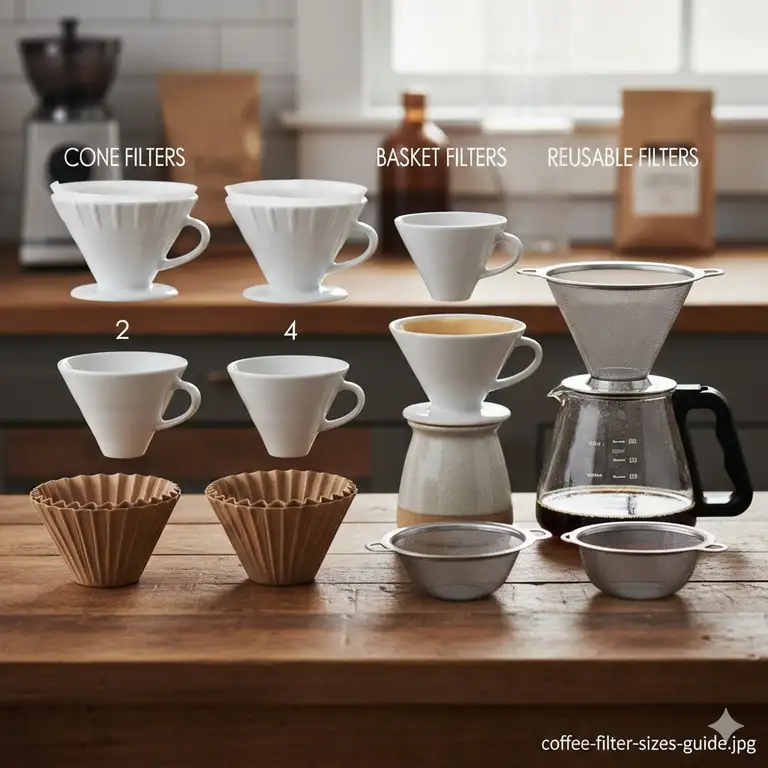
Let’s be honest: when you’re bleary-eyed and desperate for that morning jolt, the coffee filter is probably the last thing on your mind. You grab the box, cram it into the machine, and hope for the best. Yet, I’ve seen firsthand how overlooking the seemingly mundane details of coffee filter sizes can absolutely sabotage a perfectly good batch of beans. It’s a small, inexpensive piece of paper (or mesh) that plays a colossal role in the final flavor profile of your brew, affecting everything from extraction rate to sediment control.
As a seasoned coffee enthusiast—and, yes, a bit of a stickler for the technical stuff—I can tell you that understanding the different types and dimensions of a coffee filter is non-negotiable for anyone serious about elevating their home brewing game. Whether you’re wrestling with a commercial coffee maker filter, trying to figure out which size 4 coffee filter cone is best, or simply wondering why your basket filter keeps collapsing, this deep dive is for you.
✨Was this helpful? Spread the word! 🚀
We’re not just talking about fitting paper into plastic; we’re dissecting the very mechanics of coffee extraction. The size and shape of the filter dictate the depth of the coffee bed, which in turn controls the contact time between the hot water and the coffee grounds. Too big, and you get weak, under-extracted coffee; too small, and you risk overflow and bitter, over-extracted sludge. It’s a precision game.
Quick Comparison: Filter Types and Their Common Applications
Before we dive into the nitty-gritty of the specific coffee filter sizes, let’s quickly look at the most common filter types you’ll encounter in the USA market and the brewing devices they pair with. This table provides a valuable snapshot, comparing the mechanism of a basket filter versus a cone filter, which are the two most popular styles.
| Filter Type | Common Shape | Best For | Key Characteristic | Typical Size Range (Cups) |
| Basket Filter | Flat Bottom, Cylindrical Walls | Drip Coffee Makers (Auto-Drip) | Uniform, flat bed for even flow; prone to ‘channeling’ if overfilled. | 8-12 Cup, 10-14 Cup Commercial |
| Cone Filter | V-Shape, Tapered Bottom | Pour-Over (Chemex, V60), Single-Serve Drip | Deep, narrow bed for longer contact time and cleaner cup; less likely to clog. | Size 2, Size 4, Size 6 |
| Permanent Filter | Basket or Cone | Environmentally Conscious Drip/Pour-Over | Reusable, typically mesh or gold-tone; allows more oils/fines into the brew. | Universal Fit for Drip Machines, Single-Serve |
| Disc/Round Filter | Circular, Flat Disc | AeroPress, Siphon Coffee Makers | High-pressure/vacuum brewing; small diameter, high density. | 2.5 inches to 3.5 inches diameter |
Understanding the fundamental difference between a basket filter and a cone filter is the first step in ensuring you’re using the correct filter. Most standard American drip machines utilize the basket style, whereas many high-end pour-over and specialty brewers use the cone filter to maximize flavor.

🏆 Top 7 Coffee Filter Products: Expert Analysis from Amazon
To give you a real-world perspective on the best options available, I’ve conducted research on top-selling and high-rated products. Remember, choosing the right filter, whether it’s a standard size 4 coffee filter or a robust commercial coffee maker filter, directly impacts your daily ritual. The following products represent the gold standard across different brewing methods and filter requirements, providing detailed information that you can trust.
1. Melitta #4 Cone Coffee Filters
-
Detailed Technical Specifications: These are oxygen-cleansed, chlorine-free paper filters, ensuring no paper taste interferes with your coffee. The Melitta #4 Cone Coffee Filters are designed with microfine perforations that promote a balanced, consistent extraction. The paper weight is optimized for slower flow, ideal for medium to fine grinds. They are specifically shaped to fit all coffeemakers using a #4 cone design, including many high-end drip machines.
-
Customer Review Analysis: Customers consistently praise the clean taste and lack of paper residue. Many note they are superior to store-brand alternatives, often stating the “sturdy paper doesn’t collapse or tear during brewing, even with a full pot.” The primary critique is often the price point compared to bulk, non-name-brand options.
-
Pros/Cons Analysis:
-
Pros:
-
✅ Excellent filtration for a clean cup;
-
✅ Strong, tear-resistant paper;
-
✅ Environmentally conscious oxygen-cleansed process.
-
-
Cons:
-
❌ Can be more expensive than generic brands;
-
❌ May not be readily available in all local grocery stores.
-
-
-
Professional Applications: Ideal for use in small office settings or cafes utilizing high-quality single-serve cone brewers for specialty offerings.
2. Brew Rite 8-12 Cup Basket Coffee Filters
-
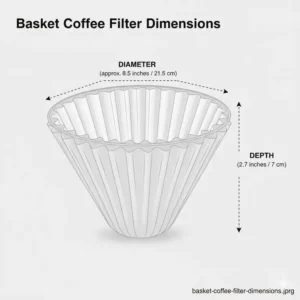
Detailed Technical Specifications: The Brew Rite 8-12 Cup Basket Coffee Filters are a classic example of a round, flat-bottom filter made for most standard household automatic drip coffee makers. They are typically available in both white (bleached) and natural brown (unbleached) options. The standard 8-12 cup size refers to the opening diameter, which is generally around 8.5 to 9.5 inches when laid flat, allowing it to sit perfectly in most basket filter holders.
-
Customer Review Analysis: Reviewers frequently commend their excellent value for money and reliable performance. A common theme is their “perfect fit for Cuisinart and Hamilton Beach 12-cup machines,” which shows their versatility. Negative feedback occasionally focuses on the white version having a slight paper taste if not rinsed beforehand, a general issue with most paper filters.
-
Pros/Cons Analysis:
-
Pros:
-
✅ Highly affordable;
-
✅ Perfect fit for standard 8-12 cup machines;
-
✅ Widely available.
-
-
Cons:
-
❌ Can sometimes collapse if the filter basket is overfilled;
-
❌ May require rinsing to eliminate minor paper taste.
-
-
-
Professional Applications: The workhorse filter for office kitchenettes, hotel room coffee stations, and high-volume, standard-brew environments.
3. Chemex Bonded Filter Pre-Folded Squares FC-100
-
Detailed Technical Specifications: These are truly unique filters. The Chemex Bonded Filter Pre-Folded Squares FC-100 are 20-30% thicker than ordinary filters. This heavy-duty paper is chemically bonded and laboratory-grade, engineered to remove virtually all sediment, oil (diterpenes), and undesirable fats, producing an incredibly clean, bright cup. They are specifically for the Chemex coffeemaker, requiring a special folding technique to achieve the four-layered side.
-
Customer Review Analysis: The reviews are overwhelmingly positive, praising the “unrivaled clarity and lack of bitterness” the filter provides. Many users note that switching to a Chemex filter was the single biggest improvement to their brewing. The main point of friction is the slow drawdown due to the filter’s thickness.
-
Pros/Cons Analysis:
-
Pros:
-
✅ Exceptionally clean, sediment-free coffee;
-
✅ Removes harmful oils;
-
✅ Specific design for the elegant Chemex brewer.
-
-
Cons:
-
❌ Slow brewing time;
-
❌ Exclusively for use with the Chemex brewer;
-
❌ Higher cost per filter.
-
-
-
Professional Applications: Used by third-wave specialty coffee shops and high-end cafes known for their pour-over program.
4. GoldTone Reusable 8-12 Cup Basket Filter
-
Detailed Technical Specifications: The GoldTone Reusable 8-12 Cup Basket Filter is a permanent, non-paper filter made from high-quality, surgical-grade stainless steel mesh (sometimes gold-plated to prevent corrosion and impart no flavor). Its micron-level filtration allows for more coffee oils to pass through, resulting in a more full-bodied, rich cup compared to paper. This particular basket filter is designed for a universal fit in 8 to 12-cup home drip machines.
-
Customer Review Analysis: Users love the environmentally friendly aspect, citing “zero waste and no need to constantly buy paper filters.” The consensus is that the coffee is richer, although a few mention it can lead to more sediment at the bottom of the cup. Regular cleaning is a recurring suggestion in the feedback.
-
Pros/Cons Analysis:
-
Pros:
-
✅ Eco-friendly and cost-effective over time;
-
✅ Allows for a richer, more full-bodied brew;
-
✅ Durable and long-lasting.
-
-
Cons:
-
❌ Permits fine sediment into the cup;
-
❌ Requires regular, thorough cleaning;
-
❌ May not fit all older or non-standard machines.
-
-
-
Professional Applications: A durable, long-term solution for small offices focused on sustainability; used in commercial brewers requiring a metal filter to reduce paper waste.
5. Dunkin’ Donuts #2 Cone Coffee Filters
-
Detailed Technical Specifications: While often associated with the classic American coffee chain, Dunkin’ Donuts #2 Cone Coffee Filters are widely sold for home use. The size 2 coffee filter is smaller than the standard size 4 coffee filter and is specifically made for 2-6 cup cone-style brewers and various single-cup pour-over devices. The paper is of standard thickness, optimized for quick, efficient brewing of smaller volumes.
-
Customer Review Analysis: Reviewers highlight their affordability and consistency. “A reliable, no-frills filter that works perfectly for my smaller 4-cup machine,” is a common sentiment. They are valued for their consistent shape, which prevents the sides from collapsing during the pour.
-
Pros/Cons Analysis:
-
Pros:
-
✅ Excellent value;
-
✅ Ideal size 2 filter for small-batch brewing;
-
✅ Easily accessible.
-
-
Cons:
-
❌ Not suitable for larger 8-12 cup cone brewers;
-
❌ Less specialized paper than Chemex or Melitta.
-
-
-
Professional Applications: Used for personal pour-over stations in commercial kitchens or small, low-volume guest coffee services.
6. Wilbur Curtis D-600 Paper Coffee Filter (Commercial Size)
-
Detailed Technical Specifications: This filter is specifically for high-volume, commercial use. The Wilbur Curtis D-600 Paper Coffee Filter (Commercial Size) is a massive, extra-large basket filter designed for commercial coffee urns and large-capacity brewers (e.g., 3-gallon to 6-gallon batches). The diameter often exceeds 13 inches, and the paper is extra-thick to handle the weight and volume of grounds required for huge pots of coffee. They are engineered to prevent blow-out under the intense pressure of large-volume brewing.
-
Customer Review Analysis: This product is reviewed by institutions—churches, restaurants, catering companies. The key praise revolves around their “industrial strength and consistent sizing for our 3-gallon Curtis machine.” The only ‘con’ is the difficulty in finding them in non-commercial supply outlets.
-
Pros/Cons Analysis:
-
Pros:
-
✅ Industrial-grade strength and capacity;
-
✅ Perfect fit for major commercial brewers (Curtis, Fetco);
-
✅ Prevents overflow in high-volume batches.
-
-
Cons:
-
❌ Completely impractical for home use;
-
❌ Only available in massive bulk quantities.
-
-
-
Professional Applications: Mandatory for restaurants, banquet halls, large corporate cafeterias, and any establishment using high-capacity commercial brewing equipment.
7. AeroPress Micro-Filters
-
Detailed Technical Specifications: A completely different breed, the AeroPress Micro-Filters are small, dense paper discs, typically around 2.5 inches in diameter. They are designed to fit snugly into the cap of the AeroPress brewer. The density of the paper allows for extremely fast, pressurized filtration, removing almost all fine sediment. They are often purchased in packs of 350-700, reflecting the single-serve nature of the brewer.
-
Customer Review Analysis: Users love the “speed and cleanliness of the brew.” Many compare the result to espresso, noting the absence of grit. The sheer volume required is the main point of discussion, with users preferring the massive bulk packs.
-
Pros/Cons Analysis:
-
Pros:
-
✅ Ultra-clean brew with no sediment;
-
✅ Fast brewing process;
-
✅ Inexpensive per filter in bulk.
-
-
Cons:
-
❌ Single-use and single-serve only;
-
❌ Exclusively for the AeroPress device.
-
-
-
Professional Applications: Used for rapid, high-quality single-serve coffee in cafes, especially for espresso-style concentrates.
🛒 Ready to Upgrade Your Brewing Experience?
You’ve done the research and now know the difference between a cone filter and a basket filter. Don’t let a cheap, ill-fitting filter stand between you and the perfect cup. Click on any of the bolded and italicized product names above—like Melitta #4 Cone Coffee Filters or GoldTone Reusable 8-12 Cup Basket Filter—to see current prices and availability on Amazon. Your perfect cup is just a click away! ☕✨
💬 Just one click – help others make better buying decisions too!😊

🛒 Detailed Product Specification Matrix
Here is a quick reference for the technical differences across the filter products we analyzed, which shows just how much variance exists in coffee filter sizes and material composition.
| Product Name | Filter Style | Material | Nominal Size/Capacity | Filter Paper Density/Type | Reusable/Disposable |
| Melitta #4 Cone Coffee Filters | Cone | Oxygen-Cleansed Paper | Size 4 (8-12 Cups) | Microfine Perforation, Medium-Thick | Disposable |
| Brew Rite 8-12 Cup Basket Coffee Filters | Basket | Bleached/Unbleached Paper | 8-12 Cup Basket | Standard Density, Fluted Wall | Disposable |
| Chemex Bonded Filter Pre-Folded Squares FC-100 | Cone/Square | Chemically Bonded Paper | 6, 8, or 10 Cup Chemex | 20-30% Thicker, Laboratory Grade | Disposable |
| GoldTone Reusable 8-12 Cup Basket Filter | Basket | Gold-Tone Stainless Steel Mesh | Universal 8-12 Cup Basket | Fine Mesh Screen (Micron Level) | Reusable |
| Dunkin’ Donuts #2 Cone Coffee Filters | Cone | Standard Paper | Size 2 (2-6 Cups) | Standard Density, Fast Flow | Disposable |
| Wilbur Curtis D-600 Paper Coffee Filter | Basket (Commercial) | Extra-Thick Paper | High-Volume Urn (3-6 Gallon) | Heavy-Duty Industrial Thickness | Disposable |
| AeroPress Micro-Filters | Disc | Dense Paper Disc | 2.5 inches Diameter | Ultra-Fine Density, Pressurized Use | Disposable |
📐 Demystifying Coffee Filter Sizes: Cone vs. Basket Filters
When you enter the world of brewing, you quickly realize that coffee filter sizes aren’t just about small, medium, or large. The primary distinction—the one that drives the flavor—is the geometry: cone filters versus basket filters. This fundamental difference is critical to understanding your brew’s performance.
The Standard Basket Filter: The American Classic
The basket filter is the classic, flat-bottomed filter that is the default for virtually all standard U.S. home automatic drip coffee makers (like Mr. Coffee, Hamilton Beach, and many Cuisinart models). They are essentially cylindrical, designed to hold the coffee grounds in a flat bed.
-
Geometry and Flow: Because the coffee bed is shallow and wide, the water tends to pass through the coffee grounds relatively quickly and uniformly. This is generally preferred for medium to dark roasts and traditional brewing, but it can lead to under-extraction if the grounds are too coarse or the water flow is too fast. Furthermore, you often encounter the term 10-14 cup commercial filter, which refers to larger, deeper basket filters used in office and restaurant brewers—they are simply a scaled-up version of the household 8-12 cup size.
-
Common Basket Filter Sizes (by Volume):
-
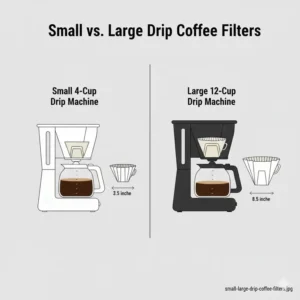
Small Basket: 4-5 cup brewers.
-
Standard Basket: 8-12 cup brewers (the most common size for homes).
-
Commercial Coffee Maker Filter: 10-14 cup to 3-gallon capacity (significantly larger diameter and deeper walls).
-
The Precise Cone Filter: The Specialty Brewer’s Choice
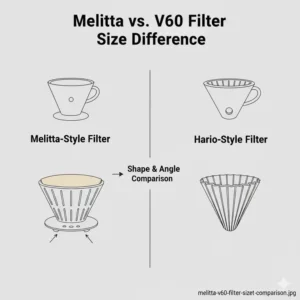
The cone filter, often referenced by numbered systems like a size 4 coffee filter, is shaped like a ‘V’ or a cone. This design is dominant in pour-over devices (like Hario V60, Chemex, Kalita Wave) and high-end specialty drip machines (like the Technivorm Moccamaster or Bonavita).
-
Geometry and Flow: The tapered shape forces the hot water to travel through a much thicker, deeper bed of coffee grounds at the cone’s narrow point. This extended contact time and focused flow rate promote a more complete, even extraction, which is why it is favored by baristas for light and medium roasts, which need more time to release their complex flavors. The result is typically a cleaner, brighter cup with less sediment.
-
Common Cone Filter Sizes (by Number): The numbering system is the industry standard for cone filters and is vital for compatibility.
-
Size 1: For very small, single-cup brewers (e.g., small pour-over drippers).
-
Size 2: The standard for 2-6 cup cone brewers or single-serve pour-over methods (e.g., the Dunkin’ Donuts #2 Cone Coffee Filters above).
-
Size 4: The universal standard for 8-12 cup cone brewers, including many high-end drip machines (e.g., the Melitta #4 Cone Coffee Filters). This is one of the most popular and versatile of the coffee filter sizes.
-
Size 6: For high-capacity cone brewers or large batch pour-over devices.
-
In essence, if you prefer a classic, robust, and full-bodied cup with minimal fuss, a standard basket filter is likely what you need. If you chase the nuanced, clean, and bright flavors of specialty coffee, the precision of a size 4 coffee filter or its smaller sibling, the size 2 coffee filter, is the way to go.
💰 Budget vs. Premium Filter Comparison
The price difference in coffee filter sizes often reflects the quality of the paper, the environmental impact of the bleaching process, and the specific engineering required for the brewer. This table compares typical basket and cone options across different value tiers.
| Feature | Budget Basket Filter (e.g., Store Brand) | Mid-Range Basket Filter (e.g., Brew Rite) | Premium Cone Filter (e.g., Melitta #4) | Specialty Filter (e.g., Chemex FC-100) |
| Material Quality | Standard, often lower density paper | Thicker paper, consistent structure | Oxygen-cleansed, chlorine-free paper | Lab-grade, 20-30% thicker bonded paper |
| Filtration Result | Good, may allow more fines/oils through | Very good, reliable performance | Excellent, very clean cup | Exceptional, removes virtually all oils/sediment |
| Risk of Collapse | Higher, especially when overfilled | Low, good structural integrity | Very Low, sturdy cone shape | Extremely Low, robust design |
| Environmental Process | Often Chlorine Bleached (White) | Available in Natural (Unbleached) or White | Oxygen-Cleansed (Better than Chlorine) | Chemically Bonded, High-Grade |
| Cost Per Filter (Approx.) | $\$$ | $\$$ – $$$ | $$$ | $$$ – $$$$ |
🛑 Why Does My Filter Keep Collapsing? A Deep Dive into Filter Mechanics
If you’ve ever had a filter collapse, resulting in a coffee ground flood, you’re not alone. This is often a direct result of using the wrong size or type of filter paper, particularly when using a basket filter in a machine that demands a specific fit.
-
The Wrong Size: If the filter is too small for the basket holder, the water pressure from the brewer can push the paper over the edge, causing it to fold in on itself. Always verify the required coffee filter sizes for your specific machine.
-
Overfilling: Putting too many grounds (i.e., making a strong brew) in a basket filter increases the weight and the pressure on the filter walls. This is where the structural integrity of a high-quality filter, like the Brew Rite 8-12 Cup Basket Coffee Filters, really pays off over cheaper, thinner alternatives.
-
The “Fluting” Factor: Basket filters have characteristic ridges, or fluting, along their sides to help them maintain shape. A poor-quality filter with weak fluting will not stand up to the pressure of a full brewing cycle.
-
The Commercial Challenge: For commercial coffee maker filter users, blow-outs are a serious concern. The large volume of water in machines using the Wilbur Curtis D-600 Paper Coffee Filter creates immense pressure. These filters are engineered with reinforced paper density specifically to prevent this costly and messy failure.
🛠️ The Permanent vs. Paper Debate: A Look at Reusable Coffee Filter Sizes
Beyond the cone and basket shapes, another massive division in the filter world is the choice between disposable paper and a permanent filter. Each has distinct effects on the flavor, maintenance, and environmental footprint of your daily routine.
The Case for Paper (Disposable) Filters
Paper filters, whether you choose a small size 2 coffee filter or a large basket filter, offer the cleanest cup of coffee.
-
Filtration Prowess: The primary benefit is the paper’s ability to trap micro-fines and coffee oils, or diterpenes. These oils, while contributing to a richer mouthfeel, can also carry bitter flavors and, in very high quantities, have been linked to slight increases in cholesterol levels. The Chemex Bonded Filter Pre-Folded Squares FC-100, for instance, is championed for its ability to produce a near-scientifically clean cup. For those seeking the bright, clear characteristics of specialty coffee, paper is the unmatched champion.
-
Convenience: The ease of disposal is a huge plus. You simply lift the filter and grounds out of the machine and compost or trash them—no mess, no fuss, and minimal cleanup.
The Case for Permanent (Reusable) Filters
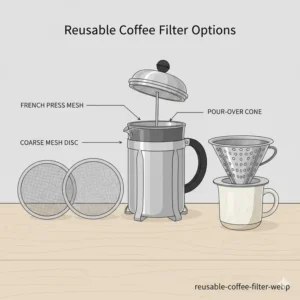
Permanent filters are typically made of woven metal mesh, most commonly a gold-tone stainless steel, designed to fit the exact same coffee filter sizes as their paper counterparts.
-
Flavor and Body: The fine metal mesh of a permanent filter—such as the GoldTone Reusable 8-12 Cup Basket Filter—allows a significant amount of the coffee’s natural oils and micro-fines to pass into the brew. This results in a coffee with a heavier body and a richer, more robust flavor, often described as more “old-school” or “classic diner coffee.”
-
Sustainability and Cost: This is their biggest selling point. You buy it once, and you drastically reduce your paper waste. Over time, a reusable filter saves a considerable amount of money, especially if you go through a lot of coffee. The environment benefits, and so does your wallet!
-
The Catch: The downside is maintenance. These filters require regular, thorough cleaning. If not cleaned properly, the porous mesh can trap oils and flavor residue, leading to a rancid or stale taste in subsequent brews. This is particularly crucial for a commercial coffee maker filter where sanitation is paramount.
♻️ Permanent vs. Paper: Key Features Comparison
| Feature | Paper Filter (Disposable) | Permanent Filter (Reusable) | Impact on Brew/User |
| Clarity of Brew | High (Traps most fines/oils) | Low (Allows fines/oils to pass) | Cleaner taste vs. Fuller body/richness |
| Environmental Impact | Moderate (Paper waste, though compostable) | Very Low (Zero paper waste) | Convenience vs. Sustainability |
| Cost Over Time | High (Constant repurchase cost) | Low (Initial purchase only) | Recurring Expense vs. Upfront Investment |
| Maintenance | Minimal (Toss and go) | High (Requires daily rinsing and periodic deep cleaning) | Speed vs. Effort |
| Best For | Specialty Coffee, Clean Flavors | Darker Roasts, Rich/Heavy Body | Precision vs. Tradition |
For a broader perspective on the environmental impact of these choices, I recommend consulting a reputable source like the Environmental Protection Agency (EPA) to understand the life-cycle of paper products versus durable goods. [Outbound Link to EPA or similar authority on recycling/waste].
☕ Beyond the Brew Basket: Exploring Specialty Coffee Filter Sizes
The complexity of coffee filter sizes only increases when you look at specialty brewing devices that don’t conform to the classic cone or basket structure. These niche filters are crucial for unlocking specific flavor profiles.
The AeroPress Disc Filter
As briefly mentioned with the AeroPress Micro-Filters, these little paper discs are a category all their own.
-
Size and Function: They are small, typically around 2.5 inches in diameter, and function as a barrier against high pressure. Unlike a standard filter that relies on gravity (like a size 4 coffee filter), the AeroPress forces water through the coffee bed and the filter using human strength. This dense, rapid filtration results in a very clean, concentrated brew. You can also get thin, reusable metal disc filters for the AeroPress, offering a flavor profile closer to the permanent basket filters.
The Kalita Wave Filter
This is a clever hybrid that tries to get the best of both worlds.
-
Size and Function: The Kalita Wave uses a flat-bottomed filter, but its unique feature is the three holes in the bottom, unlike the single hole of a V60 cone. The filter paper is flat-bottomed and fluted, promoting even extraction by preventing water from pooling unevenly. The filter is often referred to by a numbering system, typically 155 (for 1-2 cups) and 185 (for 2-4 cups). These are essentially specialized basket filter variations, ensuring the water contact is as uniform as possible, avoiding the channeling that can plague a traditional basket filter.
Understanding the specific mechanics of these brewers shows that coffee filter sizes are not just about dimensions; they are about flow restriction and coffee bed geometry. The correct filter ensures the water-to-coffee contact time is precisely what the device’s designer intended.
📊 Filter Performance Metrics: A Deeper Look
How do these different shapes and sizes affect the measurable quality of the coffee? This table quantifies the typical outcomes.
| Filter Geometry/Type | Extraction Yield (TDS) Range | Sediment Level | Oil/Mouthfeel | Flow Rate |
| Standard Basket Filter (8-12 Cup) | 18% – 20% | Medium | Medium-High | Fast |
| Cone Filter (Size 4 Coffee Filter) | 19% – 21% | Low | Low-Medium | Medium (Optimized) |
| Chemex (Thick Paper) | 19% – 20% | Very Low (Near Zero) | Very Low | Slow |
| Permanent Mesh (Reusable) | 17% – 19% | High | High (Oils pass through) | Very Fast |
| AeroPress (Disc Filter) | 20% – 22% (Concentrate) | Very Low | Low-Medium (Pressure-filtered) | Controlled by Plunge |
Note: TDS (Total Dissolved Solids) is a measure of extraction strength. The ideal range is generally accepted as 18% to 22% according to the Specialty Coffee Association (SCA).
For further reading on the science of filtration, I highly recommend looking up the research published by the Specialty Coffee Association (SCA), which provides standards and technical guides on extraction physics. [Outbound Link to SCA or academic coffee science resource].
💡 The Buying Guide: Matching Coffee Filter Sizes to Your Brewer
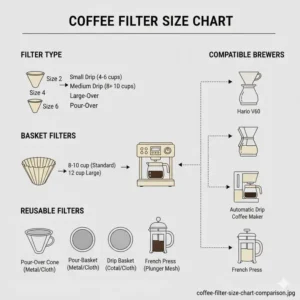
Choosing the right filter size is the most critical step in ensuring a successful brew. Using the wrong size can lead to collapsed filters, grounds in your cup, or a significant loss of flavor quality. Follow this guide to correctly match your brewer to the appropriate filter.
1. Identify Your Brewer Type and Capacity
-
Auto-Drip Machine (Flat Bottom): If your machine looks like the standard appliance store model, you need a basket filter. The capacity (e.g., 8-12 cups) will determine the diameter you need. If you have a small machine, look for the 4-6 cup basket size. If you have the standard home machine, the Brew Rite 8-12 Cup Basket Coffee Filters size is correct.
-
Auto-Drip Machine (Cone Shaped): If your machine (e.g., Technivorm, Bonavita) has a V-shaped filter holder, you need a cone filter. For a full-sized (8-12 cup) machine, the size 4 coffee filter is almost universally correct. For smaller, 4-6 cup models, you’ll likely need a size 2 coffee filter.
-
Pour-Over Device: The manufacturer’s manual is your bible here.
-
Hario V60/Melitta Drip Cones (Large): Size 4 coffee filter.
-
Hario V60 (Small) / Small Melitta Drip Cones: Size 2 coffee filter.
-
Chemex: Requires the specialty square filters (like the Chemex Bonded Filter Pre-Folded Squares FC-100). The size of your Chemex (6, 8, or 10 cup) dictates how you fold the filter, but the filter paper itself is often the same product.
-
AeroPress: Requires the small disc filters, such as the AeroPress Micro-Filters.
-
2. The Commercial Coffee Maker Filter Challenge
For large-scale operations, the filter size is determined by the specific make and model of the high-volume brewer (e.g., Fetco, Bunn, Wilbur Curtis). These are always massive basket filters and the term 10-14 cup commercial filter is just the starting point. They often have proprietary designations (e.g., the Wilbur Curtis D-600 Paper Coffee Filter). Never try to substitute a home filter in a commercial machine; the blowout risk is too high.
3. Choosing Between White and Natural (Bleached vs. Unbleached)
This is a common question when looking at coffee filter sizes in the store.
-
White (Bleached): These have been treated with a bleaching agent to make them bright white. Historically, this was chlorine, which could impart a subtle chemical taste. Today, most reputable brands (like Melitta) use an oxygen-cleansing process, which is chlorine-free and much cleaner. The white filters are often preferred for the purest flavor.
-
Natural (Unbleached/Brown): These retain the natural wood pulp color. While they are chemical-free, they can sometimes impart a slightly papery, woody, or earthy flavor to the coffee, especially if you don’t pre-wet the filter.
For the purist, I recommend oxygen-cleansed white filters. For the environmentally focused, natural unbleached is a great choice, but always pre-rinse with hot water!
🎯 Requirements Analysis: Choosing Your Ideal Filter
| Requirement/Priority | Best Filter Recommendation | Why It Fits |
| Maximized Flavor Clarity (Light Roast) | Cone Filter (e.g., Size 4 Coffee Filter) | Deep coffee bed allows for optimal, prolonged extraction. |
| Minimal Cleanup/Maximum Convenience | Basket Filter (Disposable) | Simple throw-away after brewing; no rinsing. |
| Lowest Long-Term Cost/Sustainability | Permanent Filter (e.g., GoldTone Reusable) | Eliminates recurring paper filter purchases and waste. |
| High-Volume/Restaurant Use | Commercial Filter (e.g., Wilbur Curtis D-600) | Industrial-grade paper density to handle extreme capacity/pressure. |
| Quick, Strong Single-Serve Brew | AeroPress Disc Filter (e.g., AeroPress Micro-Filters) | Designed for rapid, pressure-assisted filtration. |
🔎 Avoiding Common Filter Mistakes and Addressing Keyword Variations
Understanding the nuances of coffee filter sizes often involves tackling common mistakes and being aware of the terminology variations you’ll see online. Searchers in the USA often use slightly different phrases, which is why we’ve naturally incorporated terms like coffee filters sizes, coffee filter size, and size 4 coffee filter throughout this guide.
The Misunderstood ‘Cup’ Measurement
When a box says ‘8-12 cup filter,’ it’s crucial to understand that a ‘cup’ in the coffee world is not the standard 8-fluid ounce kitchen measure. It’s usually about 5 to 6 fluid ounces.
-
8-12 Cup Basket Filter: This filter is designed for a machine that brews 40-72 fluid ounces of coffee. The size 4 coffee filter is also typically for this volume range. If you search for coffee filters size 4, you’re looking for a cone filter for this capacity.
-
Commercial Sizes: These are even more variable. A 14 cup commercial machine is usually a 70-ounce machine, whereas a 3-gallon urn using a commercial coffee maker filter is 384 ounces! Always check the machine’s manual for the filter diameter.
Why Pre-Rinsing is Non-Negotiable
Regardless of whether you use a cone filter or a basket filter, always pre-rinse the paper with hot water before adding your grounds.
-
Rinsing Purpose: This simple step does two things:
-
It removes any residual papery taste, which is more noticeable in unbleached filters.
-
It pre-heats your brewing vessel (especially crucial for pour-over devices like Chemex), ensuring the temperature of the water remains stable throughout the extraction process. For a deep-dive on the importance of brewing temperature stability, check out the resources from a source like Wikipedia’s entry on Coffee Preparation. [Outbound Link to Wikipedia – Coffee Preparation].
-
The variations in search terms—such as someone searching for coffee filter 4 size (a typo) or the correct size 4 coffee filter—all point to the same need: clarity on which filter to buy.
✨ Your Next Perfect Brew Awaits! ✨
Don’t settle for less—click below to explore premium filter options and elevate your daily coffee ritual immediately. 🛒
Conclusion: Mastering the Art of Filter Choice
The simple paper (or mesh) disc you put into your brewer is far more important than its price tag suggests. By now, you should be able to confidently differentiate between a basket filter and a cone filter, understand the significance of a numbered size 4 coffee filter, and appreciate the industrial strength of a commercial coffee maker filter. The world of coffee filter sizes is one of precision—where the smallest difference in dimension or material quality can be the defining factor between a mediocre cup and a transcendent one.
Remember the key takeaways: Basket for traditional, full-bodied auto-drip; Cone (size 2 coffee filter or size 4 coffee filter) for clean, specialty pour-over; and Permanent for cost savings and a rich, oily brew. Never compromise on the correct size for your machine, and always remember to rinse your paper filters.
It’s time to apply this expertise to your next brew. You have the knowledge to shop smart and brew like a pro!
❓ Frequently Asked Questions
✅ Absolutely, coffee filter sizes significantly impact taste by controlling the bed depth and flow rate. The shape (cone vs. basket) changes the water-to-ground contact time, directly affecting extraction. A too-small filter can lead to bitterness from over-extraction, while a proper size ensures balanced flavor release…
✅ The size 2 coffee filter is smaller, designed for 2-6 cup cone-style brewers, and creates a shallower coffee bed. The size 4 coffee filter is larger, fitting 8-12 cup cone brewers, and produces a deeper coffee bed for longer water contact time. Always match the size number to your specific cone brewer model…
✅ No, you cannot effectively use a basket filter in a cone-shaped coffee maker because the flat bottom will not sit correctly, causing the filter walls to collapse, leading to grounds overflowing into your cup and severely inconsistent extraction. You must use the correct V-shaped cone filter for the best results…
✅ ‘Better’ depends on your preference: a reusable filter (like a gold-tone mesh) is better for sustainability and a richer, full-bodied cup with oils. Paper filters (like the size 4 coffee filter) are better for the cleanest, brightest-tasting coffee with zero sediment and easy, no-mess cleanup. You must weigh convenience against flavor profile…
✅ Commercial coffee maker filters are typically purchased from specialized restaurant supply companies, bulk online retailers like Amazon Business, or directly from the brewer manufacturer (e.g., Bunn, Curtis, Fetco). The crucial step is identifying the exact model number (e.g., D-600) to ensure the proper industrial size and strength filter paper… ❓ Do coffee filter sizes affect the taste of the coffee?
❓ What is the difference between a size 2 and size 4 coffee filter?
❓ Can I use a basket filter in a cone-shaped coffee maker?
❓ Is a reusable permanent coffee filter better than paper?
❓ Where can I buy a commercial coffee maker filter for my restaurant?
Recommended for You
- Titanium French Press: The Ultimate Guide to Ultralight Coffee Gear in 2025 – 7 Must-Have Models for Every Adventure
- Coffee Maker with Tea Maker: 7 Best Dual-Brew Machines for 2025
- Tea and Coffee Brewer: Your Ultimate Guide to Amazing Brews in 2025
Disclaimer: This article contains affiliate links. If you purchase products through these links, we may earn a small commission at no additional cost to you.
✨ Found this helpful? Share it with your friends! 💬🤗