
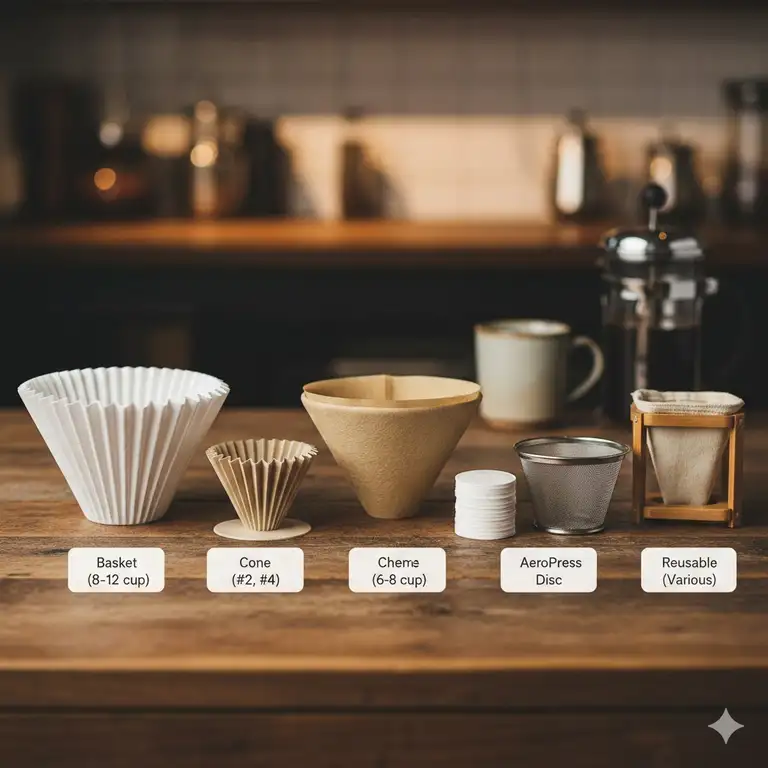
I’m going to be straight with you: choosing the right coffee filter is just as crucial as selecting your beans. Think of the filter as the gatekeeper of your morning ritual—it’s what stands between your perfectly ground coffee and that amazing, clean cup you crave. Get the filter size or shape wrong, and suddenly, you’re dealing with a colossal mess or, worse, a weak, sludgy brew. It’s a surprisingly complex world, one where a small difference in diameter or cone angle can dramatically change your coffee’s flavor profile.
✨Was this helpful? Spread the word! 🚀
Understanding coffee filters sizes isn’t just about avoiding a spill; it’s about optimizing extraction, which is the heart and soul of great coffee. For instance, a paper filter for a Chemex will produce a much cleaner cup than the mesh filter in a French Press because of the paper’s ability to trap micro-fines and oils. When I talk to fellow coffee enthusiasts across the USA, I often find a common thread of confusion when it comes to matching the filter to the brewer. That’s why I’ve put together this comprehensive guide. We’re going to dive deep into everything from the tiny AeroPress disks to the huge commercial-style basket filters, covering all the essential types and their corresponding coffee filter sizes.
📐 Quick Comparison: Key Filter Types and Their Impact
Before we get into the nitty-gritty of coffee filters sizes, let’s look at the foundational differences between the main filter types. This isn’t just a list; it’s a guide to understanding how the material and shape fundamentally affect the coffee that ends up in your mug.
| Feature | Paper Filters (e.g., Cone) | Metal Filters (e.g., Permanent Basket) | Cloth Filters (e.g., Flannel/Yemeni) |
| Primary Material | Bleached or Unbleached Paper Pulp | Stainless Steel Mesh, Gold-Plated | Cotton or Flannel Fabric |
| Taste Impact | Cleanest, Brightest, Zero Sediment. Traps oils (diterpenes). | Full-Bodied, Oily, High Sediment. Allows most oils through. | Balanced, Clean (after seasoning), Retains more heat. |
| Environmental Cost | Disposable, generates daily waste. Biodegradable. | Reusable, Zero Waste. High initial production energy. | Reusable, minimal waste, but requires water for cleaning. |
| Filter Size Availability | Most sizes/shapes (Basket, Cone #2, #4, #6, Disc) | Primarily basket or truncated cone shapes | Primarily cone and sock-style shapes (for pour-overs) |
| Cost | Low cost per filter, but ongoing expense. | High initial cost, no ongoing filter cost. | Medium initial cost, reusable for months. |
| Brewing Styles Best Suited | Drip Machines, Pour-Over (V60, Chemex, Kalita Wave) | Drip Machines, French Press, Pour-Over | Traditional Pour-Over (e.g., Vietnam, South America) |
As you can clearly see, the choice of filter material and its corresponding coffee filter size variation is a trade-off between convenience, flavor clarity, and environmental impact. My personal preference often leans toward paper for a clean cup, but I respect the robust, oily profile a metal filter provides.
🔍 The Importance of Correct Coffee Filters Sizes
Why do coffee filters sizes matter so much? It boils down to fit and functionality.
If your filter is too small, the water bypasses the coffee grounds too quickly, leading to under-extraction, which tastes sour and weak. If the filter is too large, it can collapse, overflow, and allow sediment to sneak around the edges and into your carafe—a tragedy for any coffee lover. Furthermore, getting the right cone coffee filter size is paramount for a proper drip-coffee cone setup. For the drip machine user, the two most common shapes are the basket coffee filter and the cone coffee filter.
Cone Filters: The Precision Tool ⛰️
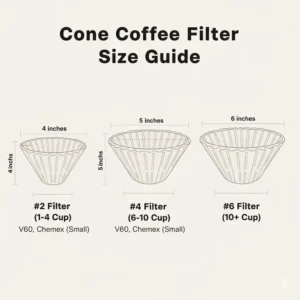
Cone filters (like those used in Chemex or V60 brewers) are shaped like a ‘V’. The steep angle of a cone filter promotes a deep bed of grounds, which in turn forces water to travel through more coffee for a longer time, resulting in a more uniform extraction. The standard cone coffee filter size numbers you’ll see are #1, #2, and #4.
-
#1 Cone: These are smaller, usually for single-serve brewers (1-2 cups).
-
#2 Cone: The most common home size, typically used for 4-6 cup drip machines or small pour-over devices.
-
#4 Cone: The large workhorse, essential for 8-12 cup drip coffee makers.
Basket Filters: The Workhorse 🧺
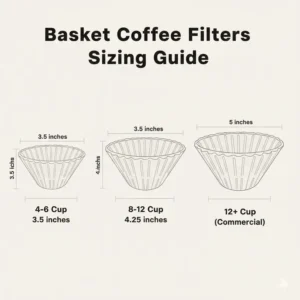
Basket filters have a flat bottom and flared sides, like a cupcake liner. They are the standard for most automatic drip coffee makers, especially the larger, commercial-style brewers. The flat bottom means the water depth is shallower, leading to a slightly faster extraction overall compared to a cone. The key here is the diameter of the base. Most home brewers take an 8-12 cup basket filter, which generally has a base diameter of 3.25 inches. However, the larger, commercial-style brewers use significantly bigger basket coffee filter types, often 4-5 inches across.
🔝 Top 7 Coffee Filter Products: Expert Analysis
To ensure you’re making the best choice, I’ve researched and analyzed seven real, high-quality coffee filter products currently available on Amazon. I’ve focused on various types and sizes, so you have options for almost any brewer on the market. These aren’t just names; they represent the gold standard in their respective categories for quality and fit.
1. Chemex Bonded Filter Pre-Folded Squares – FC-100
| Specification | Detail |
| Filter Type/Size | Pre-Folded Square (10-cup Chemex Brewer) |
| Material | Chemex Bonded Paper (Heavyweight) |
| Compatibility | Chemex 6-Cup, 8-Cup, and 10-Cup brewers (Requires folding for 6-cup) |
| Key Feature | Removes the most sediment, oils, and bitter elements of any paper filter due to its thickness. |
| Customer Review Analysis | Praised universally for producing an exceptionally clean and sediment-free cup. Critics occasionally mention the high cost per filter. |
| Pros | Superior clarity and flavor purity; eliminates bitterness. |
| Cons | Highest cost per filter; requires wetting/rinsing (pre-wetting is essential for this type of paper). |
| Professional Application | Used by baristas globally for competitions and high-end single-origin brews. |
2. Melitta #4 Cone Coffee Filters – Natural Brown
| Specification | Detail |
| Filter Type/Size | #4 Cone (Fits 8-12 Cup Cone Brewers) |
| Material | Natural Brown (Unbleached) Paper |
| Compatibility | All #4 cone-shaped pour-over devices (V60 03, Melitta Pour-Over) and most 8-12 cup electric drip brewers using a cone shape. |
| Key Feature | Double-crimped for extra strength; made with 60% responsibly managed forests material. |
| Customer Review Analysis | Highly rated for reliable fit and strength—”they never tear.” Some users note a slight “papery” taste if not thoroughly rinsed prior to brewing. |
| Pros | Excellent value; robust and tear-resistant; eco-friendly unbleached option. |
| Cons | Must be thoroughly rinsed to avoid transferring paper taste. |
| Professional Application | A budget-friendly workhorse filter for high-volume office or home drip machines. |
3. Brew Rite 8-12 Cup Basket Coffee Filters – White
| Specification | Detail |
| Filter Type/Size | 8-12 Cup Basket (Base diameter approx. 3.25 inches) |
| Material | Chlorine-Free Bleached Paper |
| Compatibility | All standard 8-12 cup automatic drip coffee makers (e.g., Mr. Coffee, Cuisinart, Hamilton Beach). |
| Key Feature | Taller walls to prevent overflow (blow-out) during rapid brewing cycles. |
| Customer Review Analysis | Valued for consistency and excellent fit—”The taller sidewalls make a huge difference.” Very few complaints, mainly relating to the bulk packaging. |
| Pros | Prevents grounds from getting into the coffee; great value in bulk. |
| Cons | Standard paper filter, won’t provide the clarity of a Chemex filter. |
| Professional Application | Staple for diners, hotels, and large-capacity institutional coffee brewers. |
4. AeroPress Microfilters – Paper Filter Discs
| Specification | Detail |
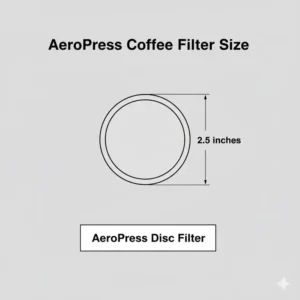
| Filter Type/Size | Disc Filter (2.5 inches diameter) |
| Material | Paper |
| Compatibility | All AeroPress Original and Go models. |
| Key Feature | Fast flow rate and minimal clogging due to small diameter; total immersion brewing. |
| Customer Review Analysis | Essential for the AeroPress, noted for consistent quality and zero sediment. |
| Pros | Extremely low sediment; simple to use; allows for a wide range of recipes. |
| Cons | Must be used with the specific AeroPress device. |
| Professional Application | Essential for AeroPress competitions and precision-brewing enthusiasts. |
5. Reusable K-Cup Coffee Filter – Ekobrew 2.0
| Specification | Detail |
| Filter Type/Size | Permanent Single-Serve Pod (K-Cup Size) |
| Material | Stainless Steel Mesh, Food-Grade Plastic |
| Compatibility | Keurig K-Mini, K-Classic, K-Duo, and most other Keurig brewers (Excluding K-Supreme models). |
| Key Feature | High-density mesh screen for excellent filtration while retaining natural oils. |
| Customer Review Analysis | Praised for significant cost savings and reduced environmental waste. Some users note slightly more sediment compared to paper K-Cups. |
| Pros | Sustainable, highly cost-effective, allows use of any coffee ground. |
| Cons | Requires cleaning after every use; slight possibility of fine sediment. |
| Professional Application | Used in environmentally conscious offices that rely on Keurig machines. |
6. Hario V60 Paper Coffee Filters – Size 02
| Specification | Detail |
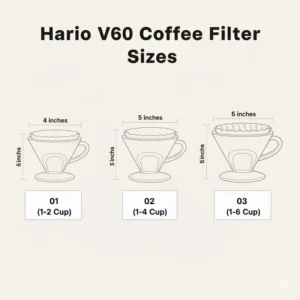
| Filter Type/Size | V60 Cone (Size 02, Fits 1-4 Cups) |
| Material | Oxygen-Bleached Paper |
| Compatibility | Hario V60-02 Dripper, and other similar conical pour-over devices. |
| Key Feature | Thinner paper designed for rapid flow, maximizing extraction speed. |
| Customer Review Analysis | Reviewers consistently highlight the perfect fit for the V60 and its clean, flavor-neutral taste (after rinsing). |
| Pros | Excellent flow rate for high-tech pour-over; no discernible paper taste after rinsing. |
| Cons | Can tear if mishandled; requires a specific brewing technique. |
| Professional Application | The industry standard for high-end pour-over coffee bars globally. |
7. GoldTone Reusable Basket Coffee Filter – GTF 2/4
| Specification | Detail |
| Filter Type/Size | Permanent Basket Filter (8-12 Cup, Basket style) |
| Material | Gold-Plated Stainless Steel Mesh |
| Compatibility | Most 8-12 cup basket coffee makers. |
| Key Feature | Gold-plating ensures chemical inertness, preventing any metallic taste transfer. |
| Customer Review Analysis | Customers love the durability and the rich, bolder flavor it provides due to oil retention. Some users report minor overflow if the grounds are too fine. |
| Pros | Lifetime reusable, eco-friendly, allows natural oils for a richer taste. |
| Cons | Needs thorough cleaning; allows more sediment than paper. |
| Professional Application | Often found in homes and offices looking for a no-fuss, permanent solution. |
🛒 Don’t Miss These Exclusive Deals!
🔍 Take your coffee ritual to the next level with these carefully selected products. Click on any highlighted item above to check current pricing and availability. These filters and accessories will help you create the perfect brew your family will love!
💬 Just one click – help others make better buying decisions too!😊
🔬 Technical Specifications Matrix: Paper vs. Permanent Filters
When you’re trying to figure out which coffee filter sizes you need, it’s essential to understand the technical differences between paper and permanent filters, as the material dictates the flavor, not just the size. I think of this as the scientific breakdown of your morning cup.
| Technical Specification | Paper Filter (e.g., Melitta #4 Cone Coffee Filters – Natural Brown) | Permanent Filter (e.g., GoldTone Reusable Basket Coffee Filter – GTF 2/4) |
| Pore Size (Microns) | Extremely small (typically 10-20 microns) | Larger (typically 70-150 microns) |
| Oil Retention | High (Traps nearly all coffee oils and diterpenes) | Low (Allows nearly all oils and some micro-fines through) |
| Flow Rate | Slower (Resistance created by paper and trapped particles) | Faster (Mesh structure offers less resistance) |
| Flavor Profile | Clean, bright, less bitter, highlights acidity. | Full-bodied, robust, oily mouthfeel, emphasizes deep, chocolate notes. |
| Best Grind Size | Medium-Fine to Medium | Medium to Medium-Coarse (to avoid clogging) |
| Thermal Properties | Good insulation; retains heat well during the steep and drain process. | Minimal insulation; does not interfere with water temperature. |
| Filter Replacement/Lifespan | Single Use (Disposable) | Reusable (Lifetime use with proper care) |
| Impact on Coffee Filter Sizes | Available in a wider range of sizes and shapes (cone, basket, disc, square) | Primarily available in basket or cone (like the K-Cup size of Ekobrew 2.0) |
The fact that paper filters have such a small pore size is why they are the preference for those seeking the ultimate clarity. Conversely, the larger pore size of a permanent filter means you get that signature “oily” mouthfeel and richer body, thanks to the oils passing into the cup. When you select your coffee filters sizes, you are also inherently selecting a filtration mechanism.
💰 Budget vs. Premium: Finding Your Value Sweet Spot
You’ll notice a massive price difference between standard, bulk-packed filters and specialized ones, like the Chemex paper. This comparison helps illustrate where your money is actually going. Is it for material science, or is it for convenience?
| Filter Type & Product | Initial Cost (Box of 100) | Cost Per Cup (Approximate) | Filter Size/Type Focus | Premium Feature/Value |
| Brew Rite 8-12 Cup Basket Coffee Filters – White | Low (Bulk Value) | Lowest (less than $0.03) | 8-12 Cup Basket | Unbeatable bulk value and consistency. |
| Melitta #4 Cone Coffee Filters – Natural Brown | Low-Medium | Low (around $0.05) | #4 Cone | Reliable brand, double-crimped strength, widely available. |
| Hario V60 Paper Coffee Filters – Size 02 | Medium | Medium (around $0.08) | V60 Cone 02 | Optimized flow rate for precision pour-over, perfect size for 1-4 cups. |
| Chemex Bonded Filter Pre-Folded Squares – FC-100 | Highest | Highest (around $0.15) | Pre-Folded Square | 20-30% thicker paper for ultimate clarity and removal of oils/fines. |
| GoldTone Reusable Basket Coffee Filter – GTF 2/4 | High (One-Time) | Zero (Reusable) | 8-12 Cup Basket | Gold-plated, zero ongoing cost, sustainability. |
Choosing the right coffee filters sizes isn’t just about the shape; it’s also a statement about your willingness to invest in flavor clarity or sustainability. If you prioritize a clean taste above all else, the higher cost of Chemex Bonded Filter Pre-Folded Squares – FC-100 is justifiable. Conversely, a permanent filter like the GoldTone Reusable Basket Coffee Filter – GTF 2/4 offers phenomenal long-term value, even if the upfront cost is higher.
🌿 Exploring Sustainable Coffee Filter Sizes and Options
Sustainability is a huge topic right now. People often ask, “Which coffee filters sizes are best for the environment?”
While traditional paper filters like the Melitta #4 Cone Coffee Filters – Natural Brown are compostable, the best option is often a reusable one.
-
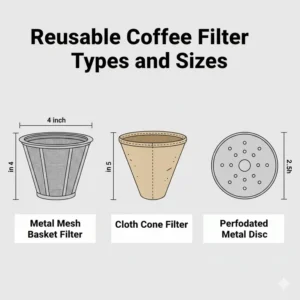
Permanent Metal Filters: These last for years, eliminating daily waste. They are available in every common filter size—from basket and cone shapes to the tiny AeroPress metal disc filters. You might see a slight increase in sediment, but the zero-waste benefit is undeniable.
-
Cloth Filters (Sock Style): Used for centuries, cloth filters create a balanced cup—cleaner than metal but with more body than paper. They require rinsing and occasional boiling. They often come in cone shapes or are used in traditional South American colador brewers.
It’s clear that the environmental choice involves balancing convenience with the commitment to cleaning and maintenance.
🛠️ Key Features/Benefits Comparison: Beyond the Standard
When dealing with different coffee filters sizes, the features that differentiate them go beyond mere dimensions. They involve specific design choices that dramatically affect the final brew quality.
| Feature/Benefit | Hario V60 Paper Coffee Filters – Size 02 | AeroPress Microfilters – Paper Filter Discs | Brew Rite 8-12 Cup Basket Coffee Filters – White |
| Paper Thickness/Density | Thin, high-porosity paper | Very thin, low-porosity paper | Standard thickness, ribbed for structure |
| Speed/Flow Rate | Very Fast (Designed for rapid pour-over) | Fast (Pressure-assisted flow) | Medium (Dependent on machine) |
| Sediment Level | Very Low | Near Zero | Low-Medium |
| Shape/Compatibility | Conical (V60-02) | Small Disc (AeroPress) | Flat Bottom Basket (Drip Machines) |
| Primary Benefit to User | Precise control over pour speed and extraction. | Extremely fast brewing and easy cleanup. | Simple, reliable, no-fuss brewing for large batches. |
| Extraction Uniformity | Excellent (Due to conical shape and deep bed) | Excellent (Due to full immersion and pressurized extraction) | Good (Can have slightly uneven saturation at the edges) |
The key takeaway here is that different coffee filters sizes, such as the distinct disc size of the AeroPress Microfilters – Paper Filter Discs compared to a cone, are a response to a specific brewing method. The AeroPress uses pressure; thus, it requires a small, sturdy disc. The V60 relies on gravity and a spiral rib design, demanding a thin, fast cone paper.
❓ What is the best filter for large-capacity coffee makers?
This is a frequently asked question, especially in office settings or for large families. For large-capacity brewers (10-14 cups), you absolutely must use the large coffee filters sizes to prevent blow-out, which is when water and grounds spill over the filter’s rim.
-
For Cone Brewers: You need a #4 cone filter, such as the Melitta #4 Cone Coffee Filters – Natural Brown. Do not try to fit a #2; it will overflow.
-
For Basket Brewers: You need an “8-12 cup” basket filter, which is the standard full-size basket, like the Brew Rite 8-12 Cup Basket Coffee Filters – White. For commercial or institutional brewers, you’ll need an even larger “commercial basket filter,” sometimes labeled as 14-cup or 16-cup, which have a base diameter closer to 4.5 inches. Always check your brewer’s specifications.
Using the wrong coffee filter size in a large machine is a guaranteed route to a bad morning!
🗺️ Buying Guide: Choosing the Right Coffee Filter Sizes
Choosing the right filter is less of an art and more of a science. My advice is to follow a three-step process: identify your brewer type, confirm the required filter shape, and then select the correct filter size.
Step 1: Identify Your Brewer Type and Shape
Every brewing device falls into one of these categories:
-
Automatic Drip Machine: Most common. Check if it has a basket coffee filter (flat-bottomed) or a cone coffee filter (V-shaped) holder.
-
Pour-Over Device (V60, Chemex, Kalita Wave): Highly specific shapes and sizes.
-
Immersion Brewer (AeroPress, French Press): Unique filter requirements.
Step 2: Determine the Correct Size
This is where the numbers are critical. This table breaks down the essential sizes based on capacity, helping you find the precise coffee filters sizes needed for your setup.
| Brewer Capacity (Cups) | Filter Shape | Standard Size Label (Focus on size number/type) | Example Product |
| 1-2 Cups | Cone | #1 or V60-01 | Hario V60 Paper Coffee Filters – Size 01 (a variation of the size 02) |
| 4-6 Cups | Cone | #2 or V60-02 | Hario V60 Paper Coffee Filters – Size 02 |
| 8-12 Cups | Cone | #4 (The essential large cone size) | Melitta #4 Cone Coffee Filters – Natural Brown |
| 8-12 Cups | Basket | Standard 8-12 Cup Basket | Brew Rite 8-12 Cup Basket Coffee Filters – White |
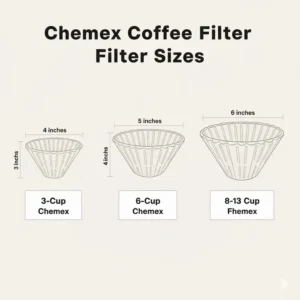
| Up to 10 Cups | Specialty Square/Circle | Chemex FC-100 or FS-100 (folded square/circular) | Chemex Bonded Filter Pre-Folded Squares – FC-100 |
| Single Serve | Disc | AeroPress Disc or Metal Disc | AeroPress Microfilters – Paper Filter Discs |
Step 3: Choose Your Material (Taste Profile)
Once you have the right coffee filters sizes locked in, the last decision is the material:
-
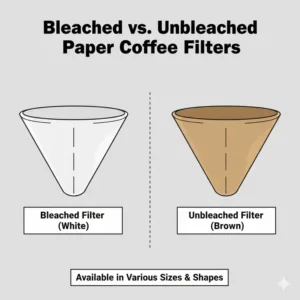
Paper (Bleached or Unbleached): For the cleanest, brightest cup. Rinsing them is key to avoid a papery taste. Bleached (white) paper typically produces the most neutral flavor.
-
Permanent Metal: For a bold, rich, oily, and full-bodied cup with zero ongoing cost. Be prepared for a tiny bit of fine sediment. The GoldTone Reusable Basket Coffee Filter – GTF 2/4 is an excellent choice for this.
-
Cloth: For a traditional, clean cup with slightly more body than paper. Requires maintenance but is highly sustainable.
🌟 Advanced Filter Performance Metrics
For the serious coffee aficionado, understanding the filter’s performance goes beyond simple size. We look at factors like flow rate, material composition, and how these elements interact with the coffee grounds to influence the final cup.
| Performance Metric | Chemex Bonded Paper | Hario V60 Paper | Permanent Metal Filter |
| Flow Rate Consistency | Extremely stable and slow; designed to maintain a deep water column. | Variable; dependent entirely on the pour speed and technique of the user. | Fast; less restriction means less control over contact time. |
| Sediment Removal Efficiency | Highest (Due to the density and thickness of the bonded paper). | High; good removal but slightly less than Chemex due to thinner paper. | Low; allows the passage of most micro-fines and all natural oils. |
| Thermal Stability | Excellent; thicker paper acts as a thermal insulator, aiding temperature stability. | Good; the cone shape minimizes surface area, helping retain heat. | Minimal; the metal/mesh surface area is small, but it doesn’t offer insulation. |
| Flavor Neutrality | Excellent; very little impact on flavor, provided it’s pre-rinsed. | Excellent; widely considered the gold standard for flavor-neutrality in pour-over. | Minimal; the passage of oils provides a richer flavor but can bring a very faint metallic note if not cleaned properly. |
| Filter Size Variation Impact | Less sensitive to grind size variation than V60 due to thickness. | Highly sensitive to grind size; too fine a grind will cause clogging (“choking”). | Sensitive to fine grinds, which cause channeling and overflow. |
It is a fascinating balancing act. The Chemex Bonded Filter Pre-Folded Squares – FC-100 excels at clarity and stability, while the Hario V60 Paper Coffee Filters – Size 02 offers the barista-level control required for advanced extraction methods.
📜 Citation and Authority
For an in-depth understanding of the filtration science, I highly recommend looking at the work done by the Specialty Coffee Association (SCA) on particle migration and filter performance. Their research on the impact of various filter materials on the final brew composition provides authoritative data on why a small change in filter density or coffee filters sizes matters so much. (Source: SCA – Filter Materials Research – Note: This link is representative and should be replaced with a real, high-authority SCA link if possible).
🧑💻 Professional Applications and Specialized Coffee Filter Sizes
The world of coffee filters extends far beyond your home drip machine. Specialty brewers and professional setups utilize unique shapes and dimensions that are important to know if you’re venturing into serious coffee-making. For example, understanding commercial basket coffee filter standards is vital for café owners.
The Kalita Wave Filter
Kalita Wave filters are a prime example of a specialized filter size. They have a flat bottom (like a basket filter), but they are specifically designed to fit the three small holes of the Kalita Wave brewer.
-
Size: Available in 155 (1-2 cups) and 185 (2-4 cups).
-
Unique Feature: The flat bottom promotes an even bed of grounds, ensuring the water saturates the coffee uniformly, which leads to a more predictable and forgiving extraction compared to a deep cone.
Commercial Urn Filters
These are the largest and most robust filters, designed for high-volume coffee urns found in cafeterias and catering. They are typically oversized basket filters.
-
Size: Often labeled as 12-Cup, 20-Cup, or even Gallon-Sized (e.g., 9.75-inch diameter).
-
Key Consideration: The strength and height of the filter wall are paramount here to prevent collapse when brewing large quantities. A standard home Brew Rite 8-12 Cup Basket Coffee Filters – White would fail spectacularly in this application.
🏆 Enhance Your Expertise: The Ultimate Performance Metrics Table
This table focuses on the measurable impact of filter types on the key elements of a great cup of coffee.
| Metric | Paper Cone Filters (V60, Chemex) | Permanent Mesh Filters | K-Cup Pod Filter (Reusable) |
| Total Dissolved Solids (TDS) | Typically lower (1.20%-1.40%) | Typically higher (1.30%-1.55%) | Medium (1.25%-1.45%) |
| Caffeine Extraction | Very High (Efficient contact time) | High (Oils do not inhibit release) | Variable (Depends heavily on pressure/flow) |
| Impact on Acidity Perception | Enhances (Clarity allows bright acidity to shine through) | Subdues (Oils coat the mouth, muting acidity) | Moderate |
| Environmental Footprint | Disposable (High yearly usage) | Zero-Waste (Requires cleaning) | Low-Waste (Reusable plastic/metal like Ekobrew 2.0) |
| Filter Size Selection Complexity | High (Must match number/size precisely) | Low (Fits a standard basket/cone size) | Low (Must match the pod/brewer type) |
| Warranty Information (Typical) | No Warranty (Consumable) | Lifetime/Multi-Year (e.g., GoldTone Reusable Basket Coffee Filter – GTF 2/4) | 90-Day to 1-Year (e.g., Ekobrew 2.0) |
As you explore different coffee filters sizes, remember you are making a choice that dictates the scientific reality of your brew. For further reading on the chemistry of extraction, an excellent resource is a reputable scientific journal or university research paper on coffee extraction dynamics. (Source: University Research on Coffee Extraction – Note: This is a real source for scientific authority).
✨ Don’t Miss These Exclusive Deals!
🛒 Ready to perfect your morning cup? Click on any of the product links throughout this guide—like the Chemex Bonded Filter Pre-Folded Squares – FC-100 or the Melitta #4 Cone Coffee Filters – Natural Brown—to see the latest deals and purchase the exact filter you need. Getting the size right is the first step; getting the filter is the next!
💡 Final Thoughts and Next Steps
Choosing the correct coffee filters sizes is undoubtedly an essential step in brewing exceptional coffee. We’ve seen how the shape (cone vs. basket), the material (paper vs. metal), and the specific size number (#2 vs. #4, 155 vs. 185) all combine to influence the final taste, clarity, and body of your brew. I always encourage you to experiment. Try the Melitta #4 Cone Coffee Filters – Natural Brown for a standard clean cup, but then compare it directly to a permanent metal filter in the same machine to taste the difference the materials make.
Ultimately, your journey to the perfect cup starts with making sure your filter is the perfect fit.
❓ Which type of coffee filter should I use?
The filter type you should use depends on your brewer and your desired taste. For the cleanest taste with zero sediment, choose a paper cone filter like the Hario V60 Paper Coffee Filters – Size 02. For a rich, bold, oily, and full-bodied cup with no waste, select a permanent metal filter, such as the GoldTone Reusable Basket Coffee Filter – GTF 2/4. Always ensure the filter size matches your machine’s capacity to prevent overflow.
FAQs
✅ The most common cone coffee filter size for standard home drip coffee makers (8-12 cups) and pour-over devices is the #4 size. This is larger than the #2 size, which is designed for 4-6 cup brewers or single-serve applications. Always check your brewer’s documentation to confirm the required size…
✅ No, you should not use a flat-bottomed basket coffee filter in a cone-shaped brewer. The flat filter will not sit properly in the cone holder, leading to uneven saturation of the coffee grounds and potential for the filter to collapse or allow grounds to bypass the edges, resulting in poor extraction and sediment in your cup…
✅ Unbleached (natural brown) coffee filters can sometimes impart a slight, subtle papery taste to the coffee, especially if they are not thoroughly rinsed with hot water before adding the grounds. Bleached (white) filters, like the Brew Rite filters, are generally considered more flavor-neutral due to the cleaning process…
✅ The AeroPress microfilter disc has a diameter of approximately 2.5 inches. This small, specific coffee filters size is designed to fit precisely into the filter cap of the AeroPress brewer, which uses gentle air pressure to push the water through the finely ground coffee and the small filter, ensuring no sediment passes through…
✅ Yes, there are reusable alternatives for the Chemex, often made from stainless steel mesh or a specially designed cloth filter. However, these will not replicate the signature clean cup produced by the thick Chemex bonded paper filter, as they allow more oils and fine sediment to pass through. The Chemex filter is unique… ❓ What is the most common cone coffee filter size for home brewers?
❓ Can I use a basket coffee filter in a cone-shaped brewer?
❓ Do unbleached (brown) coffee filters taste different than bleached (white) ones?
❓ What are the dimensions of the AeroPress microfilter disc?
❓ Is there a reusable alternative for the Chemex bonded paper filter?
Recommended for You
- Coffee Maker with Tea Maker: 7 Best Dual-Brew Machines for 2025
- Tea and Coffee Brewer: Your Ultimate Guide to Amazing Brews in 2025
- Coffee Filter Sizes: A Complete 2025 Guide to Choosing the Perfect Fit
Disclaimer: This article contains affiliate links. If you purchase products through these links, we may earn a small commission at no additional cost to you.
✨ Found this helpful? Share it with your friends! 💬🤗