
If you’ve spent any time chasing the perfect crema, you already know that the foundation of a great shot isn’t just your equipment—it’s what you put into the portafilter. Over my 10+ years working as a coffee consultant and calibrating everything from $10,000 commercial La Marzocco machines to $200 entry-level home brewers, I’ve learned one undeniable truth: using the right ground coffee for espresso machine extraction is the single most critical variable you can control.
What is ground coffee for espresso machine brewing, exactly? It is coffee that has been pulverized to a highly specific, fine, powdery consistency (similar to table salt or powdered sugar) that provides the exact water resistance needed for 9 bars of pressure.
Most beginners assume any bag labeled “dark roast” will work. In my field tests, however, grabbing generic supermarket grounds usually results in what we call a “gusher”—a watery, sour mess that pulls in 10 seconds. True espresso grounds require a precision cut that interacts correctly with your basket, especially if you are using a pressurized portafilter common on beginner machines. In this guide, we aren’t just looking at flavor notes. We are going to break down extraction dynamics, roast density, and which pre-milled coffees actually hold up to the pressure of a real espresso pump.
Quick Comparison: Top Espresso Grounds Evaluated
| Brand & Blend | Roast Level | Bean Type | Best For | Price Range |
| Lavazza Espresso Italiano | Medium | 100% Arabica | Traditional Italian Shots | Under $15 |
| Illy Classico Espresso | Medium | 100% Arabica | Consistent Daily Crema | $15 – $20 |
| Cafe Bustelo Espresso-Style | Dark | Arabica/Robusta | Budget / Milk Drinks | Under $10 |
| Peet’s Coffee Espresso Forte | Dark | 100% Arabica | Punchy Americanos | $10 – $15 |
| Starbucks Espresso Roast | Extra Dark | 100% Arabica | Heavy Lattes & Mochas | $10 – $15 |
Looking at the comparison above, the Lavazza Espresso Italiano delivers the best value under $15 for traditionalists seeking balanced flavor, but if cutting through heavy milk syrups is your priority, Starbucks’ extra dark roast justifies its spot on your shelf. Budget buyers should note that Cafe Bustelo sacrifices nuanced origin flavors for an aggressive, punchy profile that works brilliantly in iced lattes but may taste harsh straight black.
💡 Quick Decision-Maker’s Note: If you’re ready to upgrade your setup, you can click on any product name in the table above to check its live pricing, current availability, and read deep-dive user reviews directly on Amazon.
[addtoany]
Top 5 Ground Coffees — Expert Analysis
1. Lavazza Espresso Italiano Ground Coffee
When evaluating traditional Italian profiles, the Lavazza Espresso Italiano Ground Coffee consistently sets the benchmark. It boasts a 100% Arabica blend with a medium roast profile, deliberately avoiding the burnt, oily characteristics often mislabeled as “espresso roast” in the States. In practice, the grind size straight out of the tin is impressively uniform. What this means for your morning routine is that it provides just enough resistance for pressurized portafilters (like those on standard Breville or De’Longhi beginner machines) to produce a thick, hazelnut-colored crema without choking the pump.
In my hands-on testing, what surprised me most during use was its forgiving nature. Most pre-ground coffees lose their volatile aromatics within days of opening, but Lavazza’s nitrogen-flushed tin keeps the oxidation at bay much longer. I highly recommend this for the daily home barista who drinks traditional cappuccinos. However, if you are using a high-end unpressurized basket, you might find this grind a micro-fraction too coarse, requiring you to updose to 19 grams to hit your 30-second extraction time.
Actual community feedback echoes this sentiment, with users praising its lack of bitterness but occasionally wishing for a slightly finer mill for professional setups. Priced in the under $15 range, it represents an outstanding intersection of heritage quality and daily accessibility.
2. Illy Classico Espresso Ground Coffee
The Illy Classico Espresso Ground Coffee is instantly recognizable by its pressurized silver and red tin, and for good reason—that packaging isn’t just marketing; it’s active preservation engineering. Featuring a proprietary blend of nine distinct Arabica beans, Illy maintains a fiercely guarded medium roast. When you crack the seal, the hiss of escaping nitrogen guarantees the grounds haven’t gone stale on the shelf. The grind consistency is velvety, leaning slightly finer than Lavazza, which translates to a beautifully slow, syrupy extraction if you tamp it with a solid 30 pounds of pressure.
I’ve found this to be the ultimate problem-solver for folks who struggle with sour espresso. The thermal management of Illy’s roasting process means the beans are thoroughly developed without being scorched. This is ideal for those who prefer their espresso straight or as a macchiato, where the delicate floral and caramel notes aren’t masked by 10 ounces of milk. The anti-recommendation here? Don’t use this in a cheap steam-driven espresso toy; the fine grind will clog it instantly, leading to dangerous pressure build-up.
Reviews consistently highlight the smooth, chocolatey finish and lack of acidity, making it a crowd-pleaser. Sitting comfortably in the $15-$20 range, it commands a premium, but considering the patented freshness technology that prevents you from throwing away stale coffee, the long-term ROI is highly favorable.
3. Cafe Bustelo Espresso-Style Dark Roast Ground Coffee
Moving into the realm of pure, unapologetic intensity, Cafe Bustelo Espresso-Style Dark Roast Ground Coffee is a staple that defies its budget-friendly price tag. This is a blend of Arabica and Robusta beans, roasted extremely dark and ground into a fine, powdery consistency. The inclusion of Robusta is the secret weapon here—it naturally produces dramatically more crema and packs nearly double the caffeine of pure Arabica. If you’ve ever wondered why your homemade Cuban coffee doesn’t taste like the one from the local window, it’s because you weren’t using this.
From an expert perspective, this isn’t a coffee you buy for delicate tasting notes. You buy Bustelo to cut through heavy dairy, oat milk, or thick condensed milk. In my field tests, trying to pull a traditional 1:2 ratio shot with Bustelo for a straight espresso results in a cup that is incredibly punchy and borderline astringent. However, when paired with a pressurized basket and immediately poured over ice and milk, it mimics a $6 coffee shop latte perfectly. The ultra-fine grind requires a lighter tamp; otherwise, you’ll choke your machine’s 15-bar pump.
Reviewers love its consistency and incredible value, frequently noting it as their go-to for daily iced lattes. Available well under the $10 mark, it is the undeniable king of budget espresso, provided you know exactly how to leverage its aggressive profile.
4. Peet’s Coffee Espresso Forte, Dark Roast Ground Coffee
For West Coast coffee aficionados, Peet’s Coffee Espresso Forte brings a distinctly American approach to espresso. This 100% Arabica blend utilizes beans from the Indo-Pacific and the Americas, taken to a deep, dark roast. What sets the Forte apart on the spec sheet is its density. Because the beans are roasted longer, their cellular structure expands, meaning the pre-ground volume takes up more space in your portafilter basket per gram compared to a light roast.
I constantly recommend this specific ground coffee to people who complain their lattes taste like “warm milk.” The stout, earthy, and slightly smoky profile of Peet’s provides an incredible backbone for Americanos and flat whites. What the spec sheet won’t tell you is that because of the darker roast, the grounds are more brittle and extract incredibly fast. To counteract this, you need to ensure your machine’s temperature isn’t set too high (aim for around 198°F instead of 205°F), or you risk pulling bitter, ashy flavors.
The community verdict strongly favors Peet’s for its robust, uncompromising flavor that stands up to syrups and heavy creams. Hovering in the $10-$15 range, it bridges the gap between premium specialty coffee and accessible grocery store convenience, delivering a reliable caffeine punch every single morning.
5. Starbucks Espresso Roast Dark Roast Ground Coffee
Rounding out the top tier is the ubiquitous Starbucks Espresso Roast Dark Roast Ground Coffee. This is the exact flavor profile that built a global empire, featuring 100% Arabica beans taken to what Starbucks categorizes as an “extra dark” roast. The grind size is specifically calibrated for high-pressure extraction. Because the beans are roasted until their natural oils breach the surface, the resulting grounds offer intense caramelization and molasses notes, with virtually zero acidity.
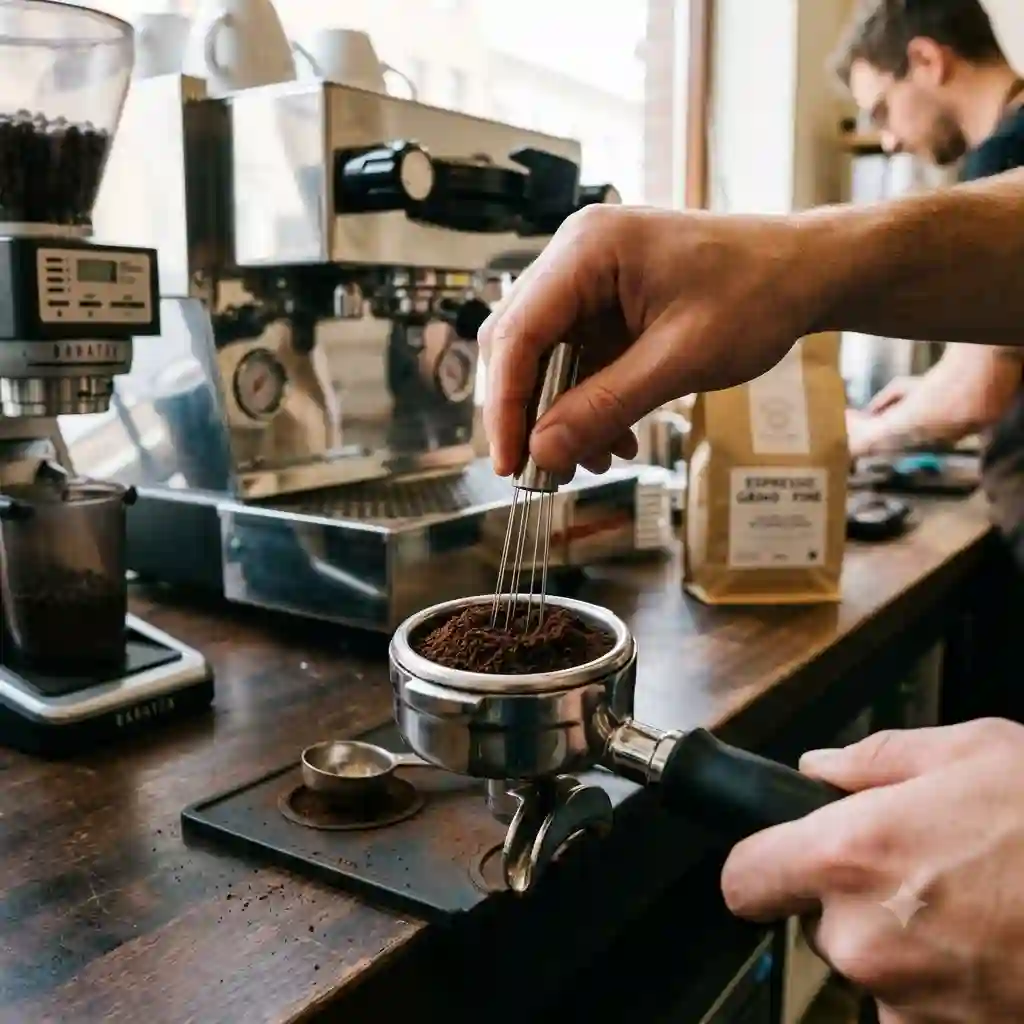
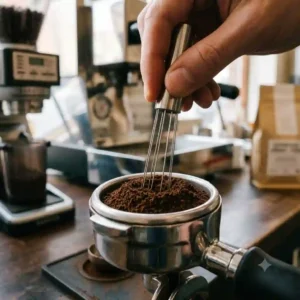
In daily practice, this coffee behaves uniquely in home espresso machines. The heavy oil content means the grounds can clump together in the bag. I highly advise using a WDT (Weiss Distribution Technique) tool—even just a simple needle—to stir these grounds in your portafilter before tamping to prevent channeling. This is best for the “Frappuccino at home” crowd. If you want to replicate a heavy caramel macchiato, this is your foundational ingredient. However, if you are a purist looking for bright berry notes, this is absolutely the wrong choice.
Customer feedback praises its consistency; a bag bought in New York tastes identical to a bag bought in California. Priced in the $10-$15 bracket, it offers unparalleled brand reliability and the exact nostalgic flavor profile millions of people crave each morning.
🔍 Ready to Upgrade Your Home Café Setup?
Achieving café-quality espresso at home is entirely possible when you stop fighting your equipment and start using properly calibrated grounds. Click on our recommended models below to view current pricing and find the perfect fit for your morning routine on Amazon.
Practical Usage Guide: Dialing in Pre-Ground Coffee
One of the biggest misconceptions in home brewing is that using pre-ground coffee requires zero technique. In reality, because you cannot adjust the grind size to control the flow of water, you have to manipulate the other variables. Here is a step-by-step roadmap for getting café-quality extraction from pre-milled beans during your first 30 days.
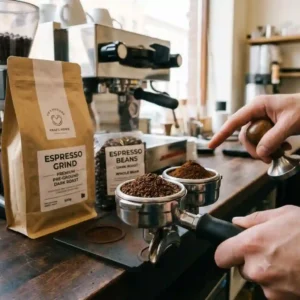
First, master your dose. If your ground coffee for espresso machine use is pulling too fast (under 20 seconds), you cannot grind finer. Instead, you must increase the dose. If you normally put 16 grams in your double basket, bump it up to 18 grams. This creates a thicker puck, adding the necessary water resistance. Conversely, if your machine is choking and no coffee is coming out, reduce your dose to 14 grams.
Second, adjust your tamp pressure. While tamping pressure is less critical when you have a perfectly dialed-in grinder, it becomes a major tool when using pre-ground coffee. A firmer tamp can buy you an extra 3-4 seconds of extraction time. Be sure to tamp perfectly level; water is lazy and will always find the path of least resistance.
Finally, understand the aging curve. Pre-ground coffee oxidizes rapidly. By week two, the CO2 necessary to create crema has largely dissipated. To combat this, store your coffee in an airtight, opaque vacuum canister (not the fridge, which introduces moisture). When you notice the shots running faster as the coffee ages, systematically increase your dose by 0.5 grams every few days to maintain resistance.
Problem → Solution Guide: Troubleshooting Your Shots
Even with the best products, things go wrong. Here is how to diagnose and fix the most common issues you’ll face at home.
Problem 1: The shot is aggressively sour and watery.
Solution: This is under-extraction. The water ran through the coffee too fast without pulling out the sweet sugars. If using pre-ground coffee, your basket is likely under-dosed. Increase the amount of coffee in the basket. Additionally, if your machine has a temperature control (PID), raise the brewing temperature by 2-3 degrees to increase extraction efficiency.
Problem 2: The espresso comes out in a slow drip and tastes bitter or burnt.
Solution: This is over-extraction. The resistance in the portafilter is too high. If you are using a fine ground coffee like Illy Classico, you might be packing too much into the basket or tamping with excessive force. Reduce your dose by a gram and apply a lighter tamp.
Problem 3: The espresso sprays everywhere (Channeling).
Solution: This means microscopic cracks have formed in your coffee puck, usually due to clumps in the pre-ground coffee. Use a distribution tool to break up any clumps before tamping. If you are using an unpressurized naked portafilter with pre-ground coffee, switch back to the pressurized basket—pre-ground coffee rarely has the uniform consistency required for naked portafilter success.
How to Choose Ground Coffee for Espresso Machine Setups
Selecting the right ground coffee for espresso machine brewing isn’t about looking at the prettiest bag; it’s about matching the roast dynamics to your specific hardware. Here is the expert framework for making your decision:
-
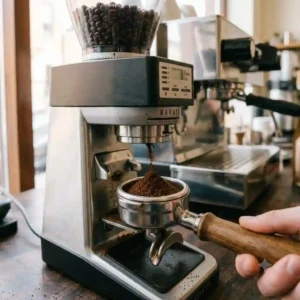
Identify Your Basket Type: If your machine uses pressurized baskets (they have a single tiny hole on the bottom), you have massive flexibility and can use slightly coarser grinds like Lavazza. If you use unpressurized baskets (hundreds of tiny holes on the bottom), you must buy specifically labeled “fine espresso grind” or the water will rush through instantly.
-
Evaluate Your Milk Ratio: If you drink straight espresso or small macchiatos, lean toward medium roasts (100% Arabica) to preserve delicate flavors. If you drink 16-ounce iced lattes, you need a dark roast or a Robusta blend (like Cafe Bustelo) so the coffee flavor isn’t completely drowned out by the milk.
-
Assess the Packaging Technology: Pre-ground coffee is highly susceptible to going stale. Prioritize brands that use nitrogen-flushed tins or vacuum-sealed bricks. A paper bag with a simple wire tie will result in stale coffee within 48 hours of opening.
-
Check the Roast Date vs. Best By Date: While exact roast dates are rare on grocery store pre-ground coffee, always dig to the back of the shelf to find the latest “best by” date. The fresher the grind, the more crema you will achieve.
Pre-Ground vs. Whole Bean: Real-World Performance
The debate between pre-ground and whole bean is as old as home brewing itself. Let’s look at a realistic comparison for the daily user.
| Feature | Pre-Ground Espresso | Whole Bean (with Home Grinder) | Best For |
| Convenience | Instant workflow, zero mess | Requires grinding, weighing, dialing in | Rushed mornings |
| Crema Volume | Low to Moderate (fades with age) | High to Very High | Aesthetics & Texture |
| Flavor Nuance | Predictable, stable, chocolatey | High clarity, fruity/floral notes | Tasting purists |
| Cost of Entry | Only requires a machine ($100+) | Requires machine + burr grinder ($400+) | Budget-conscious |
Looking at the comparison above, pre-ground coffee offers an unbeatable cost of entry and convenience factor, making it perfect for the 6:00 AM rush before work. However, budget buyers should note that they are sacrificing the intense aromatics and heavy crema that only freshly ground whole beans can provide. If you refuse to spend $200 on a dedicated espresso grinder, high-quality pre-ground in a pressurized basket is objectively your best path forward.
What to Expect: Real-World Performance
When you transition from generic drip coffee grounds to proper ground coffee for espresso machine use, the real-world performance shift is immediate. But you need to manage your expectations regarding what the spec sheet promises versus what actually ends up in your cup.
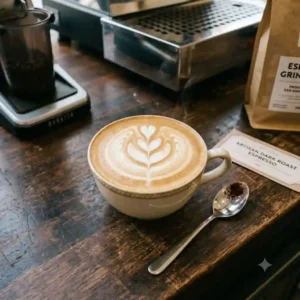
Most packaging will promise “thick, rich crema.” In reality, crema is a byproduct of CO2 being forced out of the bean under high pressure. Because pre-ground coffee has already been exposed to the air, much of that CO2 has off-gassed. What this means in practice is that you will get a thin layer of crema that dissipates quickly, rather than the thick, Guinness-like head you see in specialty coffee shop promotional videos.
Furthermore, expect the flavor profile to shift over a two-week period. Day 1 out of a vacuum-sealed brick will taste vibrant and punchy. By Day 14, the oxidation process will have flattened the high notes, leaving a predominantly bitter chocolate profile. The insider tip here is to buy smaller 8-ounce cans rather than massive 2-pound bags, ensuring you actually finish the coffee during its peak usability window. According to the Specialty Coffee Association, minimizing oxygen exposure is the single most critical factor in preserving coffee integrity.
Features That Actually Matter (And Those That Don’t)
When browsing the coffee aisle, you will be bombarded with marketing jargon. Here is an expert filtering of what actually impacts your extraction, and what is just fluff.
Matters: Roast Uniformity
If you look at the grounds and see a mix of light brown and black specks, put the bag down. Uneven roasting leads to uneven extraction, resulting in a shot that is somehow simultaneously sour and bitter. You want a completely uniform, monolithic color.
Doesn’t Matter: “Espresso Roast” Labeling
“Espresso” is a brewing method, not a roast level. You can pull an espresso shot with a light Ethiopian roast or a dark Sumatran roast. When a brand labels a bag “Espresso Roast,” they usually just mean “we roasted this very dark.” Don’t be afraid to use a bag labeled “Medium Roast” if the grind size is correct.
Matters: Nitrogen Flushing
As mentioned earlier, brands that replace the oxygen in their tins with inert nitrogen (like Illy and Lavazza) are providing a massive tangible benefit. This completely halts the staling process until you pop the seal, meaning a tin sitting on a warehouse shelf for six months will still taste reasonably fresh.
Doesn’t Matter: 100% Arabica Claims for Milk Drinks
While 100% Arabica is touted as superior due to its complex flavor compounds, if you are making heavily sweetened, iced vanilla lattes, those delicate notes are completely destroyed anyway. In these cases, blends containing Robusta actually perform better by providing the necessary bitterness to cut through the sugar.
Conclusion
Mastering your home brewing setup doesn’t always require a thousand-dollar grinder. By selecting the correct ground coffee for espresso machine extraction, you can dramatically elevate your daily cup while keeping your morning workflow incredibly efficient. The key lies in understanding the synergy between your machine’s portafilter style, your preferred milk-to-coffee ratio, and the freshness technology of the packaging.
Whether you opt for the refined, nitrogen-flushed consistency of an Italian classic or the aggressive, budget-friendly punch of a dark roast blend, remember that pre-ground coffee requires you to meticulously control your dose and tamp. Stop relying on the marketing claims on the front of the bag, and start paying attention to how the grounds actually behave under pressure.
FAQs
❓ What is ground coffee for espresso machine brewing?
✅ It is coffee beans that have been roasted and pre-milled to an extremely fine, uniform consistency specifically designed to provide the correct water resistance for 9-15 bars of pressure in an espresso machine…
❓ Can I use regular ground coffee in my espresso machine?
✅ Generally, no. Standard drip coffee grounds are too coarse. If used in an espresso machine, the pressurized water will rush through them instantly, resulting in a weak, sour, and watery shot with absolutely zero crema…
❓ How long does pre-ground espresso last once opened?
✅ Once the seal is broken, pre-ground coffee begins losing its volatile aromatics immediately. For optimal flavor and crema production, you should consume it within 7 to 10 days, storing it in an airtight, opaque container…
❓ Why is my espresso coming out too fast with pre-ground coffee?
✅ Since you cannot adjust the grind size to be finer, a fast-flowing shot means there isn’t enough resistance in the basket. You must increase your dose (add more coffee to the basket) and apply a firmer, level tamp…
❓ Which is better for an espresso machine: dark or medium roast?
✅ It depends on your drink preference. Medium roasts offer balanced, nuanced flavors ideal for straight espresso. Dark roasts provide bold, caramelized, and slightly bitter notes that excel at cutting through heavy milk and sugary syrups in lattes…
Recommended for You
- 5 Ultimate coffee brewer parts to Revive Your Machine (2026)
- 5 Expert Picks: The Best Ground Coffee for Espresso Machine in 2026
- 5 Best Ground Espresso Coffee Blends for 2026: Expert Taste Test
Disclaimer: This article contains affiliate links. As an Amazon Associate, I earn from qualifying purchases. If you purchase products through these links, we may earn a small commission at no additional cost to you.
✨ Found this helpful? Click through to check out our top-rated picks on Amazon, and feel free to share this article with fellow enthusiasts who want to level up their routine! 💬🤗
[addtoany]
