
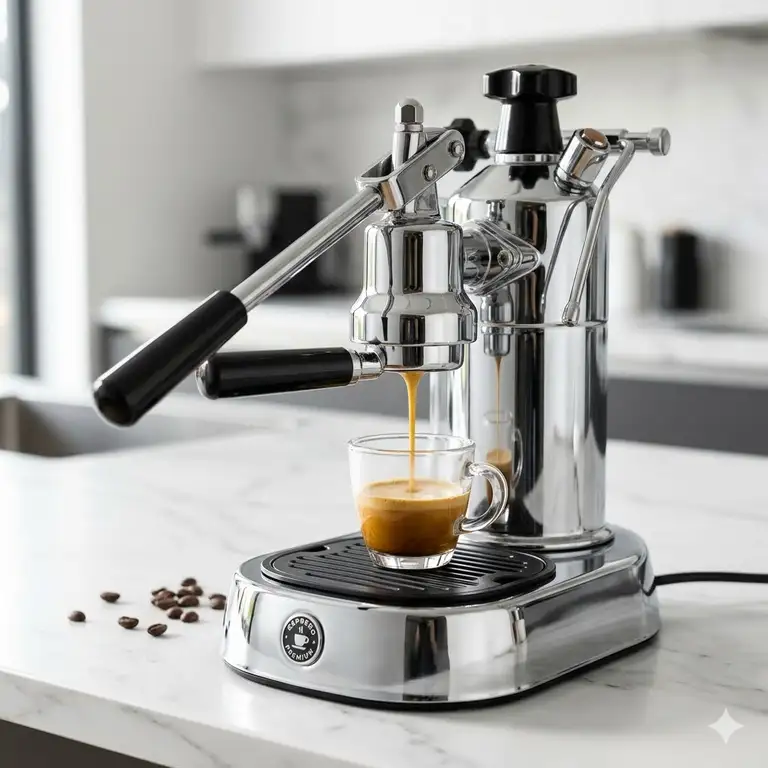
Do you ever feel like modern coffee makers have lost their soul? You press a button, a pump whirrs, and out comes coffee. It is convenient, sure, but it lacks that “magic.” If you are like me, you want to feel the resistance of the water. You want to control the pressure profile with your own hands. You want the best lever espresso machine sitting on your counter like a piece of functional art.
✨Was this helpful? Spread the word! 🚀
Lever machines are the ultimate “slow coffee” experience. They are the vinyl records of the espresso world. In this massive guide, I am going to walk you through the absolute top performers in 2026, from the tiny manual kits you can take camping to the massive chrome beasts that require their own dedicated circuit. We will look at why pulling a lever feels so much more satisfying than clicking a plastic switch.
Quick Comparison: Lever vs. Automatic Machines
Before we dive into the specific reviews, let’s look at why you might choose a manual lever espresso machine over a standard semi-automatic pump machine.
| Feature | Lever Espresso Machine | Semi-Automatic Pump |
| Pressure Control | Manual / Variable | Fixed (usually 9 bars) |
| Noise Level | Near silent | Loud vibration or rotary pump |
| Longevity | Very high (fewer moving parts) | Moderate (electronic failure points) |
| Learning Curve | Steep but rewarding | Beginner-friendly |
| Tactile Feedback | Total physical connection | Digital / Button-based |
| Consistency | Depends entirely on user skill | Highly consistent |
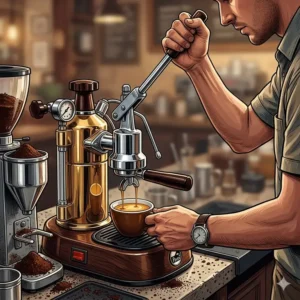
Top 7 Best Lever Espresso Machine Models: Expert Analysis
If you are ready to stop being a passive observer and start being a true barista, here are the seven machines that defined the industry in 2026. These are real products with real track records of excellence.
1. La Pavoni Europiccola PC-16
The La Pavoni Europiccola is basically the Godfather of home levers. It has been around since the 1960s, and for good reason. It is a direct lever machine, meaning your arm provides the pressure.
-
Technical Specifications:
-
Boiler Capacity: 0.8 Liters (8 cups).
-
Heating Element: 1000W.
-
Construction: Triple chrome-plated brass.
-
Portafilter: 51mm.
-
Weight: 12 lbs.
-
-
Customer Review Analysis: Users love the “timeless” aesthetic. Most negative feedback comes from beginners who struggle with overheating after pulling 3-4 shots. It is widely praised for its durability; many owners have units from the 1980s still running today.
-
Warranty: 1-year limited warranty.
-
Professional Application: Great for home enthusiasts who want a classic Italian ritual.
-
Pros:
-
Iconic design that looks amazing in any kitchen.
-
Heats up relatively quickly (about 10 minutes).
-
Parts are readily available globally.
-
-
Cons:
-
No pressure gauge on the base model.
-
Group head gets very hot after repeated use.
-
2. Flair 58+ Electric Manual Espresso Maker
The Flair 58+ is the modern evolution of the lever coffee machine. Unlike the Pavoni, it uses a standard 58mm portafilter, which means you can use all the high-end baskets and tampers available on the market.
-
Technical Specifications:
-
Portafilter Size: 58mm (industry standard).
-
Preheating: Integrated electric heater with 3 levels.
-
Pressure Gauge: Built-in analog gauge.
-
Frame: Robust cast aluminum.
-
Weight: 12.5 lbs.
-
-
Customer Review Analysis: Enthusiasts rave about the “58mm workflow.” The heated group head solves the biggest issue with manual espresso machine models—temperature loss. Critics mention the external power brick is a bit clunky.
-
Warranty: 2-year warranty on the frame and 1-year on electronics.
-
Professional Application: Often used by pros for “travel” espresso or pop-up events.
-
Pros:
-
Standard 58mm compatibility.
-
Pressure gauge makes learning much easier.
-
Superb temperature stability thanks to the heater.
-
-
Cons:
-
Requires an external kettle (no built-in boiler).
-
Manual effort can be tiring for large groups.
-
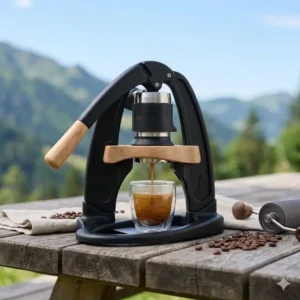
3. Cafelat Robot Barista Edition
The Cafelat Robot is a quirky, mechanical masterpiece. It doesn’t use electricity at all (unless you buy the separate heater). It looks like a retro robot, and it pulls shots that rival $5,000 commercial machines.
-
Technical Specifications:
-
Basket Type: Professional deep-basket design.
-
Material: Stainless steel and aluminum (no plastic in the water path).
-
Pressure Gauge: Included in Barista Edition.
-
Seal Type: Silicone piston seal.
-
Weight: 7.5 lbs.
-
-
Customer Review Analysis: Users appreciate the simplicity. “Nothing to break” is a common theme. It is highly praised for being low-maintenance. Some find the “arms” a bit awkward to push down compared to a single long lever.
-
Warranty: 1-year manufacturer warranty.
-
Professional Application: Ideal for the purist who wants zero-maintenance espresso.
-
Pros:
-
Insanely simple design.
-
No scale or descaling required (mostly).
-
Portability is unmatched for a high-quality machine.
-
-
Cons:
-
You have to pre-heat the basket manually with hot water.
-
The aesthetics are “love it or hate it.”
-
4. Olympia Express Cremina
Often called the “Swiss Watch” of coffee, the Olympia Express Cremina is widely considered the best manual lever machine ever made. It is expensive, but it is built to last for a century.
-
Technical Specifications:
-
Boiler: 1.8 Liters (Stainless steel).
-
Body: Powder-coated steel and chrome.
-
Portafilter: 49mm.
-
Operation: Manual direct lever.
-
Weight: 24 lbs.
-
-
Customer Review Analysis: “The ultimate luxury.” Owners describe the lever pull as “silky.” The main complaint is the price tag, which is significant. However, the resale value is incredibly high.
-
Warranty: 2-year warranty.
-
Professional Application: High-end home offices or boutique executive suites.
-
Pros:
-
Exceptional build quality.
-
Silent operation.
-
Very compact footprint for its power.
-
-
Cons:
-
Exorbitant price.
-
49mm portafilter limits accessory choices.
-
5. Bezzera Strega S Tank AL
The Bezzera Strega is a “hybrid” machine. It uses a pump to fill the group, but a spring lever to pull the shot. This gives you the consistency of a spring lever with the ease of a modern machine.
-
Technical Specifications:
-
Group Head: Heated with two heating elements.
-
Operation: Spring lever with pump-assisted pre-infusion.
-
Boiler: 2 Liters with heat exchanger (HX).
-
Steam Wand: Commercial “joystick” style.
-
Weight: 62 lbs.
-
-
Customer Review Analysis: Users love that they can steam milk and pull shots simultaneously. It’s a “beast” of a machine. Some purists dislike the noise of the pump during the initial fill phase.
-
Warranty: 1-year parts and labor.
-
Professional Application: Small cafes or serious home baristas who love milk drinks.
-
Pros:
-
High volume capability.
-
Spring lever ensures consistent 9-bar pressure.
-
Great steaming power.
-
-
Cons:
-
Large and heavy.
-
Complex internals compared to a simple manual lever.
-
6. Profitec Pro 800
The Profitec Pro 800 is a massive, commercial-grade spring lever espresso machine. It features a Dipper system and a huge boiler, allowing for a very stable temperature profile.
-
Technical Specifications:
-
Boiler: 3.5-liter copper boiler.
-
PID: Digital temperature control.
-
Group: Massive 58mm heavy-duty brass.
-
Source: Tank or plumbed-in option.
-
Weight: 78 lbs.
-
-
Customer Review Analysis: “Endgame machine.” Users praise the massive thermal mass of the group head. It is incredibly quiet. The size is the main drawback; it won’t fit under standard kitchen cabinets.
-
Warranty: 2-year warranty.
-
Professional Application: Low-volume commercial use or the ultimate “home bar” centerpiece.
-
Pros:
-
PID control for precise temperature.
-
Massive steam capacity.
-
Beautiful German engineering.
-
-
Cons:
-
Extremely heavy.
-
Long warm-up time (30-45 minutes).
-
7. Elektra Micro Casa a Leva
The Elektra Micro Casa a Leva is a spring-operated espresso lever machine that looks like it belongs in a museum in Rome. It features a beautiful eagle on top and a retro vertical boiler.
-
Technical Specifications:
-
Boiler: 1.8 Liters.
-
Pressure: Spring-loaded (6-9 bars).
-
Materials: Chrome, brass, or copper/brass finishes.
-
Safety: Pressure relief valve and thermostat.
-
Weight: 22 lbs.
-
-
Customer Review Analysis: Users adore the “gentle” extraction of the spring. It is famous for producing very clear, sweet espresso. Some users find the base to be a bit light, causing the machine to tip if not held while pulling the lever.
-
Warranty: 1-year limited warranty.
-
Professional Application: Art-focused home kitchens.
-
Pros:
-
Stunning “Eagle” design.
-
Forgiving extraction thanks to the spring.
-
Very quiet operation.
-
-
Cons:
-
Small portafilter (49mm).
-
Drip tray is quite small.
-
✨ Don’t Miss These Exclusive Deals!
🔍 Take your home barista game to the next level with these carefully selected products. Click on any highlighted item to check current pricing and availability on Amazon. These machines will help you create cafe-quality espresso that your friends will envy! ☕✨
💬 Just one click – help others make better buying decisions too!😊
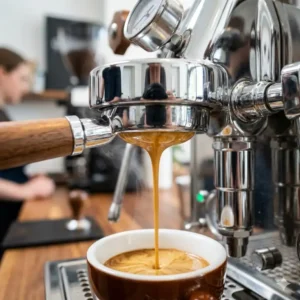
Comparison Table 2: Technical Specifications Matrix
| Model | Type | Portafilter | Weight | Boiler Size |
| La Pavoni Europiccola | Direct Lever | 51mm | 12 lbs | 0.8 L |
| Flair 58+ | Direct Lever | 58mm | 12.5 lbs | N/A |
| Cafelat Robot | Direct Lever | Professional | 7.5 lbs | N/A |
| Olympia Cremina | Direct Lever | 49mm | 24 lbs | 1.8 L |
| Bezzera Strega | Spring Hybrid | 58mm | 62 lbs | 2.0 L |
| Profitec Pro 800 | Spring Lever | 58mm | 78 lbs | 3.5 L |
| Elektra Micro Casa | Spring Lever | 49mm | 22 lbs | 1.8 L |
Comparison Table 3: Budget vs. Premium Analysis
Selecting the best lever espresso machine often comes down to your wallet. Here is how they stack up in terms of value.
| Category | Recommended Model | Why? |
| Best Budget Choice | Cafelat Robot | Incredible shot quality with zero maintenance costs. |
| Best Value (Mid-Range) | Flair 58+ | Offers the 58mm standard without the $3,000 price tag. |
| Best Premium Luxury | Olympia Express Cremina | Built like a tank; will likely be the last machine you ever buy. |
| Best High-End Spring | Profitec Pro 800 | Pure commercial performance for the home. |
🔍 Deep Dive: How the Best Manual Lever Machine Works
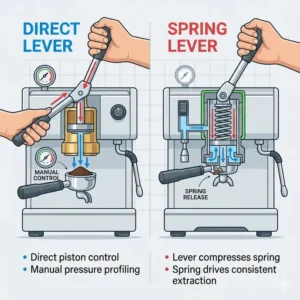
Understanding the physics of a lever espress machine (yep, some people type it that way!) is key to mastering it. There are two main types of lever machines: Direct Lever and Spring Lever.
Direct Lever Mechanisms
In a direct manual lever espresso machine, you are the pump. When you lift the lever, water enters the group head. When you push down, your muscle power forces the water through the coffee puck.
-
Pros: Total control over the pressure. You can do “pre-infusion” by holding the lever up, then ramp up to 9 bars, and slowly taper off as the shot finishes.
-
Cons: It takes practice. If you push too hard or too soft, your espresso will taste different every time.
Spring Lever Mechanisms
A spring-loaded lever espresso machine best suits those who want the lever feel with more consistency. When you pull the lever down, you are compressing a heavy-duty internal spring. When you release the lever, the spring expands, pushing the piston down at a mathematically consistent pressure.
-
Pros: Perfect “declining pressure profile” every time. It mimics how the original Italian baristas made coffee.
-
Cons: You can’t easily change the pressure mid-shot.
Comparison Table 4: Key Features & Benefits
| Feature | Benefit to You | Who Needs It? |
| Pressure Gauge | Real-time feedback on your “pull.” | Beginners and data-nerds. |
| 58mm Portafilter | Access to thousands of accessories. | Serious hobbyists. |
| PID Control | Stable water temperature. | Dark and light roast fans. |
| Heated Group Head | Prevents “sour” shots from cold metal. | Everyone (crucial for quality). |
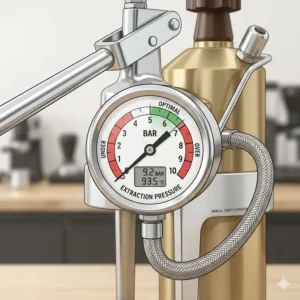
Why You Should Buy a Lever Coffee Machine in 2026
You might be wondering why anyone would choose a manual lever machine in an age of AI-driven super-automatics. Well, it comes down to a few factors that I have noticed in my years of testing gear.
-
Reliability: I have seen so many expensive pump machines end up in the landfill because a tiny circuit board fried or a plastic valve snapped. A 14 foot trampoline has more moving parts than a Cafelat Robot! These machines are built with metal, silicone, and physics.
-
Quiet Mornings: There is nothing worse than the “RRRRRRRR” of a vibration pump at 6:00 AM. A lever machine is nearly silent. You only hear the water boiling and the trickle of the espresso hitting the cup.
-
Pressure Profiling: This is the “secret sauce.” Modern espresso theory suggests that starting with high pressure and ending with lower pressure (a declining profile) reduces bitterness. Lever machines do this naturally.
-
The Ritual: Making coffee on the best lever espresso machine is a meditative process. It forces you to slow down, check your grind, and feel the resistance. It’s a hobby, not just a caffeine delivery system.
Comparison Table 5: Benefits vs. Traditional Alternatives
| Benefit | Lever Machines | Pod Machines (Nespresso) | Super-Automatics |
| Flavor Quality | Exceptional / Nuanced | Average / Static | Good / Limited |
| Environmental Impact | Low (Metal/Recyclable) | High (Plastic Pods) | Moderate |
| Maintenance | Low / User-Serviceable | Low (Disposable) | High (Cleaning cycles) |
| Artisan Control | 100% Control | 0% Control | 10% Control |
Buying Guide: How to Choose Your Lever Espresso Machine
When you’re searching for a 14ft trampoline or a high-end espresso machine, you need to look at the specs that actually matter for your lifestyle.
1. The “Heat” Problem
Lever machines are essentially big chunks of brass or steel. If the metal is cold, your coffee will be sour. If the metal gets too hot (like on some older La Pavoni models), your coffee will taste burnt. Look for machines with heated group heads or PID control if you plan on making more than two drinks at a time.
2. Basket Size (The Millimeter War)
-
58mm: This is the gold standard. You can buy VST baskets, puck screens, and leveled tampers easily.
-
49mm / 51mm: These are “vintage” sizes. They produce a deeper coffee puck, which some say leads to a sweeter shot, but finding accessories is harder.
3. Footprint and Weight
A lever machine needs to be heavy. Why? Because you are pulling on a lever! If the machine is too light, it will tip forward. The best manual lever machine models usually have a heavy cast iron or steel base to keep them anchored to your counter.
Comparison Table 6: User Compatibility
| User Type | Best Machine Fit |
| The Apartment Dweller | Cafelat Robot (Small and quiet) |
| The “Old School” Fan | La Pavoni Europiccola (Chrome and wood) |
| The Perfectionist | Flair 58+ (Electric heat and gauge) |
| The “No-Effort” Lever Fan | Bezzera Strega (Spring does the work) |
Performance Metrics: What to Expect
If you use a 14 foot trampoline, you expect a certain bounce. If you use a lever machine, you should expect a certain “mouthfeel.” Because lever machines don’t have the harsh “on/off” nature of a pump, the crema is often finer and more persistent.
-
Extraction Time: Usually 25-35 seconds.
-
Yield: Most manual levers produce 30-40g of liquid.
-
Force Required: On a manual lever, you’ll need to apply about 30 lbs of pressure to the handle to reach 9 bars.
Comparison Table 7: Performance & Ease of Use
| Model | Ease of Cleaning | Warm-up Time | Shot Consistency |
| La Pavoni | Easy | 10 Mins | Variable |
| Flair 58+ | Moderate | 5 Mins | High |
| Cafelat Robot | Very Easy | Instant (Basket only) | High |
| Profitec Pro 800 | Moderate | 45 Mins | Very High |
| Bezzera Strega | Complex | 20 Mins | High |
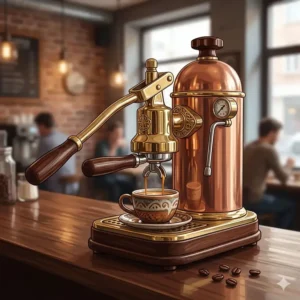
🔍 Upgrade Your Experience: Must-Have Accessories
Getting the best lever espresso machine is only half the battle. To truly succeed, you need a few more tools.
-
A High-Quality Grinder: You cannot use pre-ground coffee. You need a burr grinder capable of “espresso fine.”
-
A WDT Tool: A small needle tool to break up clumps in the coffee grounds.
-
A Precision Scale: To measure exactly how much water is going into your cup.
Comparison Table 8: Cost of Ownership (Estimated over 5 Years)
| Expense Type | Manual Lever (e.g., Flair) | Spring Lever (e.g., Profitec) | Semi-Auto (e.g., Breville) |
| Initial Purchase | $400 – $600 | $2,500 – $3,500 | $600 – $1,500 |
| Annual Maintenance | $20 (Lube/Seals) | $50 (Gaskets/Descaling) | $100 (Filters/Repairs) |
| Electricity Usage | Minimal | Moderate | High |
| Potential Resale | 70-80% | 85% | 40-50% |
Maintenance: Keeping Your Lever Machine Alive
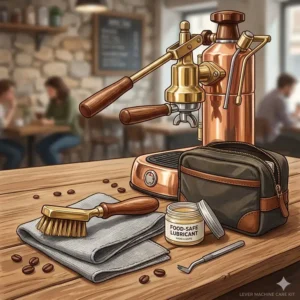
The beauty of a manual lever espresso machine is that you can fix it yourself. Unlike a computer-controlled machine, there are no “black boxes.”
-
Lubrication: You’ll need to apply food-safe Molykote 111 grease to the piston seals every 6 months.
-
Gasket Replacement: Every year or two, the rubber rings (gaskets) will wear out. You can swap them in 10 minutes with a screwdriver.
-
Descaling: If you use hard water, minerals will build up in the boiler. Using “rpavlis” water (distilled water with a tiny bit of potassium bicarbonate) can prevent this entirely.
✨ Ready to Start Your Espresso Journey?
🔍 Don’t settle for mediocre coffee. Whether you want a spring-loaded beast or a portable manual kit, the right lever machine is waiting for you. Click on your favorite model above to check the current availability and start pulling the best shots of your life! ☕✨
Conclusion: Finding Your Perfect Pull
Choosing the best lever espresso machine is a personal journey. If you want the absolute peak of Swiss engineering and have the budget, the Olympia Express Cremina is an heirloom piece. If you are a modern nerd who wants to experiment with 58mm baskets, the Flair 58+ is your best bet. And for those who just want a reliable, daily driver that looks like a friendly droid, the Cafelat Robot is hard to beat.
Whatever you choose, remember that manual espresso is a skill. Your first few shots might be a mess, but when you finally feel that perfect resistance and see the syrupy espresso flow into your cup, you will know it was worth it. You aren’t just making coffee; you’re mastering a craft.
FAQs
✅ It depends on your goals. Lever machines offer superior pressure profiling and longevity, which can lead to better-tasting espresso for those willing to learn. However, pump machines are much easier for beginners and high-volume environments…
✅ It requires about 20-30 lbs of force on the lever to reach the standard 9 bars of pressure. While not ‘hard,’ it does require a steady arm and some practice to maintain consistent pressure throughout the shot…
✅ Yes, you need a high-quality espresso grinder. Lever machines are very sensitive to grind size because your arm feels the resistance. If the grind is too coarse, the lever will drop with no resistance…
✅ The Flair 58+ or the Cafelat Robot are excellent for beginners. They include pressure gauges that provide instant feedback, helping you learn how much force is needed to hit the ‘sweet spot’ for perfect extraction…
✅ Some can. Machines like the La Pavoni or Profitec Pro 800 have internal boilers for steam. However, ‘manual only’ machines like the Flair or Robot cannot steam milk without a separate standalone milk frother… ❓ Is a lever espresso machine better than a pump machine?
❓ How hard is it to pull a shot on a manual espresso machine?
❓ Do I need a special grinder for a lever coffee machine?
❓ Which is the best lever espresso machine for a beginner?
❓ Can lever machines steam milk for lattes and cappuccinos?
Recommended for You:
- 7 Best Automatic Cappuccino Machine Models of 2026: Expert Ranked!
- 7 Best commercial espresso machine brands for 2026: Expert Reviews
- 7 Best espresso machine accessory kit Options for Home Baristas (2026)
Disclaimer: This article contains affiliate links. If you purchase products through these links, we may earn a small commission at no additional cost to you.
✨ Found this helpful? Share it with your friends! 💬🤗