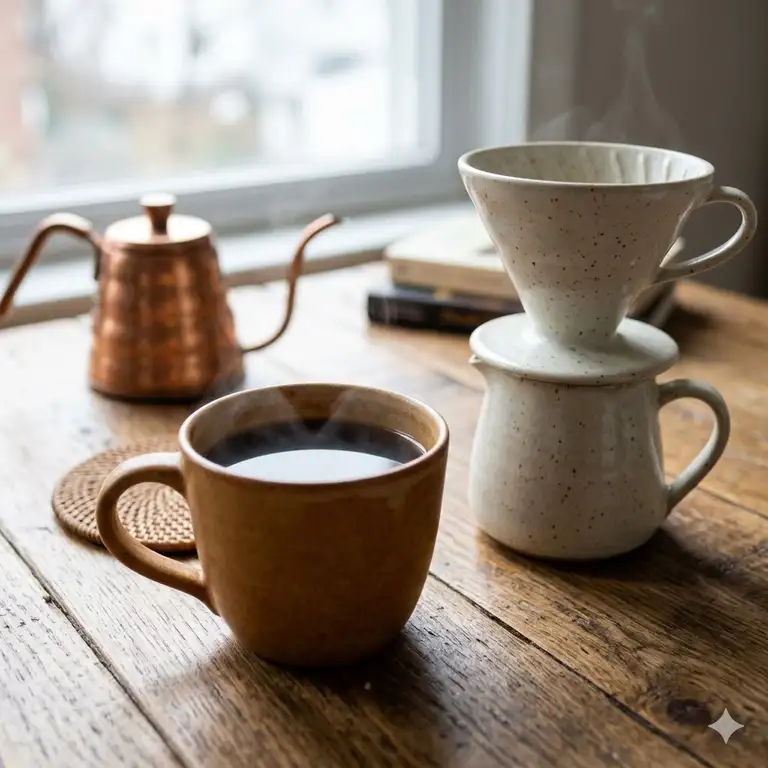
There is something profoundly meditative about the ritual of brewing a single cup of coffee. As we navigate 2026, the trend of “slow coffee” has shifted from a niche hobby to a mainstream lifestyle choice. But what is single pour over coffee exactly? At its core, it is a manual brewing method where hot water is poured over coffee grounds in a filter, allowing gravity to pull the liquid through into a single mug or carafe. Unlike batch brewers that prioritize volume, the single-serve pour-over focuses on precision, clarity of flavor, and the ability to highlight the unique “terroir” of specific coffee beans.
In my years of exploring the specialty coffee world, I’ve found that the single-cup approach is the ultimate equalizer. You don’t need an industrial-sized machine to get world-class results; you just need a dripper, a filter, and a little bit of patience. According to the Specialty Coffee Association, manual brewing allows for the most granular control over variables like water temperature and flow rate, which are the two biggest levers in extraction. Whether you are a college student in a cramped dorm or a professional looking for a desk-side escape, mastering the single pour over coffee technique is the fastest way to upgrade your morning routine without cluttering your kitchen with expensive electronics.
Quick Comparison of Top Single Pour Over Brewers
| Product Name | Best For | Material | Flow Rate | Price Range |
| Hario V60 (Size 01) | Clarity & Brightness | Ceramic/Glass | Fast | Around $20-$30 |
| Kalita Wave 155 | Consistency | Stainless Steel | Medium | Around $30-$45 |
| OXO Brew Single Serve | Absolute Beginners | BPA-Free Plastic | Controlled | Around $15-$22 |
| Fellow Stagg [X] | Heat Retention | Double-Wall Steel | Fast/Med | Around $60-$80 |
| Origami Dripper (S) | Aesthetic/Versatility | Ceramic | Fast | Around $40-$55 |
Looking at the comparison above, the OXO Brew Single Serve offers the most foolproof experience for those who aren’t ready to invest in a gooseneck kettle, whereas the Fellow Stagg [X] is the premium choice for temperature stability. If you prioritize the traditional “bright” acidity of light roasts, the Hario V60 remains the unbeatable standard in the sub-$30 category.
💬 Just one click — help others make better buying decisions too! 😊
Top 5 single pour over coffee Brewers: Expert Analysis
1. The Timeless Icon: Hario V60 Ceramic Coffee Dripper (Size 01)
The Hario V60 Ceramic Coffee Dripper is the undisputed heavyweight champion of the manual brewing world. Its name comes from the 60-degree angle of its cone, which allows water to flow through the center, extending the contact time.
-
Key Specs: Spiral ribs for airflow and a large exit hole for flow control.
-
What this means for you: The spiral ribs prevent the wet filter paper from sticking to the walls, ensuring that air can escape and water can pass through the grounds evenly. The large hole means you are in control of the speed—pour faster for a lighter body, or slower for more intensity.
-
Expert Opinion: I recommend the V60 for those who enjoy light-to-medium roast African coffees. What most buyers overlook is that the ceramic version requires a significant pre-heat; if you don’t pour hot water through the empty filter and ceramic first, the cold material will suck the heat out of your brew, leading to sour, under-extracted coffee.
-
Customer Feedback: Users consistently praise the “flavor clarity” but warn that it takes about a week of practice to get the pour technique right.
-
Pros:
-
Exceptional flavor separation
-
Iconic, durable design
-
Widely available filters
-
-
Cons:
-
High learning curve
-
Fragile if dropped
-
-
Price Range & Value: $20-$30 range. It is the best ROI for flavor-seekers.
2. Consistency King: Kalita Wave 155 Series
If the V60 is a precision instrument, the Kalita Wave 155 Series is the reliable workhorse. Featuring a flat-bottom design with three small extraction holes, it mitigates the “channeling” issues that plague many beginners.
-
Key Specs: Flat-bottom geometry and “wave” filters with 20 ridges.
-
What this means for you: The flat bottom creates a “puck” of coffee that extracts more uniformly, while the ridges on the filter keep the paper off the walls to maintain temperature. It’s much harder to mess up a cup of coffee with this than with a conical brewer.
-
Expert Opinion: This is my “lazy Sunday” brewer. If you haven’t quite mastered your pouring technique, the Kalita Wave 155 is your best friend. In my experience, it produces a sweeter, more full-bodied cup than the V60, making it perfect for medium-to-dark roasts or those who add a splash of cream.
-
Customer Feedback: “Foolproof” is the word most often used in reviews, though some note that the specific wave filters can be harder to find in local grocery stores.
-
Pros:
-
Highly consistent results
-
Excellent heat retention in steel
-
Compact for travel
-
-
Cons:
-
Proprietary filters required
-
Less “brightness” than conical shapes
-
-
Price Range & Value: Around $35-$45. A great investment for those who want quality without the stress.
3. The Beginner’s Shortcut: OXO Brew Single Serve Coffee Dripper
The OXO Brew Single Serve Coffee Dripper is a unique beast because it includes a water tank with a hole-patterned floor that does the “pouring” for you.
-
Key Specs: Auto-drip water tank and a wide-base dripper.
-
What this means for you: You don’t need a fancy gooseneck kettle. You just dump the water into the reservoir, and it drips at a regulated rate over your coffee. It effectively automates the hardest part of the pour-over process.
-
Expert Opinion: While purists might scoff, this is a brilliant bridge for people moving away from Keurigs. What the spec sheet won’t tell you is that the reservoir actually helps keep the water temperature stable as it drips. It’s the best “set it and forget it” manual option on the market.
-
Customer Feedback: Highly rated for its “utility and ease of cleaning,” though some advanced users find the lack of control frustrating.
-
Pros:
-
No gooseneck kettle required
-
Very affordable
-
Dishwasher safe
-
-
Cons:
-
Plastic construction (BPA-free, but still)
-
Limited capacity for larger mugs
-
-
Price Range & Value: $15-$22 range. Perfect for office desks.
4. The Modern Marvel: Fellow Stagg [X] Pour-Over Dripper
The Fellow Stagg [X] Pour-Over Dripper represents the high-tech end of the manual spectrum. It’s vacuum-insulated and designed for those who want the absolute hottest extraction possible.
-
Key Specs: Double-wall vacuum insulation and a steep interior slope.
-
What this means for you: The insulation ensures that your water stays at the target temperature (usually around 200°F) throughout the 3-minute brew. The steep slope increases the height of the coffee bed, which can lead to higher extraction levels and a richer taste.
-
Expert Opinion: I’ve found that the Stagg [X] is the best at extracting sweetness from difficult beans. If you find your coffee often tastes “thin,” the insulation here will likely fix that. It’s a premium tool, but for the enthusiast who wants to squeeze every bit of value out of a $30 bag of beans, it’s worth the splurge.
-
Customer Feedback: Reviews often mention the “heavy, premium feel” and the consistency, though the price point is a common hurdle.
-
Pros:
-
Best-in-class heat retention
-
Modern, sleek aesthetic
-
Includes a built-in ratio aid
-
-
Cons:
-
Expensive for a single dripper
-
Requires specific flat-bottom filters
-
-
Price Range & Value: $60-$80 range. For the serious coffee nerd.
5. Aesthetic Versatility: Origami Dripper (Small)
The Origami Dripper (Small) is as much a piece of art as it is a brewer. Made of high-density Mino-yaki porcelain, it features deep grooves that look like folded paper.
-
Key Specs: 20 deep vertical grooves and compatibility with both V60 and Kalita filters.
-
What this means for you: The “hybrid” design means you can use conical filters for a bright cup or flat-bottom filters for a balanced cup. This is essentially two brewers in one, depending on which paper you buy.
-
Expert Opinion: This is the most versatile brewer on this list. What most buyers overlook is that the Origami Dripper usually requires a separate wooden or plastic base to sit on your mug. Make sure you buy the bundle! It’s the perfect gift for someone who loves both design and coffee.
-
Customer Feedback: “The most beautiful thing on my counter,” says one reviewer. Others note that the porcelain is quite delicate and requires careful handling.
-
Pros:
-
Stunning visual design
-
Uses two types of filters
-
Great airflow for fast brewing
-
-
Cons:
-
Base usually sold separately
-
Fragile ceramic
-
-
Price Range & Value: $40-$55 range. The choice for the style-conscious brewer.
✨ Don’t Miss These Exclusive Deals!
🔍 Take your coffee game to the next level with these carefully selected products. Click on any highlighted item to check current pricing and availability. These tools will help you create authentic brews your family will love!
The Ultimate 2026 single pour over coffee Workflow: A Transformation Guide
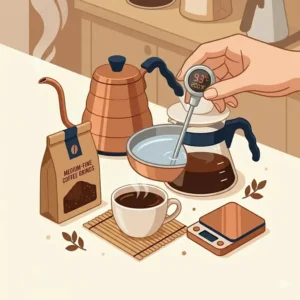
Setting up your first single pour over coffee station can feel overwhelming, but the 2026 standard for home brewing is all about “functional minimalism.” You don’t need a lab full of equipment; you need a consistent process.
Step-by-Step Setup for Success
-
Water Quality: Start with filtered water. In 2026, we know that the minerals in your water are just as important as the beans. Avoid distilled water, as it tastes “flat.”
-
The Ratio: Use a 1:16 ratio. For a standard 10oz cup, that’s about 18-20 grams of coffee. If you don’t have a scale, that’s roughly 3 level tablespoons.
-
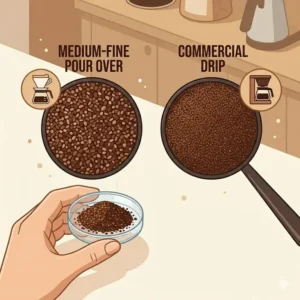
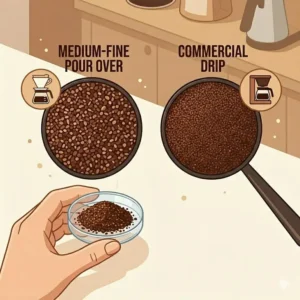
The Grind: Aim for a “medium-fine” grind—think sea salt. If your coffee tastes bitter, grind coarser next time. If it tastes sour/watery, grind finer.
-
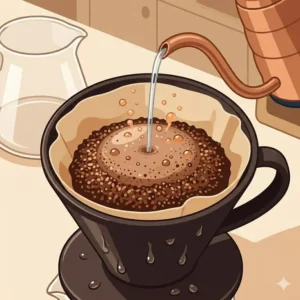
The Bloom: Pour just enough water (about 40g) to wet the grounds and wait 30-45 seconds. You’ll see bubbles; this is the CO2 escaping, which allows for better flavor extraction.
-
The Main Pour: Pour in slow, concentric circles. Avoid hitting the very edges of the filter where water can “bypass” the coffee.
Maintenance and Optimization
To keep your brewer in top shape, especially ceramic models like the Hario V60, never let old coffee oils sit. A simple rinse with hot water immediately after brewing is usually enough, but a deep soak in a vinegar-water solution once a month will keep the flavor “clean.” Also, store your paper filters in a sealed container—they can actually absorb kitchen odors like onions or garlic, which will ruin your delicate light roast!
Troubleshooting Your Extraction: A Problem-Solving Guide
Even with the best single pour over coffee gear, things can go wrong. Here is how to fix the most common issues:
-
Problem: My coffee tastes like “battery acid” (sour/sharp).
-
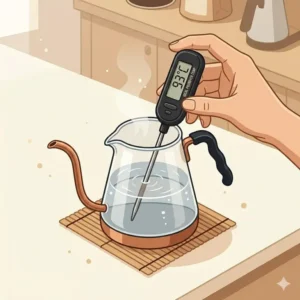
Solution: This is under-extraction. Increase your water temperature (aim for 205°F) or grind your beans finer. You might also want to try the Fellow Stagg [X] for its superior heat retention.
-
-
Problem: It takes 6 minutes to brew and tastes like “ash” (bitter/dry).
-
Solution: This is over-extraction. Grind coarser! Also, check if your filter is “clogging.” High-end grinders produce fewer “fines” (dust-like particles) that slow down the brew.
-
-
Problem: The water is just sitting there and won’t drain.
-
Solution: You likely have a “muddy” bed. Swirl the dripper gently during the bloom to settle the grounds. If using the Origami Dripper, ensure the filter is seated correctly so the air grooves aren’t blocked.
-
-
Problem: My coffee is cold by the time I drink it.
-
Solution: Pre-heat everything! Pour boiling water through your empty dripper and into your mug before you start. This “tempering” process is a game-changer for thermal stability.
-
How to Choose the Right single pour over coffee Brewer
Choosing a brewer is a personal journey, but you can narrow it down using these four expert-verified criteria:
-
Your Patience Level: If you want to master a craft, get a conical brewer like the Hario V60. If you just want a good cup while you’re still half-asleep, get the OXO Brew Single Serve.
-
Flavor Profile Preference: Do you like “tea-like” clarity? Conical is the way to go. Do you prefer a “chocolatey” and heavy mouthfeel? Flat-bottom brewers like the Kalita Wave 155 are superior here.
-
Durability Needs: If you travel or have stone countertops, stainless steel or plastic is safer. Ceramic and glass are beautiful but one “clink” away from disaster.
-
Budget for Accessories: Remember that a V60 really needs a gooseneck kettle (another $50-$100) to shine. If you aren’t ready for that, the OXO or a Clever Dripper (a steep-and-release hybrid) are better value choices.
According to research from the National Institute of Standards and Technology, the temperature at which you brew significantly alters the chemical composition of the final cup. Choosing a brewer with good insulation—like the double-walled Fellow Stagg [X]—ensures you stay in the “sweet spot” for extraction.
Common Mistakes When Buying single pour over coffee Gear
The most common mistake I see people make is buying a high-end dripper but using “stale” pre-ground coffee from the grocery store. Coffee starts losing its aromatic compounds within 15 minutes of being ground. If you’re going to spend $40 on an Origami Dripper, please spend $50 on a decent manual burr grinder.
Another pitfall is ignoring the filter paper. Cheap, bleached papers can leave a “cardboard” taste in your brew. Always rinse your filter with hot water before adding coffee—it washes away the paper dust and pre-heats your vessel simultaneously. Finally, don’t ignore the “Size 01” vs “Size 02” distinction. If you only ever make one cup, a Size 01 (like the Hario V60 01) is better because the smaller cone allows for a deeper coffee bed with less water, leading to a more even extraction.
Single pour over coffee vs. Pod Machines: The 2026 Verdict
In 2026, the environmental impact of coffee pods has become a major talking point. While pods offer speed, the single pour over coffee method offers something a machine never can: soul.
From a taste perspective, pods use “flash-frozen” or aged coffee that is often over-roasted to hide imperfections. When you brew manually, you can use fresh, locally roasted beans. Furthermore, the cost-per-cup is significantly lower. While a pod might cost $0.75 to $1.25, a cup of high-quality specialty coffee brewed at home usually averages around $0.45 to $0.60. Over a year, the pour-over method can save you hundreds of dollars while providing a vastly superior sensory experience. Plus, the only waste you produce is a compostable paper filter and organic coffee grounds.
What to Expect: Real-World Performance
When you first start with a single pour over coffee setup, expect a “learning curve” of about five to ten brews. Your first cup might be a bit watery, and your second might be a bit harsh. This is normal!
By the end of your first week, you’ll start to recognize the “draw-down” time. For a single cup, you’re usually aiming for a total brew time of 2:30 to 3:30 minutes. If it’s faster, the coffee will be weak; if it’s slower, it will be bitter. Once you hit that “God shot” (the perfect cup), you’ll realize why people get so obsessed with this. The performance of these manual tools isn’t about “speed”—it’s about the repeatability of excellence.
Features That Actually Matter (And Those That Don’t)
Marketing departments love to talk about “patented airflow” and “proprietary materials,” but as an expert, I look for three things:
-
Thermal Mass: Does the material hold heat? This is why the Fellow Stagg [X] is so well-regarded.
-
Filter Fit: Does the filter sit flush against the walls, or is there a gap? Gaps allow air to escape, which is good for flow but bad for heat.
-
Drainage Speed: Does the brewer have one big hole or three small ones? One big hole gives you more control but requires more skill. Three small holes (like the Kalita) provide a safety net for beginners.
Don’t be swayed by “limited edition colors” or “celebrity endorsements.” Stick to the physics of extraction, and your taste buds will thank you.
Long-Term Cost & Maintenance Analysis
Buying a manual brewer is essentially a one-time purchase. Unlike a drip machine with a heating element that will eventually scale up and die, a ceramic Hario V60 or a stainless Kalita Wave 155 can literally last a lifetime if handled with care.
The only recurring cost is the filters. A pack of 100 filters usually costs around $6-$10. If you brew once a day, that’s roughly $30 a year in “maintenance.” Compare that to the descaling solutions and repair costs of an automatic espresso machine, and the pour-over is the clear winner for long-term ROI.
| Item | Estimated Annual Cost | Longevity |
| Single Pour Over | $30 (Filters) | Lifetime |
| Pod Machine | $300-$400 (Pods) | 3-5 Years |
| Auto Drip | $20 (Cleaning) | 5-7 Years |
As the data suggests, the manual route is the most sustainable and cost-effective way to drink premium coffee. The initial “effort” is offset by the massive savings and the fact that you’ll never have to replace a broken circuit board.
✨ Don’t Miss These Exclusive Deals!
🔍 Take your coffee game to the next level with these carefully selected products. Click on any highlighted item to check current pricing and availability. These tools will help you create authentic brews your family will love!
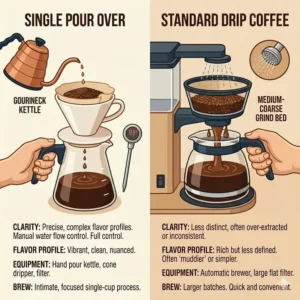
Conclusion
The journey into single pour over coffee is one of the most rewarding transitions a coffee lover can make. Whether you choose the precision of the Hario V60, the consistency of the Kalita Wave, or the modern insulation of the Fellow Stagg [X], you are taking control of your morning. In 2026, where everything feels automated and fast-paced, the three minutes you spend pouring water over fresh grounds is a valuable moment of presence. By focusing on the right materials, understanding your extraction, and avoiding common pitfalls, you can enjoy a cafe-quality experience from the comfort of your own kitchen.
FAQs
❓ Is single pour over coffee better than French Press?
✅ It depends on your preference. Pour-over uses a paper filter that removes oils and sediment, resulting in a “clean” and bright cup. French Press uses a metal mesh, leaving the oils and “fines” in the cup for a heavy, bold, and sometimes muddy mouthfeel…
❓ Do I really need a gooseneck kettle for pour over?
✅ For brewers like the Hario V60, yes. The narrow spout allows you to control the flow and placement of water, which is crucial for even extraction. However, for the OXO Brew Single Serve, a standard kettle works perfectly fine…
❓ What is the best grind size for a single cup?
✅ Generally, a “medium-fine” grind is best. Since a single cup has a smaller volume of coffee than a large carafe, you need a slightly finer grind to create enough resistance for the water to extract the flavors properly…
❓ Can I reuse paper filters to save money?
✅ It is not recommended. Once a filter is wet and dried, the pores clog with oils and microscopic particles. Reusing them will lead to “stale” flavors and a very slow draw-down time that will ruin your coffee’s taste…
❓ Why does my pour over taste like paper?
✅ This happens if you don’t “rinse” the filter before adding coffee. Always pour hot water through the empty filter and into your mug (then dump that water) to remove any residual paper taste and pre-heat your gear…
Recommended for You
- Pour Over Coffee Single Cup: 7 Best Single Serve Makers
- Hand Brew Coffee Guide: 5 Pro Secrets for Perfect 2026 Pour-Overs
- Coffee Makers Made in Germany: 7 Best Stunning Picks for 2026
Disclaimer: This article contains affiliate links. As an Amazon Associate, I earn from qualifying purchases. If you purchase products through these links, we may earn a small commission at no additional cost to you.
✨ Found this helpful? Share it with your friends! 💬🤗