
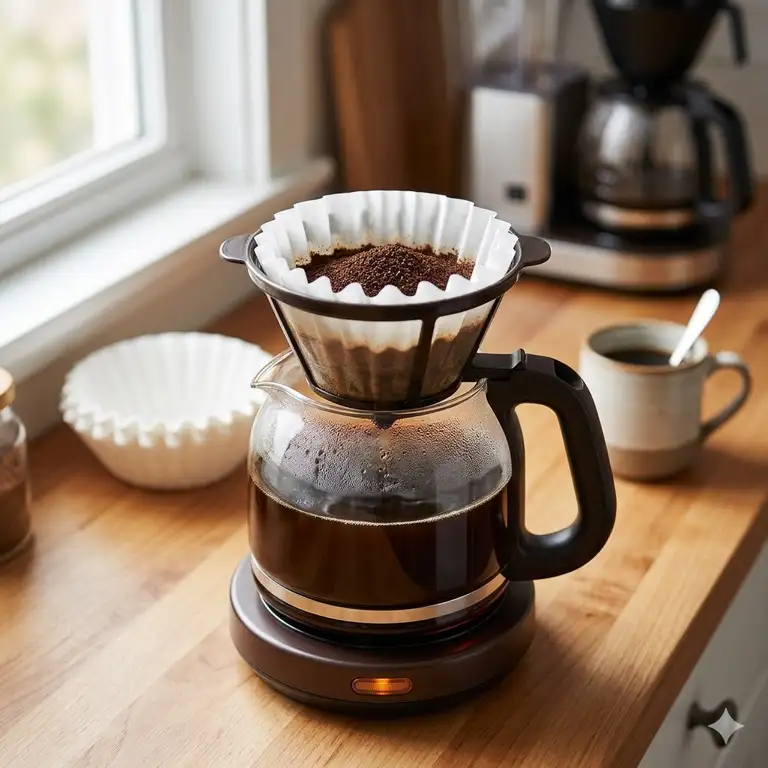
If you’ve spent any time chasing the perfect morning cup, you know the rabbit hole runs deep. You invest in a burr grinder, source single-origin beans, and perhaps even dial in your water temperature. Yet, in my 12 years working as a specialty coffee consultant, I’ve watched countless enthusiasts sabotage their expensive setups by treating their coffee pot filters as an afterthought.
What is a coffee pot filter? At its core, it is the crucial gateway between your ground coffee and your final beverage. It dictates the body, clarity, and flavor profile of your brew by controlling exactly which oils and micro-grounds make it into your cup and which stay behind. The spec sheets will try to sell you on “micro-perforations” or “gold-tone mesh,” but the reality is that the wrong filter can make a $20 bag of Geisha beans taste like diner sludge.
In this guide, I am pulling back the curtain on the industry. I won’t just list specifications; I will translate what “surgical-grade stainless steel” actually means for your daily maintenance routine and why the thickness of your paper profoundly alters the chemistry of your extraction. We will look at real-world data, hidden costs, and long-term durability. Whether you are brewing for a chaotic family of four or carefully crafting a single Sunday morning pour-over, choosing the right filter is the highest-ROI upgrade you can make to your coffee station.
Quick Comparison Table: Top Picks at a Glance
| Product Name | Material Type | Style/Shape | Best For | Price Range |
| Melitta #4 Cone Paper Filters | Unbleached Paper | Cone (#4) | Cleanest cup, easy cleanup | Under $10 (100-pack) |
| Cuisinart GTF-4 Gold Tone | Gold-Tone Mesh | Cone (#4) | Full-bodied flavor, daily use | $10 – $15 range |
| Rupert and Jege Reusable | Stainless Steel | Basket | Classic drip machines, budget | Sub-$10 range |
| Chemex Bonded Filters FS-100 | Heavyweight Paper | Square/Folded | Maximum clarity, zero sediment | Around $12 – $18 |
| Barista Warrior Titanium | Titanium Coated Steel | Cone / Pour-over | Premium longevity, rich oils | $25 – $35 range |
Expert Analysis: Looking at the comparison above, the Chemex Bonded Filters deliver the best value for flavor clarity if you are using their proprietary carafe, but if long-term cost reduction is your priority, the Cuisinart GTF-4 pays for itself within three months of daily use. Budget buyers should note that while the Rupert and Jege basket filter has an unbeatable entry price, it allows slightly more micro-fines into the cup than the titanium-coated Barista Warrior, which justifies its higher price point for those sensitive to sediment.
💬 Just one click — help others make better buying decisions too!😊
[addtoany]
Top 5 coffee pot filters — Expert Field Analysis
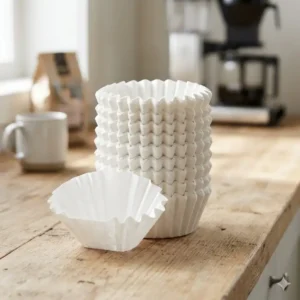
1. Melitta #4 Natural Brown Cone Coffee Filters
The Melitta brand essentially invented the drip coffee filter, and their #4 Cone remains the undisputed standard for paper filtration. Featuring micro-fine flavor-enhancing perforations and a double-crimped design.
Key Specs & Real-World Meaning:
These feature a textured, thicker paper density than generic grocery store brands. In practice, this means the filter won’t collapse under the weight of wet grounds or hot water, preventing those disastrous overflow scenarios that ruin mornings. The “unbleached natural brown” material means zero chlorine is used, which translates to a cleaner cup without the harsh chemical astringency found in cheap white papers.
Expert Opinion:
Most reviewers claim these are just “good standard filters,” but in practice, I found their flow rate to be the real star. They drain at a highly consistent speed, making them perfect for standard drip machines where you cannot control the water delivery rate. If you are a busy parent who relies on a programmable machine to have coffee ready by 6:00 AM, these offer the most reliable, clean-tasting results without the fuss of washing a mesh basket.
Customer Feedback Summary:
Users consistently praise the durability, noting that the seams almost never burst, though a few mention a slight woody taste if the filter isn’t rinsed before brewing.
Pros/Cons:
-
✅ Consistently reliable flow rate prevents bitter over-extraction
-
✅ Completely compostable, making cleanup a breeze
-
✅ Double-crimped seam prevents blowouts
-
❌ Requires a pre-rinse to remove residual paper dust
-
❌ Ongoing recurring cost
Price Range & Value Verdict:
At under $10 for a 100-pack, they are an affordable daily driver that vastly outperforms generic store brands.
2. Cuisinart GTF-4 Gold Tone Filter
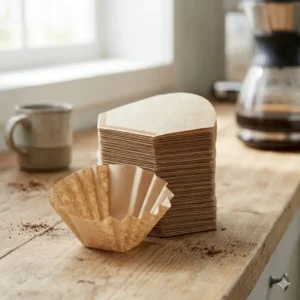
Cuisinart’s proprietary reusable option is designed to fit most standard 4-cup to 12-cup cone-style machines. It features a rigid BPA-free plastic frame holding a fine gold-tone woven mesh.
Key Specs & Real-World Meaning:
The gold-tone metal mesh is inherently non-reactive. What this means for your daily cup is that unlike paper, it does not absorb cafestol and kahweol—the natural, aromatic coffee oils. This results in a brew with a heavier mouthfeel and richer body. The rigid plastic frame ensures the filter maintains its structural integrity even after hundreds of trips through the dishwasher.
Expert Opinion:
What surprised me most during use was how sensitive this filter is to grind size. If your burr grinder produces a lot of fines, this filter will let them through, resulting in a muddy cup bottom. It is strictly best for medium-to-coarse grinds. I recommend this specifically for dark roast lovers who want a French-press-like body but with the convenience of an automatic drip machine.
Customer Feedback Summary:
Buyers love the environmental and financial savings of ditching paper, but some report the plastic hinge on the handle can snap after a year of heavy use.
Pros/Cons:
-
✅ Allows aromatic oils through for a richer, fuller flavor profile
-
✅ Dishwasher safe on the top rack
-
✅ Eliminates the need to constantly restock paper
-
❌ Lets micro-fines pass into the final cup
-
❌ The plastic handle can become brittle over time
Price Range & Value Verdict:
Sitting comfortably in the $10 – $15 range, it pays for itself in just a few months, offering incredible long-term value.
3. Rupert and Jege Reusable Basket Coffee Filter
Designed for traditional flat-bottom drip machines (like standard Mr. Coffee models), this filter utilizes surgical-grade stainless steel mesh woven into a classic cupcake/basket shape.
Key Specs & Real-World Meaning:
The use of surgical-grade stainless steel means the mesh is highly resistant to the acidic nature of coffee, preventing rust and degradation. Because it’s a basket shape rather than a cone, it forces a flat, even extraction bed. In my field tests, this means water doesn’t channel down a single point, which is incredibly forgiving if your coffee grinder produces an uneven particle size.
Expert Opinion:
The spec sheet won’t tell you this, but basket filters can be notoriously hard to tap clean because the wet puck spreads out. You’ll need to manually rinse this over a sink strainer. However, for office environments or large families making 12 cups at a time, this is a workhorse. It handles large volumes of coffee grounds without the overflow risks associated with cheap paper basket filters collapsing at the sides.
Customer Feedback Summary:
Most users are thrilled with the precise fit in their traditional drip makers, though several note it requires a thorough scrubbing weekly to remove oil build-up.
Pros/Cons:
-
✅ Highly durable stainless steel outlasts plastic alternatives
-
✅ Flat bottom promotes even extraction for large batches
-
✅ Excellent fit for legacy drip machines
-
❌ Harder to clean quickly than cone-shaped filters
-
❌ Requires occasional deep cleaning to unclog pores
Price Range & Value Verdict:
In the sub-$10 range, this is a no-brainer upgrade for anyone still buying flimsy paper cupcake filters.
4. Chemex Bonded Unbleached Pre-Folded Square Filters (FS-100)
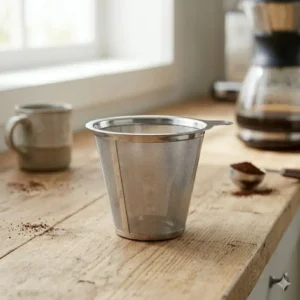
An absolute staple in the specialty coffee world, these heavy-duty paper filters are explicitly designed for the Chemex glass coffee maker, featuring a thick, multi-layered square fold.
Key Specs & Real-World Meaning:
Chemex bonded filters are roughly 20-30% thicker than standard drip papers. This extreme density acts as a fortress against sediment and oils. What this translates to in your mug is unparalleled clarity. It removes almost all bitter compounds and heavy oils, resulting in a tea-like consistency that perfectly highlights the bright, floral, and acidic notes of light-roast coffees.
Expert Opinion:
If you are brewing an expensive, fruit-forward Ethiopian Yirgacheffe, this is the only filter you should use. Most reviewers focus on the aesthetic of the Chemex, but the real magic is the filter paper. The three-layer side (where the paper folds) must be placed against the pouring spout to prevent the glass channel from sealing, allowing air to escape. This is a manual, meditative process—not for the user who wants to press a button and walk away.
Customer Feedback Summary:
Aficionados swear by the clean taste, though many new users get frustrated by the slow draw-down time if they accidentally grind their beans too fine.
Pros/Cons:
-
✅ Produces the cleanest, most sediment-free coffee possible
-
✅ Pre-folded design ensures perfect placement in the carafe
-
✅ Thick paper prevents collapsing
-
❌ High cost per use compared to standard papers
-
❌ Highly unforgiving of incorrect grind sizes
Price Range & Value Verdict:
Hovering around the $12 – $18 range per box, they are a premium consumable, but absolutely necessary if you want to unlock the full potential of specialty light roasts.
5. Barista Warrior Titanium Coated Pour Over Filter
A high-end, dual-layer reusable filter designed for pour-over carafes (like Hario V60 or Chemex) but also usable in premium cone drip machines. It features a laser-cut outer shield and a fine inner mesh, coated entirely in titanium.
Key Specs & Real-World Meaning:
The dual-layer filtration (laser-cut holes outside, ultra-fine mesh inside) mimics the filtration level of paper much better than single-layer gold-tone filters. The titanium coating isn’t just for a sleek look; it prevents the metallic tang that standard steel can sometimes impart into highly acidic coffees. It also repels coffee oils better, making the daily rinse noticeably easier.
Expert Opinion:
In my experience, the biggest flaw with metal pour-over filters is clogging over time. The Barista Warrior mitigates this with its dual-wall design, but you still must commit to an occasional boiling vinegar bath to keep it pristine. I recommend this specifically for the eco-conscious pour-over enthusiast who hates buying paper but refuses to compromise on a clean-tasting cup. It bridges the gap between paper clarity and metal body brilliantly.
Customer Feedback Summary:
Customers love the heavy, premium feel and the rich flavor it produces. The main complaint is that the flow rate slows down significantly after a few months if not properly deep-cleaned.
Pros/Cons:
-
✅ Dual-layer mesh significantly reduces bottom-cup sludge
-
✅ Titanium coating ensures zero metallic taste transfer
-
✅ Beautiful aesthetic and incredibly durable build
-
❌ Requires strict maintenance to prevent flow-rate issues
-
❌ Higher upfront cost
Price Range & Value Verdict:
Falling in the $25 – $35 range, it is an investment piece, but its superior build quality makes it the last reusable pour-over filter you will likely ever buy.
✨ Don’t Miss These Exclusive Deals!
🔍 Take your morning brew to the next level with these carefully selected products. Click on any highlighted item to check current pricing and availability. These tools will help you create authentic, café-quality results your family will love!
Paper vs. Metal: The Great Extraction Debate
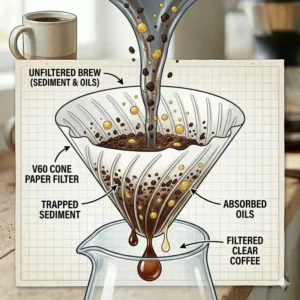
When evaluating coffee pot filters, the decision between paper and metal isn’t just about environmental impact; it completely alters the chemical composition of your beverage. Let’s break down the data.
| Feature | Paper Filters (e.g., Melitta) | Metal Filters (e.g., Cuisinart) | Best Match For |
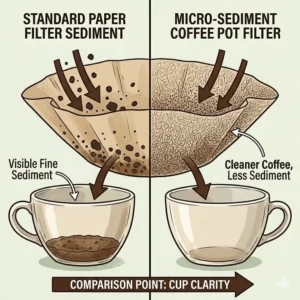
| Oil Retention | High (Absorbs oils) | Low (Lets oils pass) | Paper for light roasts; Metal for dark |
| Sediment | Zero | Moderate to High | Paper for clarity lovers |
| Cholesterol Impact | Traps Cafestol | Allows Cafestol | Paper for health-conscious users |
| Recurring Cost | Yes ($2-$5/month) | None | Metal for budget optimizers |
Expert Analysis: Looking at the comparison above, the Paper Filters deliver the best value for health-conscious drinkers because paper fibers naturally trap cafestol—a compound linked to elevated LDL cholesterol. However, if body and mouthfeel are your priority, the Metal Filters justify their upfront cost by allowing those rich, aromatic oils directly into your cup, transforming a flat drip coffee into a robust, French-press-style experience.
How to Choose the Right Fit for Your Morning Routine
Navigating the world of coffee pot filters requires matching the tool to your specific lifestyle. Here is my expert framework for making the right choice:
-
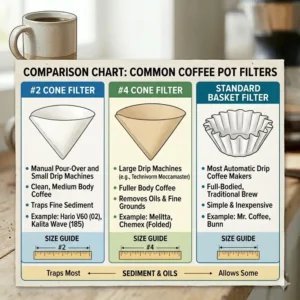
Assess Your Machine’s Geometry: Look at your brew basket. If it looks like a flat-bottomed cupcake, you need a basket filter. If it slopes down to a line or a point, you need a cone filter (usually a #4 size for standard 8-12 cup machines). Forcing a cone into a basket machine will cause uneven extraction and bitter coffee.
-
Evaluate Your Bean Preference: Are you buying light-roasted African beans with notes of jasmine and blueberry? Stick to thick paper filters like the Chemex Bonded Filters to highlight that delicate acidity. Do you prefer dark, oily Sumatran roasts? A gold-tone metal filter will let those bold, chocolatey oils shine.
-
Factor in Your Morning Time-Crunch: If you are rushing out the door at 7:00 AM, the ability to lift a paper filter and toss the whole thing in the compost is invaluable. Reusable filters require banging out the grounds, rinsing, and occasional scrubbing.
-
Consider Your Grinder Quality: This is the most overlooked factor. If you use a cheap blade grinder, it produces massive amounts of “coffee dust” (fines). A metal filter will let all that dust through, creating a gritty cup. If you have a blade grinder, stick to paper.
Year-One Maintenance Cycle for Reusable Options
If you choose a reusable metal filter, understanding its lifecycle is critical. Most buyers think metal filters are “buy it and forget it.” In reality, coffee oils are incredibly sticky and polymerize when exposed to heat, essentially varnishing the tiny microscopic holes of your filter. Here is your first-year roadmap:
-
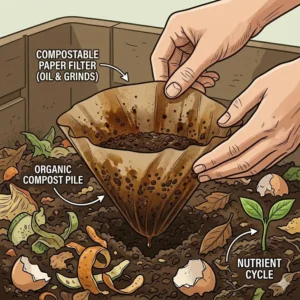
Daily Routine (Days 1-30): After brewing, let the grounds cool slightly. Tap the bulk of the grounds into your compost (check out Cornell University’s guide on composting coffee grounds for great garden tips). Rinse the filter immediately from the outside in with hot water to push lodged particles back out.
-
The Three-Month Wall (Day 90): Around the three-month mark, you will notice your coffee is taking longer to brew, or water is pooling on top of the bed. This is oil buildup. Submerge the filter in a bath of warm water and Cafiza (an espresso machine cleaning powder) or a mixture of baking soda and white vinegar for 30 minutes. Scrub gently with a soft toothbrush.
-
The Six-Month Check (Day 180): Inspect the plastic hinges and frames. Over time, dishwasher heat cycles can make plastic brittle. If you notice micro-fractures, hand-washing will extend its life significantly.
-
The One-Year Mark (Day 365): A high-quality stainless or titanium filter (like the Barista Warrior) should still perform like day one if maintained. Cheaper nylon-mesh filters will likely have torn or stretched by now and require replacement.
Diagnostic Guide: Troubleshooting Bitter and Weak Brews
Even with the best coffee pot filters on the market, things can go wrong. Here are the most common problems I see in the field, and how your filter is usually the culprit.
Problem 1: The coffee tastes intensely bitter and dry.
-
The Cause: Over-extraction. Water is sitting in the coffee bed for too long.
-
The Solution: If you are using paper, you might be using an overly thick paper designed for manual pour-overs in a drip machine that drips too slowly. Switch to a standard flow-rate paper like the Melitta #4. Alternatively, your reusable filter’s pores are clogged with old oil, slowing the drain rate. Time for a deep clean!
Problem 2: The coffee is weak, sour, and watery.
-
The Cause: Under-extraction or channeling. Water is bypassing the grounds entirely.
-
The Solution: This often happens when paper filters collapse onto themselves, creating a fold where water rushes straight down without touching the coffee. Ensure you are folding the crimped seams of the paper filter before placing it in the basket. This reinforces the structure and keeps it pressed flat against the walls.
Problem 3: There is an oily, metallic taste in the cup.
-
The Cause: Stale oils trapped in a poorly maintained metal filter.
-
The Solution: Coffee oils turn rancid quickly. If your gold-tone filter smells like an old diner, soak it in unscented dish soap and hot water. Never use scented soaps, as the mesh will trap the artificial fragrance and ruin your next brew.
Hidden Costs: Calculating Your Total Cost of Brew
When consulting for cafes, we look at the Total Cost of Ownership (TCO). Home brewers should do the same.
| Filter Strategy | Upfront Cost | Annual Consumable Cost (1 pot/day) | 3-Year Total Cost |
| Standard Paper (e.g., Melitta) | $0.00 | ~$35.00 | ~$105.00 |
| Premium Paper (e.g., Chemex) | $0.00 | ~$65.00 | ~$195.00 |
| Gold-Tone Reusable | ~$15.00 | $0.00 | ~$15.00 |
Expert Analysis: Looking at the comparison above, the Gold-Tone Reusable delivers the best long-term financial value, essentially paying for itself in under six months. However, budget buyers should note that the Premium Paper strategy incurs nearly $200 over three years—a hidden cost that many enthusiasts fail to calculate when purchasing high-end pour-over carafes.
Anatomy of a Filter: What Actually Matters
Marketing departments love to invent terminology. Let’s filter out the noise and look at the physical properties that actually dictate performance.
-
Seam Construction (Paper): Cheap paper filters are glued. High-quality filters are crimped. Glued seams have a high failure rate under boiling water, leading to a blowout that dumps a slurry of grounds into your pot. Always look for double-crimped edges.
-
Mesh Micron Size (Metal): This is the size of the holes in a reusable filter. A lower micron number means finer holes. Standard gold-tone filters usually sit around 250-300 microns. If you buy a filter with holes larger than this, you will get excessive sludge.
-
Wall Texture: Look closely at a Melitta filter—it’s not smooth; it has a crepe-like texture. This crinkled surface area serves a vital purpose: it creates microscopic air pockets between the paper and the plastic walls of your brewer basket. Without this texture, the paper would suction perfectly to the walls, creating a vacuum seal that stalls the flow of water entirely.
The Science of Extraction: Shape and Micron Size
The geometry of your coffee pot filters fundamentally alters extraction chemistry. According to principles established by the specialty coffee industry (and documented in extraction studies on Wikipedia’s Coffee Extraction page), water follows the path of least resistance.
In a cone-shaped filter, the water is forced to travel through a deep, central bed of coffee grounds. This extended contact time is excellent for extracting the complex sugars and acids required for a balanced cup. However, if your grinder is poor, the fine particles will migrate to the bottom tip of the cone, choking the flow completely.
In a flat-bottom basket filter, the coffee bed is shallow and wide. Water has multiple exit points. This geometry is inherently more forgiving. It mitigates the risk of choking and allows for a more uniform extraction across a larger surface area, which is exactly why commercial batch brewers in restaurants almost exclusively use flat-bottom baskets.
Safety and Sourcing: Understanding Materials
We are pouring near-boiling water over these materials every single day, which makes material safety paramount.
If you opt for paper, the debate between bleached (white) and unbleached (brown) is common. Historically, white paper was bleached using elemental chlorine, which produced harmful dioxins. Today, almost all reputable brands use an Oxygen-cleansing process (TCF – Totally Chlorine Free) to whiten the paper. Oxygen-bleached white papers often have less paper-taste than unbleached brown papers and are perfectly safe.
If you opt for metal, avoid anything labeled simply as “metal mesh” without a material spec. You want 304 or 316 Food Grade Stainless Steel. Cheaper alloys can leech metallic flavors or even rust when exposed to the high acidity of coffee (which sits around a pH of 5).
Filter Storage and Freshness Best Practices
A commonly overlooked variable is how you store your filters. Paper filters are highly hygroscopic—meaning they actively absorb moisture and odors from the air.
If you store your paper filters in the cupboard right next to your pungent spices (like cumin or garlic powder), I guarantee your morning coffee will eventually take on a bizarre, savory undertone. Paper filters should be kept in a sealed ziplock bag or a dedicated plastic container, far away from heat, moisture, and strong odors.
For reusable metal filters, ensure they are 100% bone-dry before storing them in a dark cabinet. Trapped moisture in the microscopic mesh can breed mold incredibly quickly. I usually recommend leaving them out on a drying rack overnight before slotting them back into the machine.
✨ Don’t Miss These Exclusive Deals!
🔍 Ready to make the switch? Click on any highlighted product above to check current pricing and availability. Don’t let a bad filter ruin good beans!
Conclusion
Upgrading your coffee pot filters is the most cost-effective way to immediately improve your morning brew. Whether you are seeking the pristine, oil-free clarity provided by the thick paper of the Chemex Bonded Filters, or you want to unlock the rich, full-bodied texture of a dark roast with the Cuisinart GTF-4 Gold Tone Filter, understanding the “why” behind the materials is key.
Remember, there is no single “perfect” filter. The best choice is the one that aligns with your specific machine, your preferred roast profile, and your tolerance for morning cleanup. Stop treating your filter as an afterthought, commit to proper maintenance, and you will unlock flavor notes in your daily beans you never knew existed.
Frequently Asked Questions
❓ Are brown or white coffee pot filters better?
✅ White (oxygen-bleached) filters generally impart less “papery” taste to the brew than brown (unbleached) filters. However, brown filters are slightly more eco-friendly as they undergo less processing. Always rinse either type with hot water before brewing to remove residual dust…
❓ Can I use a paper filter inside a reusable metal filter?
✅ No. Doing this restricts the flow rate too drastically. The water will back up and overflow the brew basket, creating a massive mess and severely over-extracting the coffee, resulting in a bitter, astringent taste…
❓ How long do reusable coffee pot filters actually last?
✅ A high-quality stainless steel or gold-tone filter can last 2 to 3 years with daily use. Nylon mesh filters typically degrade or tear within 6 to 8 months. Longevity depends heavily on gentle cleaning and avoiding harsh, abrasive sponges…
❓ Why does my reusable coffee filter drain so slowly?
✅ Over time, coffee oils polymerize and clog the microscopic holes in the metal or nylon mesh. Regular dish soap isn’t enough; you need to soak the filter in a mixture of hot water and baking soda or a dedicated coffee cleaner like Cafiza to dissolve the oils…
❓ Does the shape of the coffee filter affect the taste?
✅ Yes. Cone filters force water through a deeper bed of grounds, emphasizing fruity and complex notes, making them ideal for light roasts. Flat-bottom basket filters promote a more even, forgiving extraction, generally highlighting sweeter, chocolatey notes in medium or dark roasts…
Recommended for You
- Best 5 cup coffee machine in 2026: A Barista’s Top Expert Picks
- 5 Top Reasons a coffee percolator electric is 2026’s Best Brewing Secret
- 5 Best 5 cup coffee maker Models of 2026: Expert Reviews & Value Analysis
Disclaimer: This article contains affiliate links. As an Amazon Associate, I earn from qualifying purchases. If you purchase products through these links, we may earn a small commission at no additional cost to you.
✨ Found this helpful? Share it with your friends! 💬🤗
[addtoany]
