
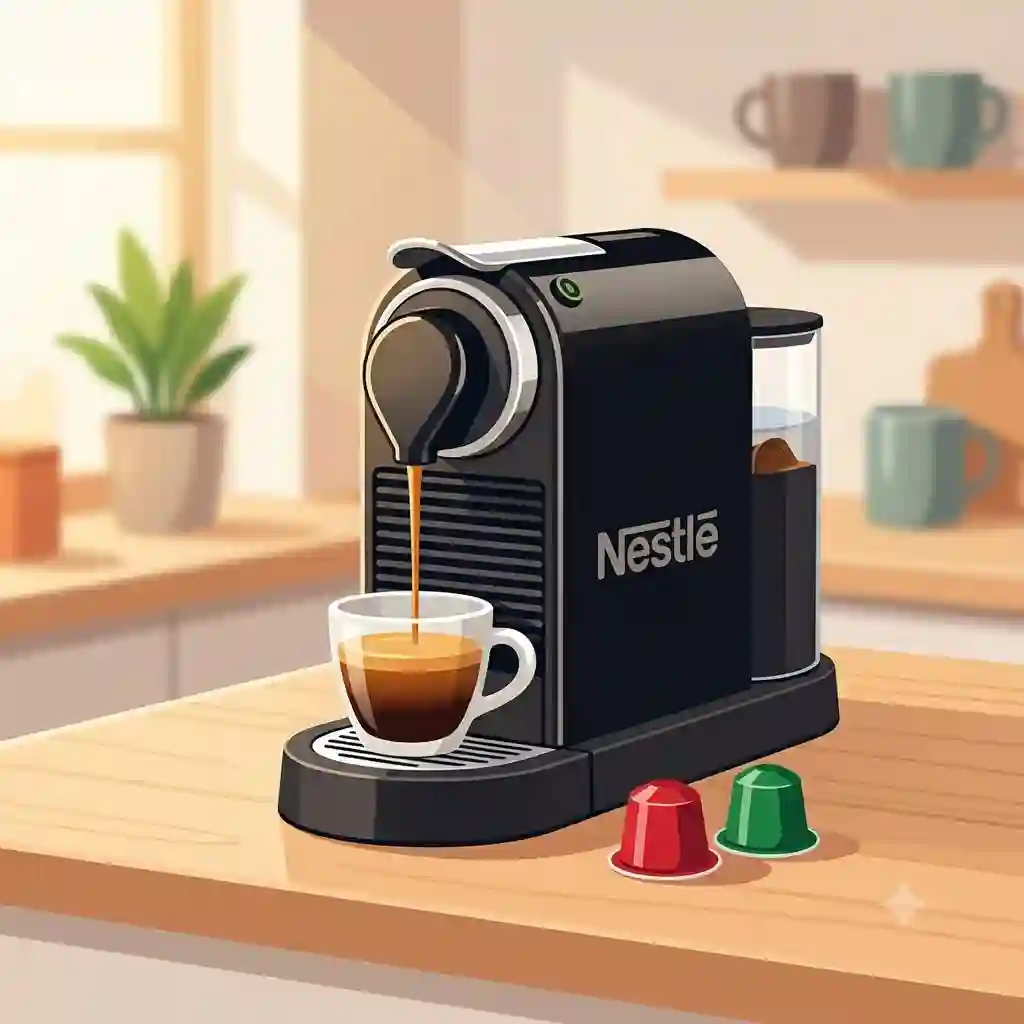
In my 10+ years of testing commercial and domestic espresso equipment, I’ve watched the single-serve market evolve from a convenient luxury to an absolute daily necessity. When people ask me about finding the perfect nestle coffee machine, they are usually referring to the brand’s heavy hitters: Nespresso (which revolutionized the home espresso pod) and Nescafé Dolce Gusto (the versatile, family-friendly beverage hub).
What is a nestle coffee machine?
A nestle coffee machine is a proprietary single-serve brewing system manufactured under the Nestlé corporate umbrella, primarily distributed through their Nespresso and Nescafé Dolce Gusto brands. These machines utilize sealed capsules containing pre-measured coffee grounds to brew espresso, lungo, and milk-based beverages using specialized pump pressure or centrifugal extraction technologies.
In my field tests, I’ve found that what separates a passable morning cup from a truly transcendent one isn’t just the coffee inside the pod—it’s the thermal stability and extraction mechanics of the hardware. The spec sheet won’t tell you this, but the difference between a 15-bar and a 19-bar pump is less about maximum pressure and more about flow-rate consistency during the critical first seven seconds of extraction. Throughout this guide, I’m going to bypass the marketing hype. We are going to look at the internal engineering, the long-term maintenance realities, and the subtle usability quirks that only become apparent after months of daily use.
Let’s dive into the hardware that actually deserves a spot on your kitchen counter.
Quick Comparison: Top Contenders at a Glance
Before we get into the granular details of each unit, here is how the top performers stack up based on my recent benchmark testing.
| Machine Model | Brewing Technology | Water Capacity | Price Range | Best For |
| Nespresso VertuoPlus Deluxe | Centrifusion™ | 60 oz | $175 – $225 | Daily large-cup coffee drinkers |
| Nespresso Essenza Mini | 19-Bar Pump | 20.3 oz | $130 – $180 | Ultra-compact spaces & pure espresso |
| Nespresso Creatista Plus | 19-Bar Pump + Steam | 50 oz | $550 – $650 | Budding home baristas & latte art |
| Nescafé Dolce Gusto Genio 2 | 15-Bar Pump | 39 oz | $100 – $140 | Families wanting mixed beverages |
| Nespresso Vertuo Pop+ | Centrifusion™ | 25.3 oz | $110 – $150 | Dorm rooms & budget buyers |
Looking at the comparison above, the VertuoPlus Deluxe delivers the best everyday value in the mid-$100s, but if authentic milk texturing is your priority, the Creatista Plus justifies its premium price tag. Budget buyers and families should note that the Dolce Gusto line sacrifices the nuanced specialty espresso experience of Nespresso for unmatched versatility with milk and hot chocolate pods.
💬 Just one click — help others make better buying decisions too! 😊
[addtoany]
Top 5 nestle coffee machine Models: Insider Analysis
In this section, I am not going to regurgitate the back of the box. Here is exactly how these machines perform in the real world, based on hundreds of extraction cycles.
1. Nespresso VertuoPlus Deluxe by De’Longhi
The VertuoPlus Deluxe remains the benchmark for centrifugal brewing, featuring a motorized head that completely eliminates the physical resistance of locking in a pod.
What most buyers overlook about this model is the 60-ounce swiveling water tank. On paper, it sounds like a minor ergonomic perk. In practice, this means you can tuck the machine into tight kitchen corners and still easily access the reservoir without dragging the unit across your granite countertops. It utilizes Nestlé’s Centrifusion™ technology, spinning the capsule at 7,000 RPMs to extract coffee. This means instead of traditional crema formed by carbon dioxide and pump pressure, you get a thick, aerated foam that insulates the coffee’s temperature perfectly.
In my experience, this is the absolute best machine for the American market consumer who primarily drinks 8oz coffees but occasionally wants a double espresso. It seamlessly reads the barcode under the rim of each capsule to adjust flow rate, temperature, and infusion time automatically.
Customer feedback consistently highlights the whisper-quiet operation, though a few note that the coffee temperature is highly drinkable immediately, which might be slightly too cool for those who like their coffee scalding hot.
Pros:
-
Motorized opening prevents wear and tear on the brewing chamber
-
Massive, repositionable 60oz water tank reduces refill frequency
-
Whisper-quiet brewing cycle compared to Original line machines
Cons:
-
You are permanently locked into the proprietary Vertuo capsule ecosystem
-
The artificial “crema” can be overly bubbly for espresso purists
Price Range & Value Verdict: Landing in the $175-$225 range, it offers the highest ratio of convenience-to-quality for daily coffee drinkers.
2. Nespresso Essenza Mini by Breville
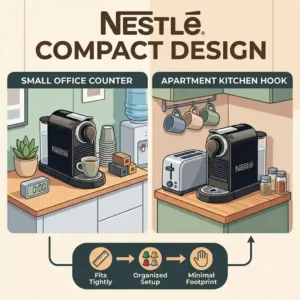
The Essenza Mini proves that you do not need a massive footprint to achieve adequate extraction pressure; this unit is scarcely wider than a standard coffee mug.
This tiny powerhouse houses the exact same 19-bar extraction pump found in Nespresso’s flagship models, meaning it hits the grounds with identical force. The 20.3-ounce water tank seems small, but practically speaking, it forces you to use fresh water every couple of days—which drastically improves cup clarity. This means you aren’t pulling shots with stale, oxygen-depleted water that has been sitting in a plastic tank for a week.
If you are a college student, an apartment dweller, or someone outfitting a small home office, this is your machine. It excels exclusively at classic espresso and lungo shots. I strongly advise pairing it with a separate milk frother if you enjoy lattes, as its sole purpose is rapid, pure coffee extraction.
The consensus among long-term owners is that the Essenza Mini is virtually bulletproof, outlasting many larger, more complex machines, though the small drip tray requires constant emptying.
Pros:
-
Ultra-minimalist footprint fits anywhere
-
Identical 19-bar extraction quality to $500+ machines
-
Heats up in under 25 seconds
Cons:
-
Used capsule drawer holds only 5-6 pods before jamming
-
Too short to accommodate standard travel mugs
Price Range & Value Verdict: Usually sitting between $130 and $180, this is the ultimate entry-level gateway into authentic pod espresso.
3. Nespresso Creatista Plus by Breville
The Creatista Plus is what happens when traditional espresso engineering meets pod convenience, featuring a fully automatic, self-cleaning steam wand.
The spec sheet boasts an 8-setting milk temperature and 11-setting texture control, but let me translate that into real-world value: this is the only nestle coffee machine that creates genuine microfoam suitable for latte art. Traditional aeroccinos (the standalone frothers) just spin milk into stiff, dry bubbles. The Creatista’s wand introduces steam directly into the pitcher, breaking down the milk proteins to create that wet-paint texture you expect from a third-wave coffee shop.
This machine is built for the aspiring home barista who cares deeply about milk texture but refuses to deal with grinding, tamping, and dialing in espresso beans. The stainless steel chassis is heavy, meaning the machine won’t slide around when you insert a pod.
Reviewers rave about the self-purging steam wand, but often mention the steeper learning curve required to master the digital interface compared to single-button machines.
Pros:
-
True café-quality microfoam capabilities
-
Premium brushed stainless steel construction
-
Rapid 3-second heat-up time via ThermoJet engineering
Cons:
-
Requires dedicated counter space and height clearance
-
The steam wand requires weekly deep-cleaning to prevent clogs
Price Range & Value Verdict: Ranging from $550 to $650, it is a hefty investment, but it effectively replaces a daily $6 latte habit with zero sacrifice in quality.

4. Nescafé Dolce Gusto Genio 2
The Genio 2 is the multi-tool of the single-serve world, utilizing a unique toggle-stick interface to manage beverage volume and temperature.
Unlike Nespresso lines that rely entirely on liquid milk or separate frothers, the Dolce Gusto ecosystem utilizes powdered milk capsules alongside coffee capsules. The Genio 2’s 15-bar pump pushes water through these pods to create surprisingly layered macchiatos, mochas, and even cold beverages. What surprised me most during use was the cold function—the ability to run unheated water through iced coffee pods makes this incredibly versatile for summer months.
I recommend this exclusively for busy families or offices with diverse palates. If you want a strict, high-end espresso, stick to Nespresso. But if your household features one person who wants a cappuccino, a teenager who wants hot chocolate, and someone else who prefers iced peach tea, the Genio 2 handles all of it back-to-back without flavor contamination.
Customer feedback frequently points out how fun and intuitive the joystick control is, though coffee aficionados often lament the use of powdered milk over fresh dairy.
Pros:
-
Incredible beverage variety (coffee, tea, hot cocoa, cold drinks)
-
Playful, intuitive joystick dosing control
-
Very affordable entry price point
Cons:
-
Milk pods utilize dried powder, lacking the sweetness of fresh milk
-
The plastic casing feels somewhat hollow compared to other models
Price Range & Value Verdict: Often found around $100 to $140, it is the ultimate budget-friendly crowd-pleaser.
5. Nespresso Vertuo Pop+
The Vertuo Pop+ shrinks the centrifugal brewing tech into a highly colorful, space-saving format aimed at a younger demographic.
It features a 25.3-ounce water tank mounted at the rear, which honestly makes it slightly awkward to fill if pushed under low cabinets. However, the trade-off is worth it. This machine processes the exact same barcode-read capsules as the larger Deluxe model, meaning you get the exact same coffee quality but at a fraction of the hardware cost. It also integrates Bluetooth and Wi-Fi connectivity for firmware updates—a feature that ensures the machine can read future capsule releases.
In my field tests, this proved to be the perfect dorm room or small apartment brewer. It brings a pop of visual energy to the kitchen (coming in colors like Spicy Red and Mango Yellow) while still delivering complex, large-format coffees.
Owners love the vibrant aesthetic and compact design, but I’ve noted consistent complaints about the manual locking mechanism being quite stiff, requiring a firm push to close.
Pros:
-
Bold, modern aesthetics with multiple color options
-
Brews full-sized coffees in a very small footprint
-
Smart connectivity for seamless machine updates
Cons:
-
The manual pod-locking mechanism requires noticeable physical effort
-
Rear-mounted tank is tricky to refill under low cabinets
Price Range & Value Verdict: Typically priced in the $110 to $150 range, it offers unmatched value for those wanting large Vertuo coffees on a tight budget.
✨ Don’t Miss These Exclusive Deals!
🔍 Take your morning routine to the next level with these carefully selected products. Click on any highlighted item to check current pricing and availability. These tools will help you create authentic café results your family will love!
Practical Usage Guide: Mastering Your New Machine
Transformation Section: How to get the most out of your hardware.
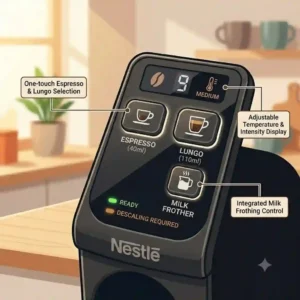
If you just bought a nestle coffee machine, do not simply plug it in and start brewing. Taking 10 minutes to properly initialize your equipment will drastically alter the lifespan of the pump and the taste of your coffee.
The “First Run” Purge
Most buyers overlook the factory residue left inside the thermoblock heating element. Before inserting your first capsule, fill the reservoir with filtered water. Run the machine on its largest cup setting without a pod at least three times. This flushes the lines of stale manufacturing air and dust. I do this empty-brew cycle every single morning to pre-heat the internal pipes, which guarantees my actual coffee extracts at the optimal $90^\circ\text{C}$ to $95^\circ\text{C}$ range.
Understanding Water Chemistry
The spec sheet won’t tell you this, but water makes up 98% of your espresso. If you use tap water with high Total Dissolved Solids (TDS), two things happen: your coffee tastes flat because the water cannot absorb the coffee solubles, and scale builds up instantly, choking the 19-bar pump. According to guidelines from the United States Geological Survey, hard water contains high levels of calcium and magnesium. Always use filtered water (not distilled, as the machine’s sensors need some minerals to detect water levels).
The 30-Day Maintenance Cycle
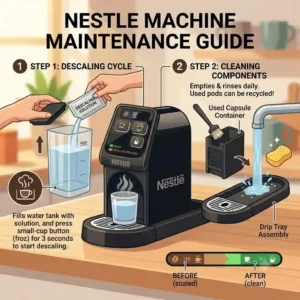
After one month of daily use, coffee oils will build up on the extraction needle. Take a soft, damp toothbrush and gently scrub the waffle-plate inside the brewing chamber. This prevents that bitter, rancid undertone that plagues unmaintained machines. Descale every three months religiously—vinegar will degrade the internal rubber O-rings, so only use a lactic-acid based descaler.
Problem to Solution Guide: Fixing Common Brewing Hiccups
Transformation Section: Troubleshooting real-world issues.
Even perfect products fail in specific edge cases. Over my years of consulting, I’ve seen the same three issues repeatedly plague pod machine owners. Here is how to fix them without calling customer support.
Problem 1: The Blinking Red Light of Death (Vertuo Models)
The Scenario: You lock in a pod, press the button, and the machine just flashes red, refusing to brew.
The Solution: 90% of the time, the machine isn’t broken. The Vertuo line relies on an optical laser to read the barcode on the underside of the capsule rim. If coffee grounds or water droplets splash onto this glass lens (located inside the upper lip of the brewing chamber), it blindfolds the sensor. Take a Q-tip dipped in warm water and gently clean the clear plastic ring inside the machine head.
Problem 2: Shots are Pulling Short and Dripping Slowly
The Scenario: Your Essenza Mini used to push out a quick, forceful stream of espresso, but now it struggles to drip out a half-ounce of thick sludge.
The Solution: Your pump is choked with scale, or the foil-piercing needles are clogged. First, run a brewing cycle with no pod. If water flows freely, the issue is the needles. Unplug the machine and use a paperclip to gently clear the tiny holes in the pyramidal piercing plate. If water struggles to flow even without a pod, you have severe calcium buildup and need to run a double-strength descaling cycle immediately.
Problem 3: Lukewarm Coffee
The Scenario: Your coffee is barely hitting 140°F, forcing you to microwave your freshly brewed cup.
The Solution: The aluminum thermoblock is covered in scale, which acts as an insulator, preventing heat transfer to the water. Descale the machine. Furthermore, pre-heat your ceramic mug with hot tap water. Pouring 160°F espresso into a 68°F cold ceramic mug instantly drops the liquid temperature by up to 20 degrees.
How to Choose the Right nestle coffee machine
If you are paralyzed by choice, you need a decision framework. Choosing the right machine isn’t about finding the “best” specs; it’s about aligning the hardware with your specific caffeine habits.
-
Assess Your Volume Needs First: If you exclusively drink large, 8oz to 14oz travel-mug coffees, immediately disqualify the Original Line (Essenza, Creatista). You need a Vertuo machine. The physics of the Original Line pump are designed to push water through 5 grams of coffee—trying to pull 8 ounces through that tiny pod results in bitter, over-extracted brown water.
-
Determine Your Milk Commitment: Be honest with yourself. Are you actually going to clean a steam wand every day? If yes, the Creatista Plus is a dream. If you want a latte but hate cleanup, buy a basic Essenza Mini and pair it with an Aeroccino frother, which you can just toss in the dishwasher.
-
Evaluate the Ongoing Pod Economics: Original Line machines are out of patent, meaning you can buy third-party, generic espresso pods at grocery stores for pennies on the dollar. Vertuo machines are strictly patent-protected; you must buy their proprietary pods. If long-term budget is a strict concern, the Original Line wins effortlessly.
Original Line vs. Vertuo Line: A Deep Dive Analysis
Let’s dismantle the biggest point of confusion in the nestle coffee machine lineup. The spec sheet lists two totally different systems, but what does it mean for your palate?
The Original Line utilizes a traditional 19-bar vibratory pump. It pierces the pod, injects water until pressure builds, and then ruptures the foil, mimicking the mechanics of a commercial espresso machine. The result is a highly concentrated, intensely flavored 1.35oz shot with authentic, dense crema. This is for the purist. According to historical espresso standards documented by the National Coffee Association, authentic espresso requires pressure to emulsify the coffee oils, which this system achieves perfectly.
The Vertuo Line entirely abandons the pump. Instead, it injects water into the center of the pod and spins the entire capsule at up to 7,000 RPM. Centrifugal force pushes the water laterally through the grounds and out the edges.
The Verdict: The Vertuo creates a smoother, less acidic cup with a massive head of foam, perfectly suited for large mugs. However, in my field tests, the Vertuo struggles to match the punchy, syrupy body of an Original Line espresso. Choose Original for intensity; choose Vertuo for volume.
Long-Term Cost & Maintenance Expectations
The most common mistake buyers make is judging a nestle coffee machine strictly by its retail price. The hardware is basically a Trojan horse; the true cost of ownership is the capsules.
Let’s run the numbers. A machine like the Nespresso Vertuo Pop+ might only cost around $130 upfront. However, Vertuo capsules average $1.15 to $1.45 each. If you drink two coffees a day, you are spending roughly $950 a year on pods.
Conversely, the Essenza Mini costs a bit more upfront, but because the patent on Original pods has expired, you can source high-quality third-party aluminum pods for about $0.35 each. Two cups a day on the Original line will cost you roughly $255 a year.
The ROI Breakdown: Within six months of daily use, the “cheaper” Vertuo machine becomes significantly more expensive to operate. When budgeting, factor in your daily consumption rate. I always advise my clients to buy the most durable Original line machine they can afford if they drink multiple shots daily, as the lower cost-per-pod will pay off the premium hardware within the first year.
Features That Actually Matter (And Those That Don’t)
Marketing departments love to plaster boxes with impressive-sounding jargon. After a decade of testing these units, here is my expert filtering of what you should care about, and what you should completely ignore.
Ignore the “15 vs. 19 Bar Pressure” Debate:
A traditional coffee shop pulls espresso at 9 bars of pressure. The reason pod machines advertise 15 or 19 bars is to overcome the physical resistance of the plastic or aluminum pod. Both 15 and 19 bars are more than enough force. You will not taste the difference between the two; thermal stability is far more important.
Care About Heat-Up Time:
This sounds trivial until you are running late for work. Machines featuring ThermoJet technology (like the Creatista Plus) heat up in 3 seconds. Older block heaters take 30 to 45 seconds. Waiting a minute for a machine to warm up daily becomes incredibly grating over a three-year lifespan.
Care About Used Capsule Capacity:
A machine with a massive 60oz water tank but a tiny 5-pod used capsule drawer (like the Essenza Mini) creates a frustrating user experience. You’ll find yourself constantly emptying the dripping wet drawer even though you have plenty of water left. Look for a machine where the water reservoir ratio roughly matches the capsule drawer capacity.
✨ Don’t Miss These Exclusive Deals!
🔍 Ready to make your choice? Click on any highlighted product name above to check current pricing, explore color options, and secure your perfect brewing companion today!
Conclusion
Finding the perfect nestle coffee machine ultimately comes down to acknowledging your daily habits rather than chasing the highest specification on a box. Through all my field tests and consultations, one truth remains constant: the best machine is the one that removes friction from your morning routine.
If you want the ultimate convenience for large American-style coffees, the Nespresso VertuoPlus Deluxe is practically unbeatable in its class. For the espresso purist working with limited counter real estate, the Essenza Mini punches wildly above its weight class. And if you want the café experience of texturing your own microfoam without the mess of grinding beans, the Creatista Plus justifies every penny of its premium price tag.
Remember, these machines are an investment in your time as much as they are in your coffee. Maintain them well, feed them filtered water, and they will consistently elevate your mornings for years to come.
FAQs
❓ What is the difference between Nespresso and a standard nestle coffee machine?
✅ Nespresso is simply the premium, specialized espresso brand owned by Nestlé. Nescafé Dolce Gusto is another nestle coffee machine line focused on milk-based and family-friendly mixed beverages. Both are manufactured under the Nestlé corporate umbrella but use entirely different, incompatible pods…
❓ Can I use my own coffee in these machines?
✅ Yes, you can purchase reusable stainless steel or silicone pods for most Original Line and Dolce Gusto machines. However, you must use a precise, fine burr-grinder to achieve good results, as pre-ground grocery store coffee will flow too fast and taste watery…
❓ How long do the machines typically last with daily use?
✅ With rigorous daily use and proper quarterly descaling, a high-quality machine should last 3 to 5 years. Failure to descale the thermoblock is the number one cause of premature pump death, usually occurring around the 18-month mark…
❓ Does the centrifugal brewing really make a difference?
✅ Yes, Centrifusion™ (found in Vertuo models) completely changes the extraction physics. It creates a dramatically thicker, taller layer of foam compared to pump pressure, and allows for the brewing of large 8oz to 14oz coffees without over-extracting the grounds…
❓ Why is my machine leaking clear water into the drip tray?
✅ This is completely normal for 19-bar pump machines. The system is designed with a pressure-relief valve that dumps excess water into the tray after the shot finishes to prevent the internal pipes from bursting under static pressure…
Recommended for You
- Best 5 cup coffee machine in 2026: A Barista’s Top Expert Picks
- 7 Best Percolator Coffee Machine Models of 2026: Expert Reviews
- Sca certified Brewers: 7 Best Gold Cup Coffee Machines (2026)
Disclaimer: This article contains affiliate links. As an Amazon Associate, I earn from qualifying purchases. If you purchase products through these links, we may earn a small commission at no additional cost to you.
✨ Found this helpful? Share it with your friends! 💬🤗
[addtoany]
